
Authentic Product

India's Leading Generic Pharmacy

Secure Payment

By MANKIND PHARMA LIMITED
MRP
₹
42.08
₹35.77
15 % OFF

Check Delivery
--

Composition

Content Reviewed By:
Dr. Rajesh Sharma
, (MBBS)
Written By:
Ms. Priyanka Shah
, (B.Pharm)
Most side effects do not require any medical attention and disappear as your body adjusts to the medicine. Consult your doctor if they persist or if you’re worried about them.

Allergies
Check ingredients carefullyAllergic reactions are more likely to be caused by inactive ingredients in vitamin D3 products, such as gelatin, oils, lactose, dyes, or preservatives, than by vitamin D3 itself.
You can take D3 MUST DROPS 15 ML at any time, morning or night. However, limited information is available about the best time to take it. Take it strictly as advised by your doctor.
D3 MUST DROPS 15 ML is vital for maintaining bone health and supporting the health of the immune system, brain, and nervous systems. It regulates insulin levels and is important for a healthy heart and blood vessels.
D3 MUST DROPS 15 ML should be swallowed whole with water and not crushed or chewed. It is advised to be taken with the main meal of the day to increase its absorption.
D3 MUST DROPS 15 ML should not be taken by patients allergic to cholecalciferol, patients with increased calcium levels in the blood, or patients with calcium in the urine. Patients with kidney stones or severe kidney problems should also avoid its use.
Taking too much D3 MUST DROPS 15 ML for an extended period may increase calcium levels in the blood (hypercalcemia). This may cause weakness, fatigue, vomiting, diarrhea, sluggishness, kidney stones, increased blood pressure, and growth retardation in children.
The daily requirement of vitamin D is 4000 IU/day. Since your diet may not meet this requirement, you may need 1000 - 3000 IU/day of vitamin D supplements. D3 MUST DROPS 15 ML is a form of vitamin D used as a supplement in patients with vitamin D deficiency.
Low vitamin D levels may cause rickets in children and osteomalacia in adults. Vitamin D deficiency may also increase the risk of diabetes mellitus 1, high blood pressure, depression, some cancers, and osteoporosis.
"D3 must" usually emphasizes that vitamin D3 (cholecalciferol) is essential for maintaining bone health, supporting calcium and phosphorus absorption, and contributing to normal immune and muscle function. It highlights the importance of ensuring adequate vitamin D3 levels through safe sun exposure, diet, and, when needed, medically supervised supplementation.
Vitamin D3 helps the intestines absorb calcium and phosphorus, minerals that are necessary for building and maintaining strong bones and teeth. Without enough vitamin D3, the body cannot use calcium efficiently, which can lead to soft or fragile bones, increased fracture risk, and conditions such as rickets in children and osteomalacia or osteoporosis in adults.
Many people use over-the-counter vitamin D3 supplements, but it is safer to consult a healthcare professional first, especially if you have chronic illnesses, take other medicines, or plan to use higher-strength products. A clinician can assess your risk factors, consider blood tests for vitamin D levels, and recommend an appropriate product and duration instead of guessing the dose yourself.
People with liver disease should use vitamin D3 only under medical supervision. The liver is involved in processing vitamin D, and certain liver conditions may alter how the body handles it. Your doctor may adjust the strength, monitor blood tests such as vitamin D and calcium levels, and check liver function regularly to reduce the risk of complications.
Kidney disease can change how the body activates and balances vitamin D, calcium, and phosphorus. Some patients with chronic kidney disease require specific forms of vitamin D or closely monitored regimens. Using standard vitamin D3 supplements without guidance may increase the risk of abnormal calcium or phosphate levels. Always seek nephrologist or physician advice before taking vitamin D3 if you have kidney problems.
Adequate vitamin D status is important during pregnancy for both the mother and the developing baby, particularly for bone and immune health. However, pregnant individuals should not start or change vitamin D3 supplements without medical advice. A healthcare professional can recommend a suitable product and strength based on diet, sun exposure, and blood test results, and will avoid excessive intake that could harm mother or fetus.
Vitamin D3 is often recommended during breastfeeding to help maintain the mother’s vitamin D levels and support bone health. Some vitamin D passes into breast milk, which can benefit the infant, but the amount depends on the mother’s intake and status. Breastfeeding individuals should follow medical advice on whether supplementation is needed and at what strength, rather than self-prescribing high doses.
Vitamin D3 does not usually cause drowsiness or impair concentration, so it is generally considered safe with respect to driving and operating machinery. However, if you experience unusual symptoms such as severe fatigue, confusion, or visual disturbances, which can rarely occur with very high vitamin D and calcium levels, you should avoid driving and seek medical attention.
There is no specific direct interaction between moderate alcohol intake and vitamin D3 itself, but heavy or long-term alcohol use can damage the liver and affect bone health. Because the liver is involved in vitamin D metabolism, excessive alcohol may worsen underlying issues. It is advisable to limit alcohol, especially if you are taking vitamin D3 for bone or liver-related concerns, and to discuss your alcohol use with your healthcare provider.
True allergy to the vitamin D3 molecule is rare, but people can react to other ingredients in supplements, such as gelatin, soy, peanut oil, lactose, dyes, or preservatives. If you have a history of allergies, asthma, or previous reactions to medicines or supplements, check the ingredient list carefully and inform your healthcare professional. Stop using the product and seek urgent care if you develop symptoms such as rash, itching, swelling of the face or throat, or difficulty breathing.
Sunlight exposure helps the skin produce vitamin D3, but the amount formed depends on factors such as time of day, season, latitude, skin pigmentation, clothing, sunscreen use, and age. Many people, especially those who spend most time indoors, cover their skin, or live in low-sunlight regions, may not achieve adequate levels from sunlight alone. A healthcare professional can help decide whether lifestyle changes, diet, or a supplement is the best way to maintain healthy vitamin D status.
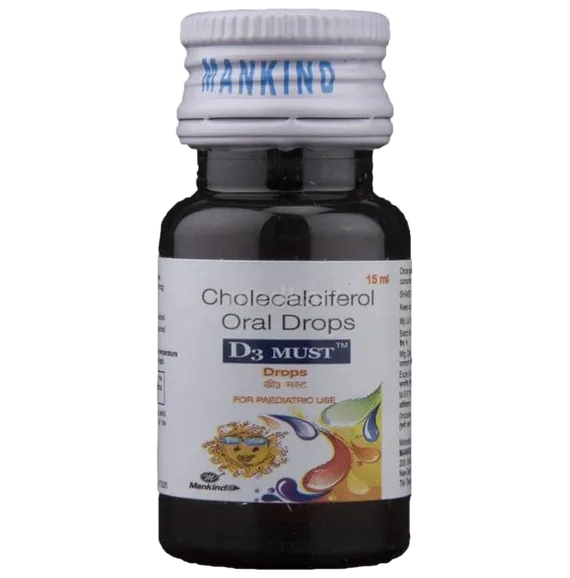
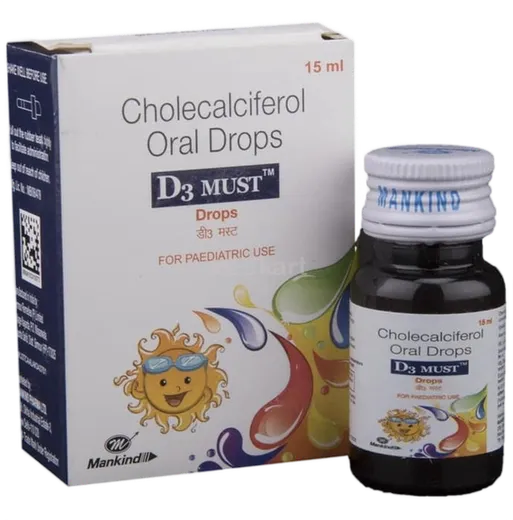
D3 Must Drops 15 ML is used for preventing and treating vitamin D deficiency; supporting calcium absorption and bone health; adjunct in rickets, osteomalacia and osteoporosis management. D3 Must Drops 15 ML contains Cholecalciferol D3 400 IU. Always use D3 Must Drops 15 ML as advised by your doctor.
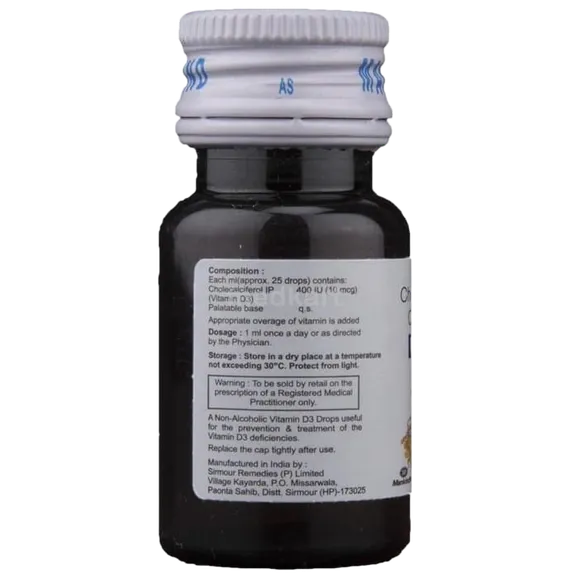
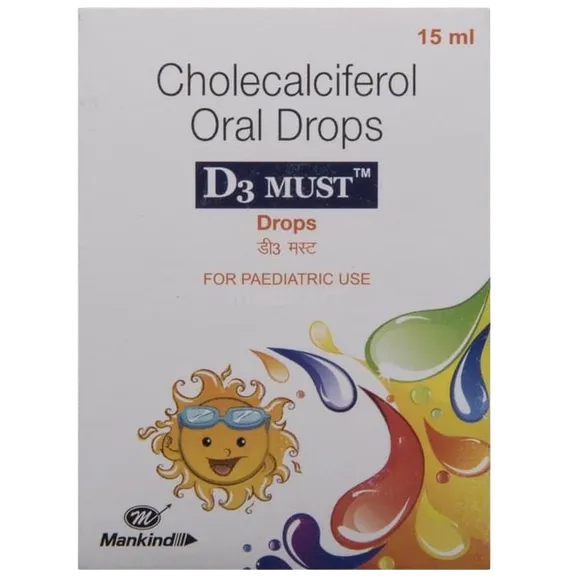
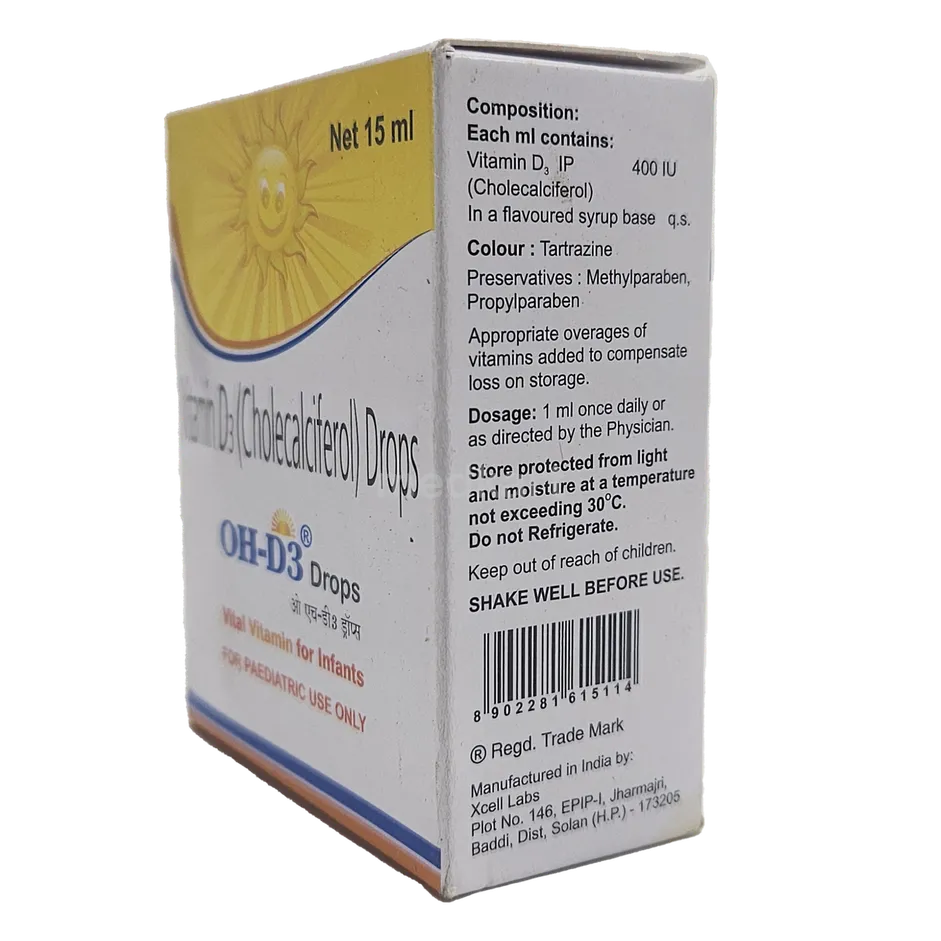
D3 Must Drops 15 ML contains Cholecalciferol D3 400 IU. It is a vitamin D3 supplement.
Commonly reported side effects of D3 Must Drops 15 ML include well tolerated at recommended doses. Not everyone gets side effects. Tell your doctor or pharmacist if any effect persists or worries you.
D3 Must Drops 15 ML is listed at Rs. 35.54 on Medkart. Prices can change — check the product page for the current price and pack size.
Not to be combined with other vitamin D sources without advice, as toxicity is cumulative. Tell your doctor about all other medicines you take before starting D3 Must Drops 15 ML.
The dose of D3 Must Drops 15 ML depends on your condition, age, weight and other medicines you take, so it must be decided by your doctor. Follow the dose and duration on your prescription and do not change it on your own.
A generic medicine is one with the same active composition as the branded product — for D3 Must Drops 15 ML that is Cholecalciferol D3 400 IU. Medkart lists generic options by composition so you can compare. Ask your doctor or pharmacist before switching from D3 Must Drops 15 ML.
D3 Must Drops 15 ML contains Cholecalciferol D3 400 IU, a vitamin D3 supplement. It is used for preventing and treating vitamin D deficiency.
D3 Must Drops 15 ML is listed as not requiring a prescription. Check with your pharmacist if unsure.
D3 Must Drops 15 ML is manufactured by Mankind Pharma Limited.
D3 Must Drops 15 ML is supplied as a drops and is taken by the not applicable route.
D3 Must Drops 15 ML contains Cholecalciferol D3 400 IU. It is used for preventing and treating vitamin D deficiency; supporting calcium absorption and bone health; adjunct in rickets, osteomalacia and osteoporosis management. The benefit you get depends on the condition your doctor prescribed D3 Must Drops 15 ML for.
Whether D3 Must Drops 15 ML can be taken daily, and for how long, depends on your condition and must be decided by your doctor. Do not start, extend or repeat a course of D3 Must Drops 15 ML on your own.
The timing of D3 Must Drops 15 ML depends on the dose your doctor prescribes and on the other medicines you take. Follow the timing on your prescription or ask your pharmacist.
D3 Must Drops 15 ML is listed as not requiring a prescription, but it is still safest to check with a doctor or pharmacist before taking it, especially alongside other medicines.
Do not take D3 Must Drops 15 ML during pregnancy or while breastfeeding without asking your doctor. Safety depends on the medicine, the stage of pregnancy and your own health.
Check with your doctor before drinking alcohol while taking D3 Must Drops 15 ML. Alcohol can add to side effects such as drowsiness and can affect how some medicines work.
Store D3 Must Drops 15 ML in its original pack, below 25°C unless the pack states otherwise, away from direct sunlight and moisture, and out of the reach of children. Do not use it after the expiry date on the pack.


Same day dilevery available, Urgent response, Free home delivery above 500
Vikas Yadav
•
Reviewed on 09-07-2023

(5/5)
Jenerik medicines is best than regular branded medicines. Extra ordinary benefit against branded medicines. I have saved more than 80% against branded medicines.
Naresh Shah
•
Reviewed on 06-01-2024
(5/5)
Discount on medicine is good But OTC discount is zero and very low
Abhishek Solanki
•
Reviewed on 05-12-2022

(3/5)
Best service always... Best staff ..thank u being over life part
Nisha Khan
•
Reviewed on 01-07-2023
(5/5)
Best medicine 💊
Mohit Tanna
•
Reviewed on 30-01-2024
(5/5)
MANKIND PHARMA LIMITED
Country of Origin -
India
MRP
₹
42.08
₹35.77
15 % OFF
Quick Links

Medkart's sole intention is to ensure that its consumers get information that is expert-reviewed, accurate and trustworthy. However, the information contained herein should NOT be used as a substitute for the advice of a qualified physician. The information provided here is for informational purposes only. This may not cover everything about particular health conditions, medicines, generic alternatives, all possible side effects, drug interactions, warnings, alerts, lab tests, etc. Please consult your doctor and discuss all your queries related to any disease or medicine. We intend to support, not replace, the doctor-patient relationship.
10 Lakh+
Happy customers
35000+
Pin-codes Covered
75 Lakh+
Orders Delivered

Authentic Products
All WHO-GMP Certified Medicines






©2025 Medkart Pharmacy. All Rights Reserved








 10's_1.webp)