
Authentic Product

India's Leading Generic Pharmacy

Secure Payment

By DABUR INDIA LIMITED
MRP
₹
240
₹216
10 % OFF

Check Delivery
--

Composition

Content Reviewed By:
Dr. Neha Patel
, (MBBS)
Written By:
Mr. Ankit Jain
, (B.Pharm)
While Dabur Chyawanprash is generally considered safe, some individuals may experience side effects, especially with excessive consumption. These may include: * **Digestive Issues:** Heartburn, bloating, gas, or stomach upset, particularly in individuals with a sensitive digestive system. * **Increased Blood Sugar:** Due to the presence of sugar and honey, it can elevate blood sugar levels, which is a concern for diabetics. * **Weight Gain:** The high sugar and calorie content may contribute to weight gain with regular and excessive consumption. * **Allergic Reactions:** Rarely, individuals may be allergic to one or more ingredients in Chyawanprash, leading to symptoms like skin rashes, itching, or hives. * **Loose Stools:** In some cases, it may cause loose stools or diarrhea, especially when taken in large quantities. * **Increased Body Heat:** Chyawanprash is believed to have warming properties, and excessive intake may cause a feeling of increased body heat or discomfort in some individuals. * **Exacerbation of Pitta Dosha:** In Ayurveda, an imbalance of Pitta dosha (fire element) may be aggravated by excessive consumption, leading to symptoms like acidity, skin inflammation, or irritability. **Important Considerations:** * Individuals with diabetes should monitor their blood sugar levels closely when consuming Chyawanprash. * People with pre-existing digestive issues or allergies should exercise caution and consult a healthcare professional before use. * It's recommended to consume Chyawanprash in moderation as per the recommended dosage. * If any adverse reactions occur, discontinue use and consult a doctor.

Metabolic conditions and chronic diseases
Special caution in diabetes, obesity, and cardiovascular diseaseChyawanprash Dabur typically contains significant amounts of sugar, honey, and fats, which can contribute to caloric intake and influence blood glucose and lipid levels.
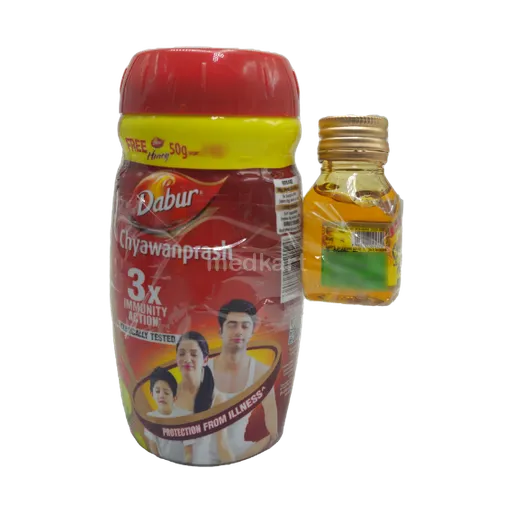
Dabur Chyawanprash is an Ayurvedic health tonic made from a blend of various herbs and minerals, designed to boost immunity, energy, and overall well-being.
The main ingredients include Amla, honey, ghee, sugar, sesame oil, and various Ayurvedic herbs like Ashwagandha, Pippali, and Haridra.
For adults, take 1-2 teaspoons twice a day. For children, take 1 teaspoon twice a day. It can be consumed with milk or water.
It boosts immunity, increases energy levels, improves digestion, and helps the body fight against illnesses.
Yes, Dabur Chyawanprash is safe for children, but they should be given a smaller dosage than adults.
Store it in a cool and dry place, away from direct sunlight.
Some people may experience stomach upset or diarrhea due to the high sugar content. Discontinue use if you notice any adverse effects.
Diabetic patients should exercise caution and consult a doctor before consuming it due to its high sugar content. Dabur Chyawanprash Sugar Free is an available alternative.
It is always better to consult a doctor before consuming Dabur Chyawanprash if you are taking other medications.
Dabur Chyawanprash does not directly help in weight gain, but it can improve digestion and metabolism, which aids in maintaining a healthy weight.
The shelf life of Dabur Chyawanprash is typically 3 years from the date of manufacture.
It is advisable to consult a doctor before consuming Dabur Chyawanprash during pregnancy.
Some herbs present in Dabur Chyawanprash, like Ashwagandha, may help in reducing stress and improving mental well-being.
Dabur Chyawanprash is known for its quality, trusted brand image, and effective Ayurvedic formulation. It is widely available and has a long-established reputation.
Yes, Dabur Chyawanprash is vegetarian as it does not contain any non-vegetarian ingredients.
Chyawanprash Dabur is an Ayurvedic polyherbal formulation marketed as a health supplement. It is based on the classical Chyawanprash recipe described in Ayurvedic texts and is generally classified as a Rasayana (rejuvenative) preparation in Ayurveda. From a modern medical perspective, it is considered a traditional herbal food supplement, not a licensed pharmaceutical drug, and it is not approved to diagnose, treat, cure, or prevent any specific disease.
Chyawanprash Dabur is commonly promoted for supporting immune function, improving general vitality, and helping the body cope with seasonal changes, particularly in relation to common colds and coughs. It is also marketed as an antioxidant-rich supplement that may support respiratory health and overall well-being. Some small studies on Chyawanprash formulations suggest improvements in certain immune markers and antioxidant status, but the evidence is limited and should be interpreted cautiously. It should not replace standard medical care.
Evidence for Chyawanprash, including products similar to Chyawanprash Dabur, comes mainly from small clinical trials, observational studies, and laboratory research. Some of these suggest potential benefits in immune modulation, antioxidant activity, and subjective well-being. However, the studies often have limitations such as small sample sizes, short duration, variable formulations, and methodological weaknesses. There is insufficient high-quality, large-scale clinical evidence to conclusively prove efficacy for specific medical indications. It should therefore be regarded as a complementary supplement rather than a proven therapeutic agent.
Chyawanprash Dabur typically contains sugar, honey, and other carbohydrate-rich ingredients, which can raise blood glucose levels. People with diabetes or impaired glucose tolerance should use it with caution, if at all. Any use should be discussed with a healthcare professional who can consider the individual’s glycaemic control, overall diet, and medication regimen. If a person with diabetes chooses to take Chyawanprash Dabur, careful monitoring of blood glucose and possible adjustment of diet or medications may be necessary. In some cases, avoidance may be the safer option.
Chyawanprash Dabur is widely used in children in traditional practice, but robust paediatric safety and efficacy data are limited. In general, small amounts are often considered acceptable for otherwise healthy children above a certain age, provided they have no known allergies to the ingredients and no significant chronic illnesses. However, infants and very young children should not be given herbal supplements without paediatric guidance. Parents should consult a paediatrician before starting regular use, especially in children with asthma, food allergies, diabetes, or other chronic conditions.
Safety data for Chyawanprash Dabur in pregnancy are limited, and controlled clinical studies in pregnant women are lacking. Because it is a complex polyherbal formulation containing multiple bioactive substances, routine use in pregnancy cannot be assumed to be risk-free. Pregnant women should consult their obstetrician or a qualified healthcare professional before using Chyawanprash Dabur. In many cases, clinicians may advise avoiding non-essential herbal supplements during pregnancy unless there is a clear, evidence-based indication and a favourable risk–benefit assessment.
There is insufficient high-quality evidence regarding the excretion of Chyawanprash components into breast milk and their effects on the nursing infant. Although many women may use Chyawanprash while breastfeeding in traditional practice without obvious problems, the absence of systematic safety data means that caution is warranted. Breastfeeding mothers should discuss use with their healthcare provider, who can consider the mother’s health, the infant’s age and medical status, and the overall risk–benefit balance. If any unusual symptoms occur in the infant, the supplement should be stopped and medical advice sought.
When taken in customary amounts by healthy adults, Chyawanprash Dabur is generally well tolerated. Possible side effects, though not systematically quantified, may include gastrointestinal discomfort such as bloating, mild abdominal pain, nausea, or loose stools, especially if taken in large quantities or on a very sensitive stomach. Because it contains multiple herbal ingredients, there is a potential for allergic reactions, which may present as rash, itching, swelling, or breathing difficulty. People with metabolic conditions may experience issues related to the sugar and fat content. Any suspected adverse reaction should prompt discontinuation and medical evaluation.
Formal drug–herb interaction studies specific to Chyawanprash Dabur are limited. However, given its multiple herbal components with potential pharmacological activity, interactions with prescription medicines cannot be excluded. Theoretical concerns include effects on blood glucose, blood pressure, or immune function, which could influence the action of antidiabetic drugs, antihypertensives, immunosuppressants, or anticoagulants. Patients taking long-term medications, especially for chronic conditions such as diabetes, cardiovascular disease, autoimmune disorders, or after organ transplantation, should consult their physician before using Chyawanprash Dabur regularly.
No. Chyawanprash Dabur must not be used as a substitute for vaccines, antibiotics, antiviral drugs, or any other evidence-based medical treatment. While it is marketed as supporting immunity and general health, there is no robust clinical evidence that it can prevent or cure serious infections or replace recommended immunization schedules. Individuals should continue to follow standard medical advice, including vaccinations, hygiene measures, and appropriate treatment for acute or chronic illnesses. Chyawanprash Dabur, if used, should be considered an adjunctive supplement only.
Chyawanprash Dabur should be stored in a cool, dry place away from direct sunlight and excessive heat, with the container tightly closed to protect it from moisture and contamination. It should be kept out of reach of children to prevent accidental overconsumption. The product should not be used after the expiry date printed on the label. If there are any changes in colour, smell, or consistency that suggest spoilage or contamination, the product should be discarded. Always follow the storage instructions provided by the manufacturer on the packaging.
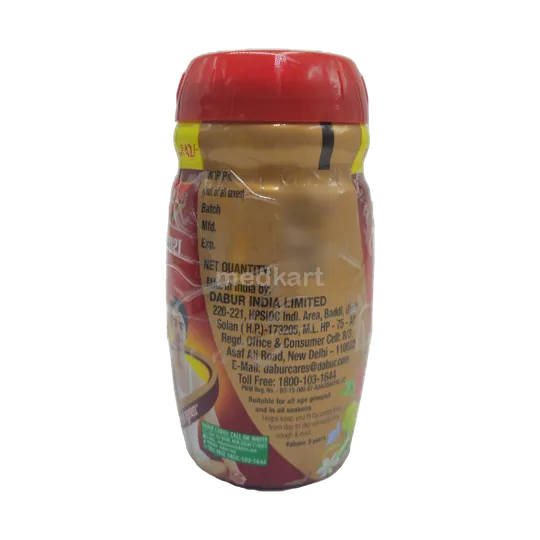
Dabur Chyawanprash 500 GM contains Ayurvedic.
Dabur Chyawanprash 500 GM is listed at Rs. 216 on Medkart. Prices can change — check the product page for the current price and pack size.
The dose of Dabur Chyawanprash 500 GM depends on your condition, age, weight and other medicines you take, so it must be decided by your doctor. Follow the dose and duration on your prescription and do not change it on your own.
A generic medicine is one with the same active composition as the branded product — for Dabur Chyawanprash 500 GM that is Ayurvedic. Medkart lists generic options by composition so you can compare. Ask your doctor or pharmacist before switching from Dabur Chyawanprash 500 GM.
Dabur Chyawanprash 500 GM is listed as not requiring a prescription. Check with your pharmacist if unsure.
Dabur Chyawanprash 500 GM is manufactured by Dabur India Limited.
Dabur Chyawanprash 500 GM is supplied as a paste and is taken by the topical route.
Whether Dabur Chyawanprash 500 GM can be taken daily, and for how long, depends on your condition and must be decided by your doctor. Do not start, extend or repeat a course of Dabur Chyawanprash 500 GM on your own.
The timing of Dabur Chyawanprash 500 GM depends on the dose your doctor prescribes and on the other medicines you take. Follow the timing on your prescription or ask your pharmacist.
Dabur Chyawanprash 500 GM is listed as not requiring a prescription, but it is still safest to check with a doctor or pharmacist before taking it, especially alongside other medicines.
Store Dabur Chyawanprash 500 GM in its original pack, below 25°C unless the pack states otherwise, away from direct sunlight and moisture, and out of the reach of children. Do not use it after the expiry date on the pack.


Best service always... Best staff ..thank u being over life part
Nisha Khan
•
Reviewed on 01-07-2023

(5/5)
Good. Provides medicines at reasonable rates.
Jiji Varughese
•
Reviewed on 08-02-2024

(4/5)
Nice experience, always!
Ashutosh Buch
•
Reviewed on 24-02-2023
(5/5)
Medkart pharmacy is doing good on saving money of customer and good work on aware to people about generic medicines.
Rinkal Surti
•
Reviewed on 23-11-2022
(5/5)
Very good service and discount
Yatin Patel
•
Reviewed on 13-01-2024
(5/5)
DABUR INDIA LIMITED
Country of Origin -
India
MRP
₹
240
₹216
10 % OFF
Quick Links

Medkart's sole intention is to ensure that its consumers get information that is expert-reviewed, accurate and trustworthy. However, the information contained herein should NOT be used as a substitute for the advice of a qualified physician. The information provided here is for informational purposes only. This may not cover everything about particular health conditions, medicines, generic alternatives, all possible side effects, drug interactions, warnings, alerts, lab tests, etc. Please consult your doctor and discuss all your queries related to any disease or medicine. We intend to support, not replace, the doctor-patient relationship.
10 Lakh+
Happy customers
35000+
Pin-codes Covered
75 Lakh+
Orders Delivered

Authentic Products
All WHO-GMP Certified Medicines






©2025 Medkart Pharmacy. All Rights Reserved






 10's_1.webp)