
Prescription Required




Authentic Product

India's Leading Generic Pharmacy

Secure Payment

By PFIZER PHARMACEUTICAL INDIA PRIVATE LIMITED
MRP
₹
302.77
₹272.49
10 % OFF
₹27.25 Only /
CAPSULE
Check Delivery
--

Composition

Content Reviewed By:
Dr. Rajesh Sharma
, (MBBS)
Written By:
Ms. Priyanka Shah
, (B.Pharm)
Most side effects do not require any medical attention and disappear as your body adjusts to the medicine. Consult your doctor if they persist or if you’re worried about them.

Gastrointestinal and colitis risk
Serious riskDalacin can disrupt normal gut flora and is associated with an increased risk of antibiotic‑associated colitis, including Clostridioides difficile–associated diarrhea.
Usually, DALACIN C 300MG CAPSULE 10'S starts working soon after taking it. However, it may take some days to kill all the harmful bacteria and make you feel better.
Yes, the use of DALACIN C 300MG CAPSULE 10'S can cause diarrhea. It is an antibiotic which kills the harmful bacteria. However, it also affects the helpful bacteria in your stomach or intestine and causes diarrhea. If you are experiencing severe diarrhea, talk to your doctor about it.
DALACIN C 300MG CAPSULE 10'S is effective if used in the dose and duration advised by your doctor. Do not stop taking it even if you see improvement in your condition. If you stop using DALACIN C 300MG CAPSULE 10'S too early, the symptoms may return or worsen.
Inform your doctor if you don't feel better after finishing the full course of treatment. Also, inform him if your symptoms are getting worse while using this medicine.
DALACIN C 300MG CAPSULE 10'S is generally safe to use. However, you should take it in the dose and duration as advised by your doctor. It may cause some side effects that are temporary and usually resolve on their own. Your doctor will tell you ways to cope up with them.
No, do not stop taking DALACIN C 300MG CAPSULE 10'S and complete the full course of treatment even if you feel better. Your symptoms may improve before the infection is completely cured.
DALACIN C 300MG CAPSULE 10'S is effective if used in the dose and duration advised by your doctor. Do not stop taking it even if you see improvement in your condition. If you stop using DALACIN C 300MG CAPSULE 10'S too early, the symptoms may return or worsen.
Dalacin (clindamycin) is an antibiotic used to treat bacterial infections such as skin and soft tissue infections (including some acne and abscesses), bone and joint infections, certain respiratory tract infections, pelvic and gynecological infections, and some dental or oral infections when caused by susceptible bacteria. It may be prescribed when other antibiotics are not suitable, for example in some patients with penicillin allergy. The exact indication depends on your doctor’s assessment and local treatment guidelines.
Dalacin contains clindamycin, which is a lincosamide antibiotic. It works by binding to the 50S subunit of bacterial ribosomes, blocking protein synthesis that bacteria need to grow and multiply. This action is mainly bacteriostatic (it stops bacterial growth), but it can be bactericidal (kills bacteria) against some organisms at higher concentrations or in certain infection sites. It is active only against susceptible bacteria and will not treat viral infections such as colds or flu.
Alcohol does not have a well‑documented direct interaction with clindamycin in most patients, but it is generally advisable to limit or avoid alcohol while taking Dalacin. Alcohol can worsen side effects such as stomach upset, dizziness, or fatigue and may impair your body’s ability to recover from infection. Heavy or chronic alcohol use can also affect liver function, which is important because clindamycin is metabolized in the liver. If you regularly drink alcohol, discuss this with your doctor before starting Dalacin.
Dalacin should be used during pregnancy only if clearly needed and prescribed by a doctor. Clindamycin has been used in pregnant women for certain infections, and available data do not suggest a high risk of major birth defects when used appropriately. However, any medicine in pregnancy must be weighed against potential risks. Your doctor will consider the severity of the infection, alternative options, and the stage of pregnancy before recommending Dalacin. Do not start or stop this medicine in pregnancy without medical advice.
Clindamycin passes into breast milk in small amounts. Because of the potential for effects on the nursing infant, such as changes in gut flora, diarrhea, or, rarely, sensitization, Dalacin should be used with caution during breastfeeding. In some situations, your doctor may decide that the benefits of treating your infection outweigh the potential risks to the baby, or may recommend an alternative antibiotic. If Dalacin is used while breastfeeding, monitor the infant for diarrhea, rash, or signs of thrush and report any concerns to a healthcare professional.
Dalacin is metabolized mainly in the liver, and in some patients it can cause changes in liver function tests or, rarely, liver inflammation (hepatitis) or jaundice. People with pre‑existing liver disease may require closer monitoring, dose adjustment, or an alternative antibiotic, depending on the severity of their condition. Your doctor may order blood tests to check liver function before or during treatment if you have known liver problems or if treatment is prolonged. Seek medical advice if you develop symptoms such as yellowing of the skin or eyes, dark urine, severe fatigue, or persistent nausea.
Clindamycin is eliminated from the body through both liver metabolism and kidney excretion. In mild to moderate kidney impairment, Dalacin can often be used with caution, but your doctor may adjust the regimen or monitor you more closely, especially if treatment is prolonged. In severe kidney dysfunction, careful assessment is needed, and dose or dosing interval may need modification according to local guidelines and your overall condition. Always inform your doctor if you have any degree of kidney disease or are on dialysis before starting Dalacin.
Dalacin does not usually impair the ability to drive or operate machinery directly. However, some people may experience side effects such as dizziness, fatigue, or, less commonly, allergic reactions that could affect concentration or alertness. If you feel unwell, light‑headed, or unusually tired while taking Dalacin, avoid driving, cycling, or using heavy machinery until you feel fully recovered and have discussed your symptoms with a healthcare professional.
If you have a history of allergy to clindamycin, lincomycin, or any component of the Dalacin formulation, you should not use this medicine. If your allergy was to a different antibiotic class, such as penicillins or cephalosporins, you may still be able to take Dalacin, but your doctor will assess the type and severity of your previous reaction. Inform your healthcare provider about all past drug allergies, including rashes, swelling, breathing difficulties, or anaphylaxis. Seek urgent medical help if you develop symptoms of an allergic reaction while on Dalacin, such as hives, swelling of the face or throat, difficulty breathing, or severe skin rash.
Common side effects of Dalacin include nausea, vomiting, abdominal pain, and diarrhea. Mild symptoms often improve as your body adjusts, but persistent or worsening problems should be discussed with your doctor. A serious but important risk is antibiotic‑associated colitis, including Clostridioides difficile–associated diarrhea, which can present with severe or persistent diarrhea, abdominal cramps, fever, or blood or mucus in the stool. This can occur during treatment or even weeks after stopping the medicine. Stop Dalacin and seek urgent medical attention if you develop these symptoms. Also seek immediate help if you notice signs of a severe allergic reaction, such as difficulty breathing, swelling of the lips or tongue, or a widespread blistering rash.
Dalacin can interact with certain medicines. It may enhance the effects of neuromuscular‑blocking agents used during anesthesia, so it is important to tell your surgeon and anesthetist if you are taking or have recently taken clindamycin. It may also interact with other antibiotics that act on the same ribosomal site, potentially affecting their activity. Additionally, medicines that affect liver enzymes could alter clindamycin levels. Always provide your doctor and pharmacist with a complete list of prescription medicines, over‑the‑counter drugs, and herbal or dietary supplements before starting Dalacin so they can check for clinically relevant interactions.
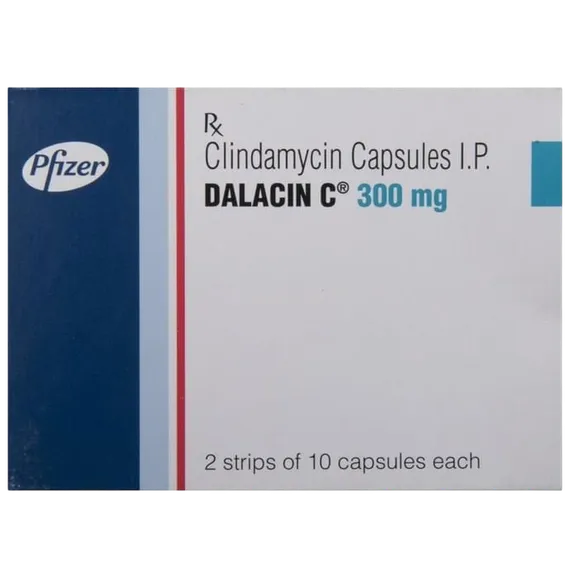
Dalacin C 300MG Capsule 10's contains Clindamycin 300 MG.
Dalacin C 300MG Capsule 10's is listed at Rs. 267.84 on Medkart. Prices can change — check the product page for the current price and pack size.
The dose of Dalacin C 300MG Capsule 10's depends on your condition, age, weight and other medicines you take, so it must be decided by your doctor. Follow the dose and duration on your prescription and do not change it on your own.
A generic medicine is one with the same active composition as the branded product — for Dalacin C 300MG Capsule 10's that is Clindamycin 300 MG. Medkart lists generic options by composition so you can compare. Ask your doctor or pharmacist before switching from Dalacin C 300MG Capsule 10's.
Yes. Dalacin C 300MG Capsule 10's requires a valid doctor's prescription.
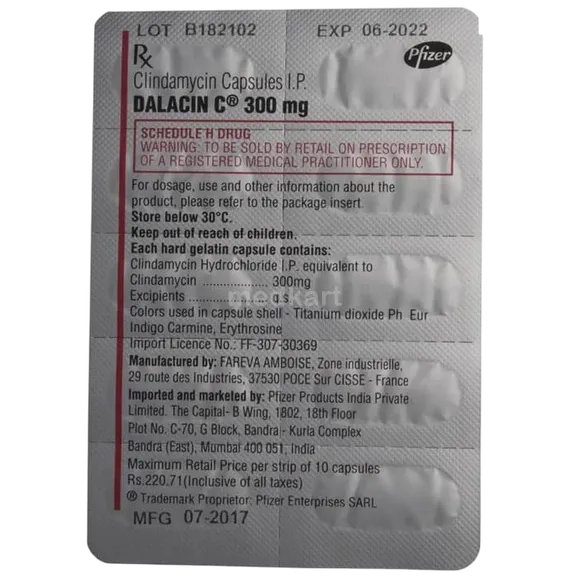
Dalacin C 300MG Capsule 10's is manufactured by Pfizer Pharmaceutical India Private Limited.
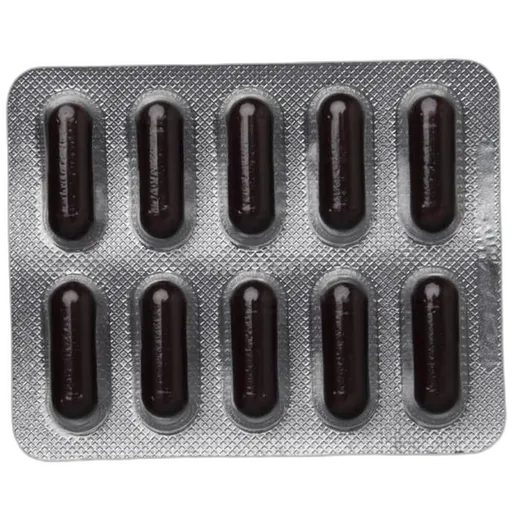
Dalacin C 300MG Capsule 10's is supplied as a capsule and is taken by the oral route.
Whether Dalacin C 300MG Capsule 10's can be taken daily, and for how long, depends on your condition and must be decided by your doctor. Do not start, extend or repeat a course of Dalacin C 300MG Capsule 10's on your own.
The timing of Dalacin C 300MG Capsule 10's depends on the dose your doctor prescribes and on the other medicines you take. Follow the timing on your prescription or ask your pharmacist.
No. Dalacin C 300MG Capsule 10's is a prescription medicine and should only be taken on a doctor's advice.
Store Dalacin C 300MG Capsule 10's in its original pack, below 25°C unless the pack states otherwise, away from direct sunlight and moisture, and out of the reach of children. Do not use it after the expiry date on the pack.


Good Medicines at affordable price. And good pharmacist who guide you with smile on their face.
Kaushal Parekh
•
Reviewed on 18-01-2024

(5/5)
Nice service All required drugs are available 😊
Meet Dobariya
•
Reviewed on 13-01-2024
(5/5)
Good
Dhara Patva
•
Reviewed on 10-02-2024
(5/5)
Medicines at affordable and discounted rates... Good service...
George Thomas
•
Reviewed on 24-01-2024
(5/5)
Great experience at medkart pharmacy, medicines are available at very affordable rate
Rajesh Nair
•
Reviewed on 17-01-2024
(5/5)
PFIZER PHARMACEUTICAL INDIA PRIVATE LIMITED
Country of Origin -
India
Medkart's sole intention is to ensure that its consumers get information that is expert-reviewed, accurate and trustworthy. However, the information contained herein should NOT be used as a substitute for the advice of a qualified physician. The information provided here is for informational purposes only. This may not cover everything about particular health conditions, medicines, generic alternatives, all possible side effects, drug interactions, warnings, alerts, lab tests, etc. Please consult your doctor and discuss all your queries related to any disease or medicine. We intend to support, not replace, the doctor-patient relationship.
10 Lakh+
Happy customers
35000+
Pin-codes Covered
75 Lakh+
Orders Delivered

Authentic Products
All WHO-GMP Certified Medicines






©2025 Medkart Pharmacy. All Rights Reserved









 10's_1.webp)