
Prescription Required

Authentic Product

India's Leading Generic Pharmacy

Secure Payment

By GLAND PHARMA LTD
MRP
₹
132
₹112.2
15 % OFF

Check Delivery
--

Composition

Content Reviewed By:
Dr. Neha Patel
, (MBBS)
Written By:
Mr. Ankit Jain
, (B.Pharm)
Like all medications, HEPARIN 5000IU INJECTION can cause side effects, although not everyone will experience them.

Allergies
Contraindicated in known allergyHeparin injection should not be used in patients with a known allergy to heparin, low‑molecular‑weight heparins, or any component of the formulation.
Common side effects of HEPARIN 5000IU INJECTION may include bruising, hematomas, pain at the injection site, and elevated liver enzymes. Serious side effects can include bleeding, Heparin-induced thrombocytopenia (HIT), hypersensitivity reactions, and osteoporosis.
HEPARIN 5000IU INJECTION is generally considered safe during pregnancy and breastfeeding. It does not cross the placenta significantly and is not expected to harm the baby when used appropriately. However, its use should be under the guidance of a healthcare provider.
HEPARIN 5000IU INJECTION dosing varies based on the patient's weight, medical condition, and desired anticoagulant effect. The dosage is usually adjusted based on regular monitoring of blood clotting parameters, such as activated partial thromboplastin time (aPTT) or anti-Xa assay.
Yes, HEPARIN 5000IU INJECTION increases the risk of bleeding. Patients should be closely monitored for signs of bleeding and inform their healthcare provider promptly if they experience any unusual bleeding or bruising.
HEPARIN 5000IU INJECTION can be used in children and the elderly. However, special consideration is required in these populations due to differences in dosing and potential age-related factors that may affect its use.
Consult your doctor or pharmacist for information about how HEPARIN 5000IU INJECTION interacts with other medications.
Patients should inform their healthcare providers about their medical history, including any bleeding disorders, liver or kidney problems, recent surgeries, and allergies, to determine the appropriate dosage and administration method. Regular monitoring of blood clotting parameters, such as activated partial thromboplastin time (aPTT) or anti-Xa assay, is crucial to maintain the desired anticoagulant effect and prevent bleeding or thrombosis. Patients should follow the prescribed dosage and administration instructions precisely and report any unusual bleeding, bruising, or allergic reactions promptly. It is advisable to avoid activities or medications that may increase the risk of bleeding while on HEPARIN 5000IU INJECTION. By adhering to these instructions and maintaining open communication with healthcare providers, patients can minimize risks and maximize the benefits of this therapy.
HEPARIN is a molecule/combination used for making HEPARIN 5000IU INJECTION. It is an anticoagulant that helps prevent blood clots.
HEPARIN 5000IU INJECTION is used to treat various cardiology conditions. Consult your doctor for more information.
Heparin injection is used to prevent and treat blood clots in veins, arteries, and the lungs. It is commonly given for conditions such as deep vein thrombosis (DVT), pulmonary embolism (PE), certain types of heart attack, and during or after major surgery or prolonged bed rest when the risk of clot formation is increased. It is also used to prevent clotting in intravenous lines and some medical devices.
Heparin injection works as an anticoagulant by enhancing the activity of antithrombin III, a natural protein that inactivates several clotting factors, including thrombin and factor Xa. By increasing the effect of antithrombin III, heparin slows down the blood clotting process and helps prevent existing clots from growing larger. It does not dissolve clots that have already formed, but it allows the body’s natural systems to break them down more effectively over time.
Heparin injection is usually given by a healthcare professional either under the skin (subcutaneously) or into a vein (intravenously). The method of administration and the dosing schedule depend on whether it is being used for prevention or treatment of clots, as well as on the patient’s clinical condition and laboratory results. In hospitals, it is typically administered by nurses or doctors. Patients should not attempt to inject heparin themselves unless they have been specifically trained and instructed by their healthcare provider.
Common side effects of heparin injection include pain, redness, or bruising at the injection site and an increased tendency to bleed, such as nosebleeds, bleeding gums, or easy bruising. Some patients may notice mild irritation or small lumps under the skin where the injection was given. These effects are usually mild, but any persistent or worsening symptoms should be reported to a healthcare professional, especially if there are signs of significant bleeding.
Serious side effects of heparin injection include severe or uncontrolled bleeding, sudden drop in blood pressure, severe headache, dizziness, weakness, coughing or vomiting blood, black or tarry stools, pink or brown urine, or unusual pain and swelling that could indicate a new clot. Another important risk is heparin‑induced thrombocytopenia (HIT), a condition where platelet counts fall and new or worsening clots may form. Signs of HIT can include new leg pain or swelling, chest pain, shortness of breath, or stroke‑like symptoms. Any of these require urgent medical attention.
Unfractionated heparin injection is often considered a preferred anticoagulant during pregnancy when blood thinning is necessary, because it does not cross the placenta and therefore does not directly affect the fetus. However, its use must be carefully supervised by a specialist, as pregnant patients are at higher risk of both clotting and bleeding complications. Dose adjustments and regular blood tests may be required. Pregnant women should never start or stop heparin on their own and should follow the treatment plan recommended by their obstetrician and hematologist or cardiologist.
Heparin injection is generally considered compatible with breastfeeding because it is a large molecule that is not expected to pass into breast milk in significant amounts or be absorbed from the infant’s gut. However, decisions about anticoagulant therapy during breastfeeding should always be made in consultation with a healthcare professional who can assess the benefits and risks for both mother and baby. Mothers should report any unusual bleeding in themselves and seek pediatric advice if they have concerns about the infant.
Heparin injection is primarily cleared by mechanisms involving the reticuloendothelial system and, at higher doses, partly by the kidneys. In patients with severe kidney or liver impairment, the response to heparin may be altered, and the risk of bleeding can increase. For this reason, people with significant liver disease, kidney disease, or both usually require closer monitoring, including regular blood tests to assess clotting status and organ function. Dose adjustments or alternative anticoagulants may be considered by the treating physician.
Alcohol can increase the risk of bleeding, especially when combined with anticoagulant medicines like heparin injection. Regular or heavy alcohol consumption may also affect liver function, which can further influence bleeding risk. Patients receiving heparin are generally advised to limit or avoid alcohol and to discuss their drinking habits honestly with their healthcare provider. Any signs of unusual bleeding should be reported promptly, and patients should not binge drink while on heparin therapy.
Heparin injection itself does not usually cause drowsiness or directly impair the ability to drive or operate machinery. However, some people may feel weak, dizzy, or unwell if they experience anemia or blood loss due to bleeding. If you notice dizziness, severe fatigue, blurred vision, or any neurological symptoms, you should avoid driving or using heavy machinery and seek medical advice. Always follow your healthcare provider’s recommendations based on your overall condition.
Before starting heparin injection, inform your doctor about any previous allergic reactions to heparin, low‑molecular‑weight heparins, or products derived from animal sources such as pork, as many heparin preparations are porcine‑derived. Also mention any history of heparin‑induced thrombocytopenia (HIT), bleeding disorders, recent surgery, stomach or intestinal ulcers, stroke, uncontrolled high blood pressure, liver or kidney disease, or use of other medicines that affect clotting. Signs of an allergic reaction to heparin can include rash, itching, swelling, difficulty breathing, or sudden drop in blood pressure, and require immediate medical attention.
Many medicines and supplements can increase the risk of bleeding when used with heparin injection. These include other anticoagulants, antiplatelet drugs such as aspirin and clopidogrel, non‑steroidal anti‑inflammatory drugs (NSAIDs) like ibuprofen, some antidepressants, and herbal products such as ginkgo, garlic, or high‑dose fish oil. You should provide your healthcare provider with a complete list of all prescription medicines, over‑the‑counter drugs, vitamins, and herbal supplements you use. Do not start or stop any medicine without medical advice while receiving heparin.
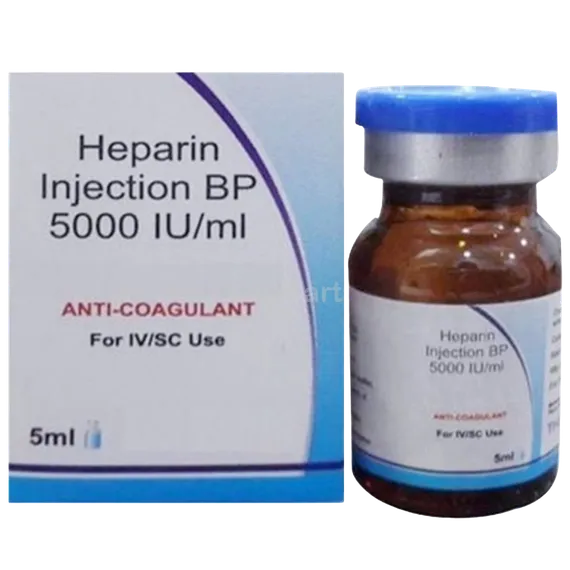
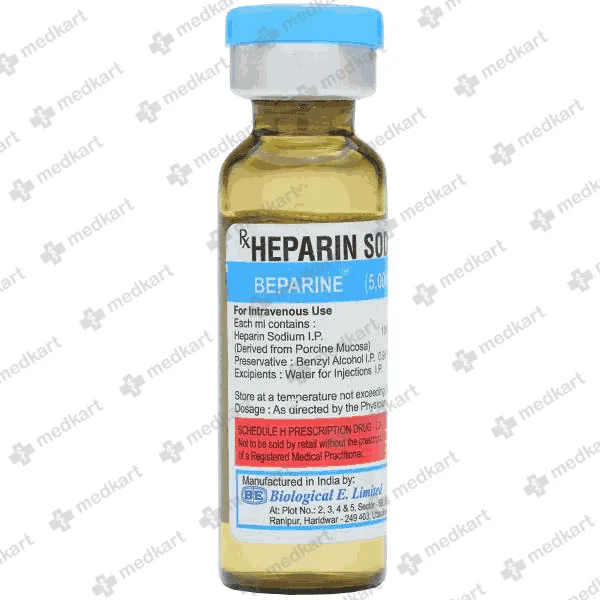
Heparin 5000IU Injection contains Heparin Sodium 5000 IU.
Heparin 5000IU Injection is listed at Rs. 112.2 on Medkart. Prices can change — check the product page for the current price and pack size.
The dose of Heparin 5000IU Injection depends on your condition, age, weight and other medicines you take, so it must be decided by your doctor. Follow the dose and duration on your prescription and do not change it on your own.
A generic medicine is one with the same active composition as the branded product — for Heparin 5000IU Injection that is Heparin Sodium 5000 IU. Medkart lists generic options by composition so you can compare. Ask your doctor or pharmacist before switching from Heparin 5000IU Injection.
Yes. Heparin 5000IU Injection requires a valid doctor's prescription.
Heparin 5000IU Injection is manufactured by Gland Pharma Ltd.
Heparin 5000IU Injection is supplied as a injection and is taken by the parenteral route.
Whether Heparin 5000IU Injection can be taken daily, and for how long, depends on your condition and must be decided by your doctor. Do not start, extend or repeat a course of Heparin 5000IU Injection on your own.
The timing of Heparin 5000IU Injection depends on the dose your doctor prescribes and on the other medicines you take. Follow the timing on your prescription or ask your pharmacist.
No. Heparin 5000IU Injection is a prescription medicine and should only be taken on a doctor's advice.
Store Heparin 5000IU Injection in its original pack, below 25°C unless the pack states otherwise, away from direct sunlight and moisture, and out of the reach of children. Do not use it after the expiry date on the pack.


Best and Affordable medicine Store thank you medkart.
Javed Malek
•
Reviewed on 09-07-2023

(5/5)
Pharmacy of generic medicines all products in generic medicines available in very low price. Thank you medkart 😊
Rosekeyu Patel
•
Reviewed on 11-01-2024
(5/5)
Nice experience, always!
Ashutosh Buch
•
Reviewed on 24-02-2023
(5/5)
Good staff and all generic medicines are available.👍
DALPAT PARMAR
•
Reviewed on 19-01-2024
(5/5)
Great experience. Quality medicine at unbelievable prices.
BRANDON FRASER
•
Reviewed on 07-01-2024
(5/5)
GLAND PHARMA LTD
Country of Origin -
India
MRP
₹
132
₹112.2
15 % OFF
Quick Links

Medkart's sole intention is to ensure that its consumers get information that is expert-reviewed, accurate and trustworthy. However, the information contained herein should NOT be used as a substitute for the advice of a qualified physician. The information provided here is for informational purposes only. This may not cover everything about particular health conditions, medicines, generic alternatives, all possible side effects, drug interactions, warnings, alerts, lab tests, etc. Please consult your doctor and discuss all your queries related to any disease or medicine. We intend to support, not replace, the doctor-patient relationship.
10 Lakh+
Happy customers
35000+
Pin-codes Covered
75 Lakh+
Orders Delivered

Authentic Products
All WHO-GMP Certified Medicines






©2025 Medkart Pharmacy. All Rights Reserved







 10's_1.webp)