
Prescription Required

Authentic Product

India's Leading Generic Pharmacy

Secure Payment

By SUN PHARMACEUTICAL INDUSTRIES LTD
MRP
₹
224.06
₹190.45
15 % OFF

Check Delivery
--

Composition

Content Reviewed By:
Dr. Sanjay Mehta
, (MBBS)
Written By:
Ms. Kavita Desai
, (B.Pharm)
Most side effects do not require any medical attention and disappear as your body adjusts to the medicine. Consult your doctor if they persist or if you’re worried about them.

General Ophthalmic Precautions
Use under specialist supervisionNepalact Eye Drops is intended for topical ophthalmic use only and must not be injected, ingested, or applied to other body sites.
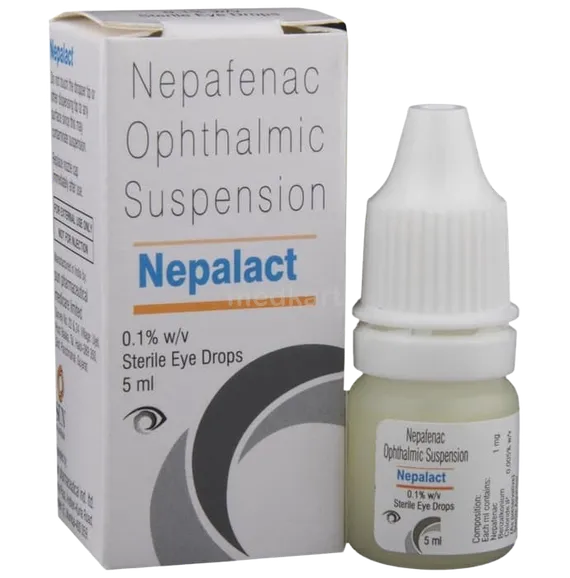
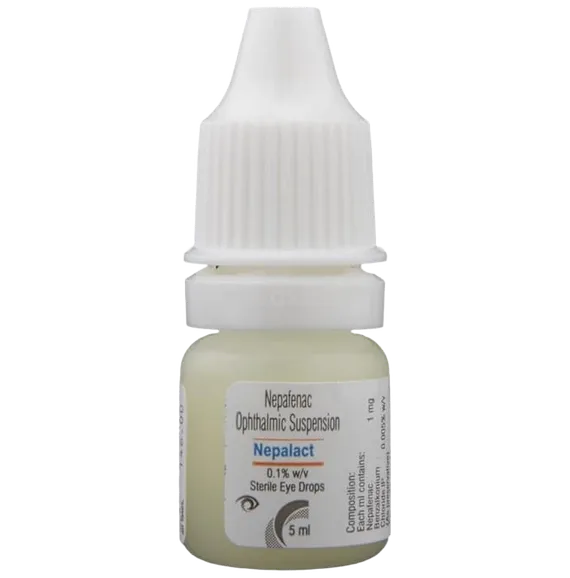
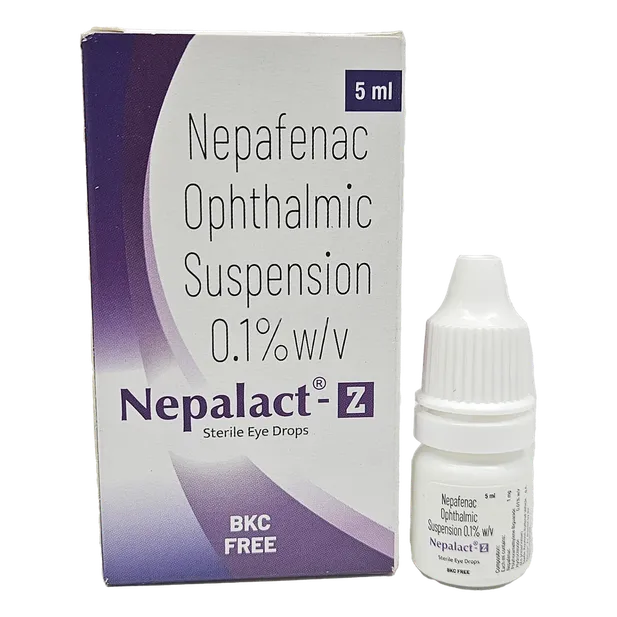
NEPALACT EYE DROPS 5 ML is a medication used to treat certain eye conditions.
Use NEPALACT EYE DROPS 5 ML as prescribed by your doctor. Typically, it is instilled into the affected eye a few times daily.
Potential side effects of NEPALACT EYE DROPS 5 ML may include eye irritation, stinging, redness, or blurred vision. If these side effects persist or worsen, inform your doctor.
Consult your doctor regarding wearing contact lenses while using NEPALACT EYE DROPS 5 ML.
Store NEPALACT EYE DROPS 5 ML at room temperature, away from direct sunlight and moisture. Keep out of reach of children and pets.
Nepalact Eye Drops is an ophthalmic solution containing nepafenac 0.1% w/v, a non-steroidal anti-inflammatory drug (NSAID). It is primarily used to reduce pain and inflammation associated with cataract surgery and, in some clinical settings, other post-operative inflammatory conditions of the front part of the eye, as directed by an ophthalmologist.
Nepafenac is a prodrug that penetrates the cornea and is converted within ocular tissues to its active form, amfenac. Amfenac inhibits cyclo-oxygenase (COX) enzymes, which decreases the production of prostaglandins. Prostaglandins are chemical mediators that contribute to inflammation, pain, and swelling. By reducing prostaglandin synthesis, nepafenac helps control post-operative ocular inflammation and discomfort.
Use Nepalact Eye Drops exactly as prescribed by your ophthalmologist. The number of drops per dose, frequency of administration, and duration of treatment depend on the indication and your individual clinical situation. Do not change the dosing schedule, start, or stop the medication on your own. If you are unsure about how often to use the drops or for how long, consult your eye specialist or refer to the instructions provided with your prescription.
Wash your hands thoroughly before use. Tilt your head back, gently pull down the lower eyelid to create a small pocket, and hold the bottle above the eye without touching the eye or eyelashes. Instill the prescribed number of drops into the pocket, then close your eye gently for 1–2 minutes without squeezing. You may perform gentle pressure on the inner corner of the eye (nasolacrimal occlusion) if advised, to reduce systemic absorption. Avoid rubbing your eyes immediately after instillation.
Nepalact Eye Drops is often used alongside other ophthalmic medications such as antibiotics, corticosteroids, or lubricating drops after eye surgery. If you are using multiple eye drops, they should generally be administered at least 5–10 minutes apart to prevent dilution or washout. Ointments are usually applied last. Always follow the sequence and spacing recommended by your ophthalmologist, and inform them of all eye products you are using, including over-the-counter preparations.
Common side effects include transient burning or stinging on instillation, mild eye irritation, redness, foreign body sensation, and temporary blurred vision. Less common effects may include eye itching, increased tearing, eyelid swelling, or headache. Rare but serious adverse events, such as corneal epithelial breakdown, corneal thinning, erosion, or ulceration, can occur, particularly in patients with pre-existing corneal disease or after prolonged use. If you experience severe pain, marked redness, sudden vision changes, or increased light sensitivity, seek urgent ophthalmic evaluation.
Contact lens wear is generally not recommended in the immediate post-operative period after cataract or other eye surgery, regardless of the medication used. If your ophthalmologist later allows contact lens use, lenses should be removed before instilling Nepalact Eye Drops and reinserted only after an interval advised by your doctor. Always follow your surgeon’s specific instructions regarding contact lens use during treatment.
Data on the use of topical nepafenac in pregnancy and breastfeeding are limited. Systemic NSAIDs can affect fetal and neonatal outcomes, especially in late pregnancy. Although systemic absorption from eye drops is relatively low, Nepalact Eye Drops should be used during pregnancy or breastfeeding only if the potential benefit justifies the potential risk, as assessed by a physician. Pregnant or breastfeeding individuals should discuss alternative options and risk–benefit considerations with their ophthalmologist and obstetrician before use.
If you miss a scheduled dose, instill it as soon as you remember, unless it is almost time for your next dose. If it is close to the next scheduled dose, skip the missed dose and resume your regular dosing schedule. Do not instill extra drops to make up for a missed dose, as this does not improve efficacy and may increase the risk of irritation or other side effects. If you frequently forget doses, inform your doctor, as this may affect treatment outcomes.
Nepalact Eye Drops should not be used by individuals with known hypersensitivity to nepafenac, other NSAIDs (including aspirin), or any component of the formulation. Caution is advised in patients with a history of asthma, urticaria, or acute rhinitis triggered by aspirin or other NSAIDs, as cross-reactivity can occur. Patients with pre-existing corneal disease, severe dry eye, diabetes, rheumatoid arthritis, or bleeding disorders should use this medicine only under close ophthalmic supervision. Always inform your doctor about your medical history before starting treatment.
Immediately after instillation, Nepalact Eye Drops can cause temporary blurred vision or mild visual disturbance. You should not drive, operate machinery, or perform tasks requiring clear vision until your sight has fully cleared. If you experience persistent blurred vision, significant visual changes, or eye discomfort that interferes with daily activities, contact your ophthalmologist promptly for assessment.
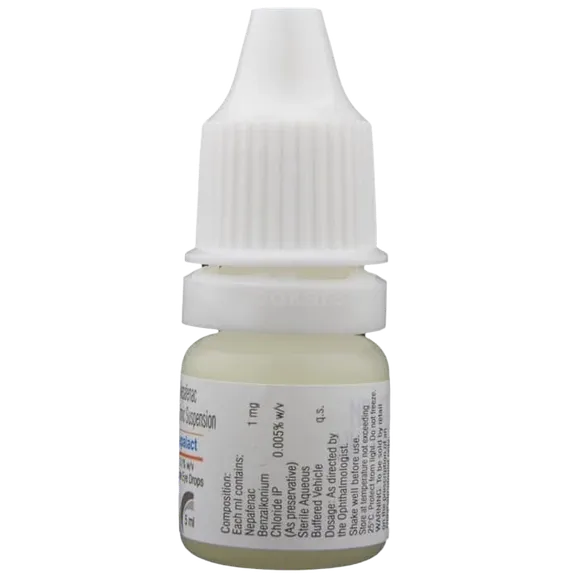
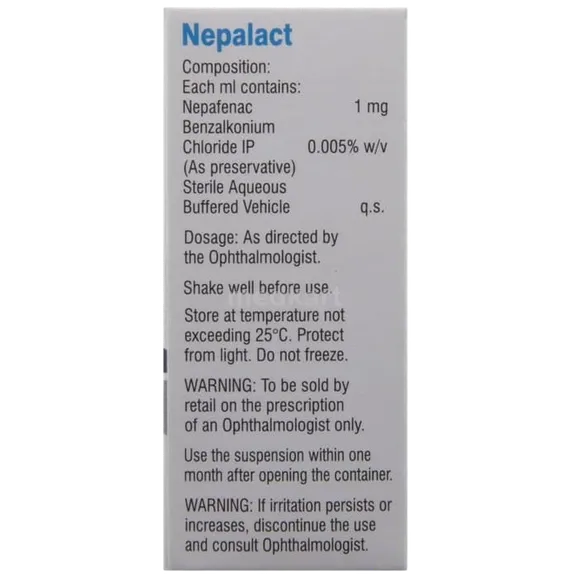
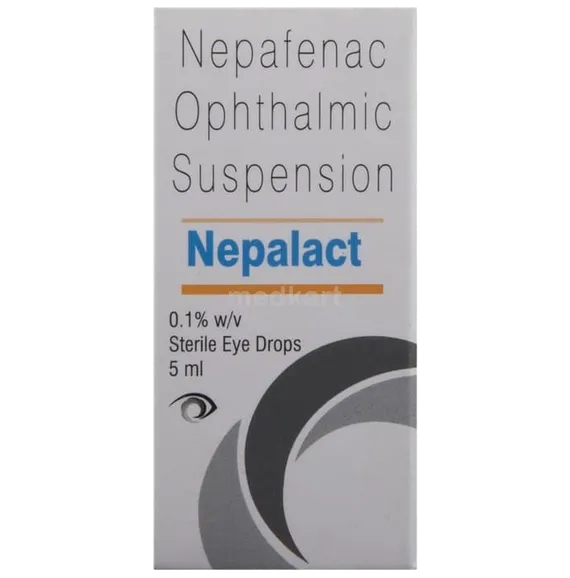
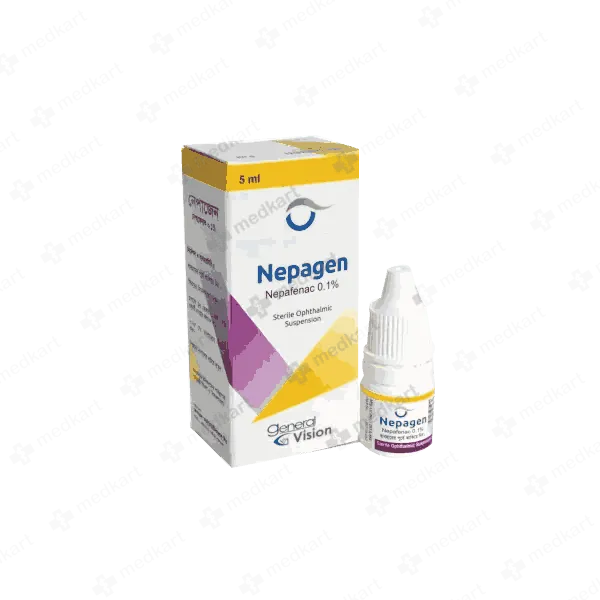
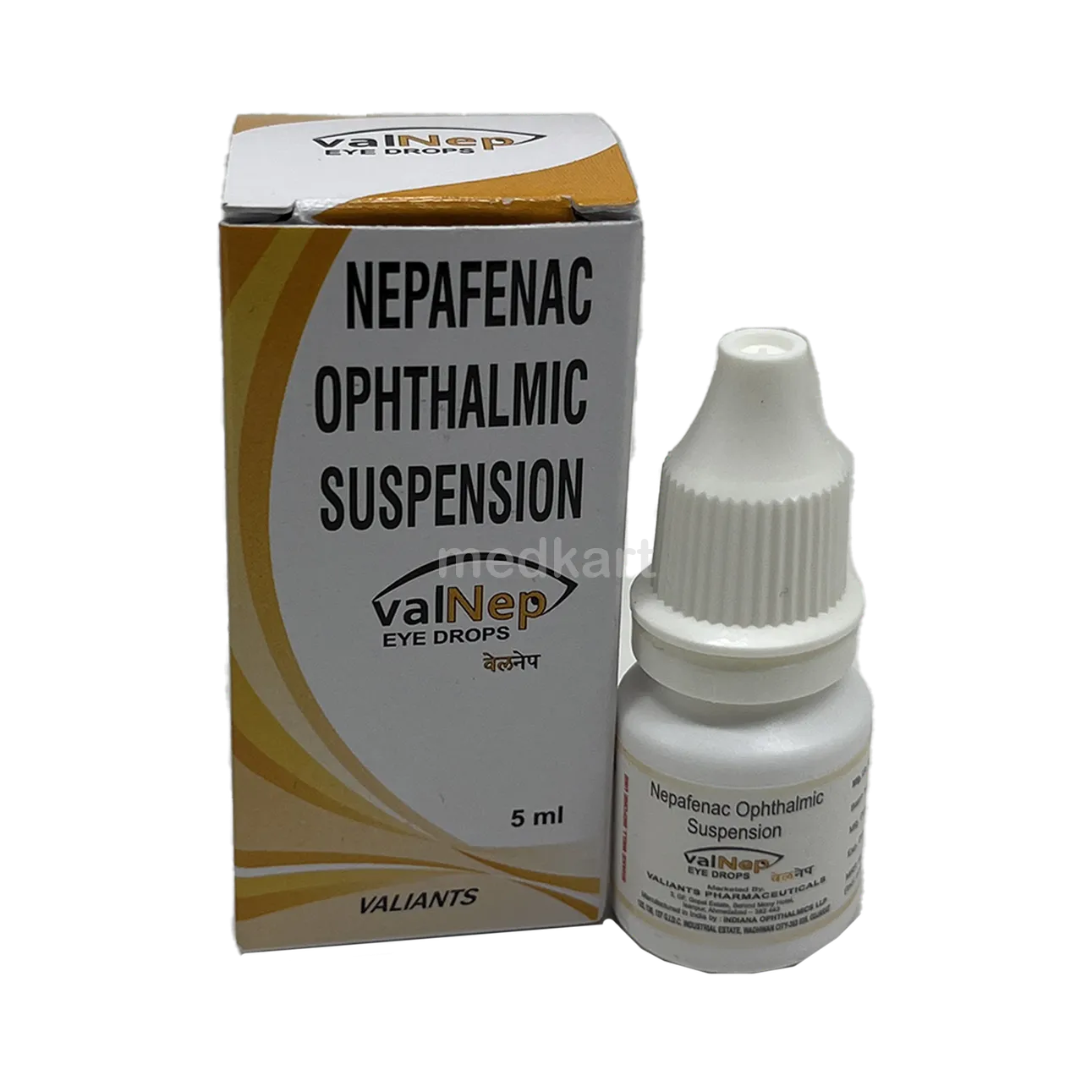
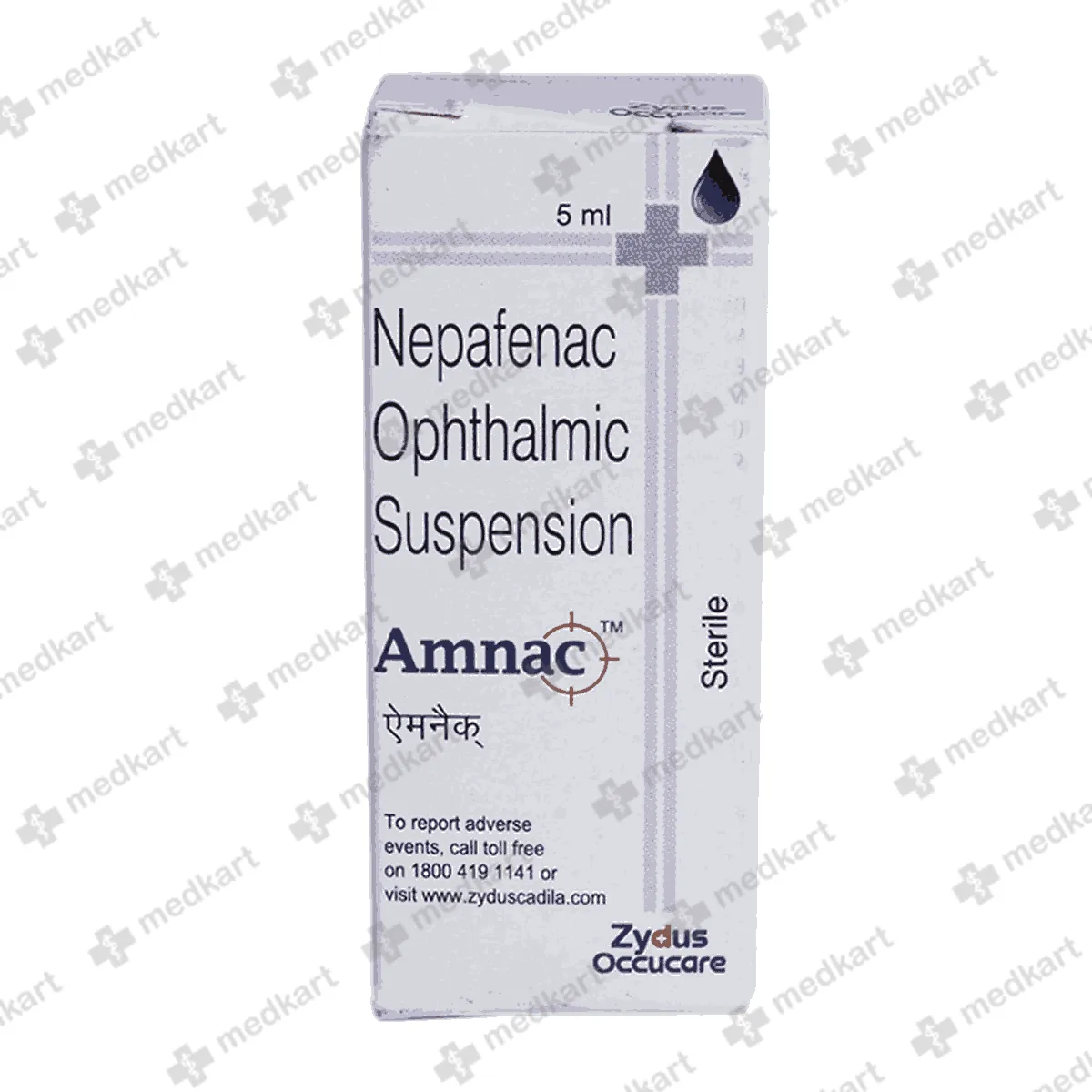
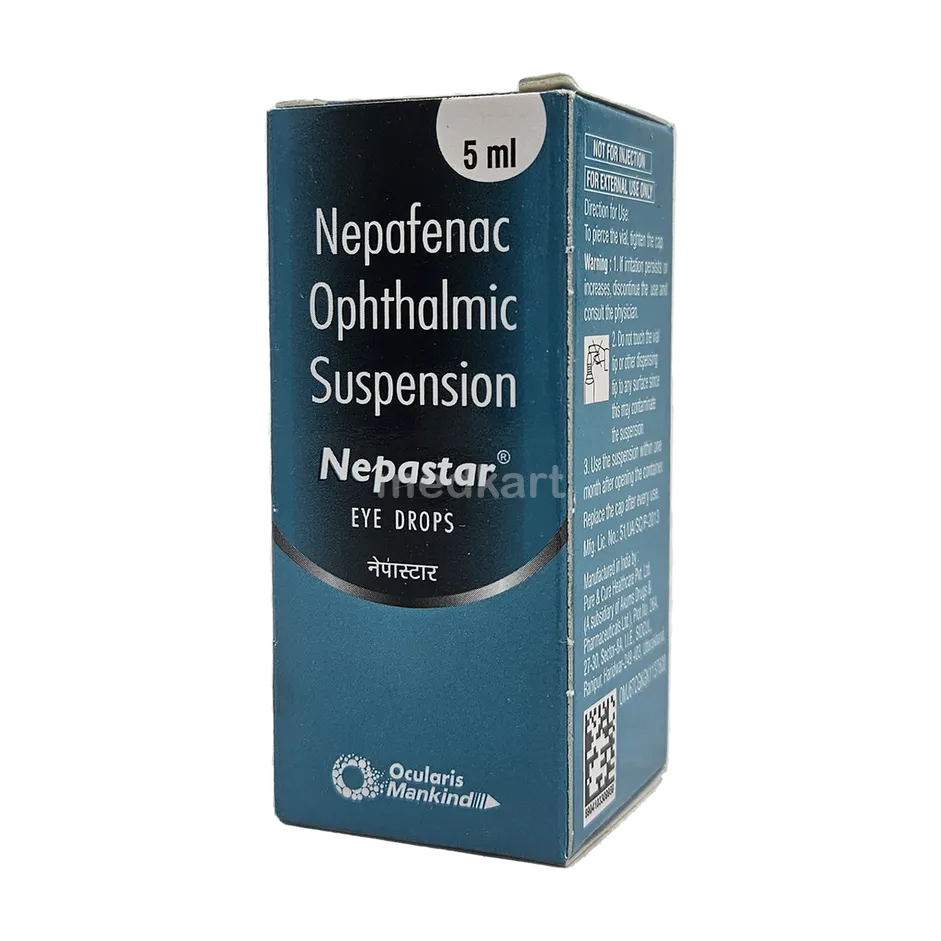
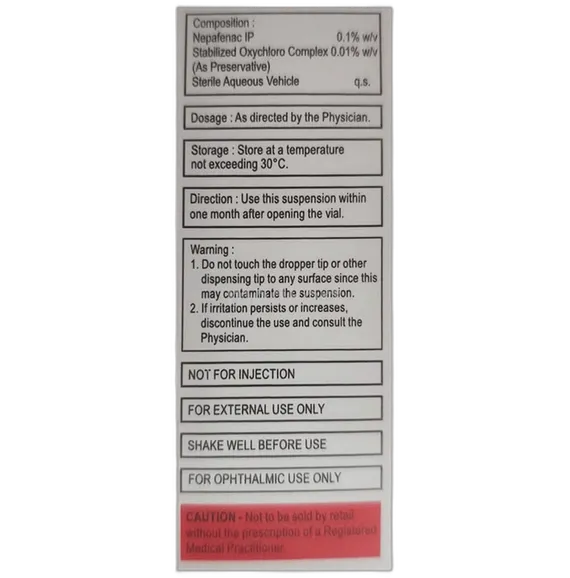
Nepalact Eye Drops 5 ML contains Nepafenac 0.1% W/v.
Nepalact Eye Drops 5 ML is listed at Rs. 190.45 on Medkart. Prices can change — check the product page for the current price and pack size.
The dose of Nepalact Eye Drops 5 ML depends on your condition, age, weight and other medicines you take, so it must be decided by your doctor. Follow the dose and duration on your prescription and do not change it on your own.
A generic medicine is one with the same active composition as the branded product — for Nepalact Eye Drops 5 ML that is Nepafenac 0.1% W/v. Medkart lists generic options by composition so you can compare. Ask your doctor or pharmacist before switching from Nepalact Eye Drops 5 ML.
Yes. Nepalact Eye Drops 5 ML requires a valid doctor's prescription.
Nepalact Eye Drops 5 ML is manufactured by Sun Pharmaceutical Industries Ltd.
Nepalact Eye Drops 5 ML is supplied as a drops and is taken by the not applicable route.
Whether Nepalact Eye Drops 5 ML can be taken daily, and for how long, depends on your condition and must be decided by your doctor. Do not start, extend or repeat a course of Nepalact Eye Drops 5 ML on your own.
The timing of Nepalact Eye Drops 5 ML depends on the dose your doctor prescribes and on the other medicines you take. Follow the timing on your prescription or ask your pharmacist.
No. Nepalact Eye Drops 5 ML is a prescription medicine and should only be taken on a doctor's advice.
Store Nepalact Eye Drops 5 ML in its original pack, below 25°C unless the pack states otherwise, away from direct sunlight and moisture, and out of the reach of children. Do not use it after the expiry date on the pack.


Generic medicines available at low cost
nitin kanwe
•
Reviewed on 09-07-2023

(5/5)
Super
Elvis
•
Reviewed on 25-01-2024
(5/5)
Happy
Prince Sharma
•
Reviewed on 18-04-2023
(5/5)
Amazing service and customer friendly
Deepak Patel
•
Reviewed on 05-11-2022

(3/5)
Nice experience, always!
Ashutosh Buch
•
Reviewed on 24-02-2023
(5/5)
SUN PHARMACEUTICAL INDUSTRIES LTD
Country of Origin -
India
MRP
₹
224.06
₹190.45
15 % OFF
Quick Links

Medkart's sole intention is to ensure that its consumers get information that is expert-reviewed, accurate and trustworthy. However, the information contained herein should NOT be used as a substitute for the advice of a qualified physician. The information provided here is for informational purposes only. This may not cover everything about particular health conditions, medicines, generic alternatives, all possible side effects, drug interactions, warnings, alerts, lab tests, etc. Please consult your doctor and discuss all your queries related to any disease or medicine. We intend to support, not replace, the doctor-patient relationship.
10 Lakh+
Happy customers
35000+
Pin-codes Covered
75 Lakh+
Orders Delivered

Authentic Products
All WHO-GMP Certified Medicines






©2025 Medkart Pharmacy. All Rights Reserved






 10's_1.webp)