
Authentic Product

India's Leading Generic Pharmacy

Secure Payment

By EMAMI LIMITED (ZANDU)
MRP
₹
44
₹41.8
5 % OFF
₹4.18 Only /
Tablet
Check Delivery
--

Composition

Content Reviewed By:
Dr. Sanjay Mehta
, (MBBS)
Written By:
Ms. Kavita Desai
, (B.Pharm)
NITYAM 10MG TABLET 10'S may cause side effects, although not everyone experiences them. Common side effects may include abdominal discomfort, such as bloating, gas, or stomach cramps. Some individuals might experience nausea or vomiting. Diarrhea is also a possible side effect. Less common side effects could involve allergic reactions, which may manifest as skin rashes, itching, or swelling. Infrequent but more serious side effects may include electrolyte imbalances (such as low potassium) with prolonged use, which can lead to muscle weakness, irregular heartbeat, or other health issues. It is crucial to consult your doctor if you experience any persistent or severe side effects.

General Use and Overuse
Short-term use onlyNityam tablet should be used for short-term relief of occasional constipation and not as a routine daily aid unless specifically advised by a healthcare professional.
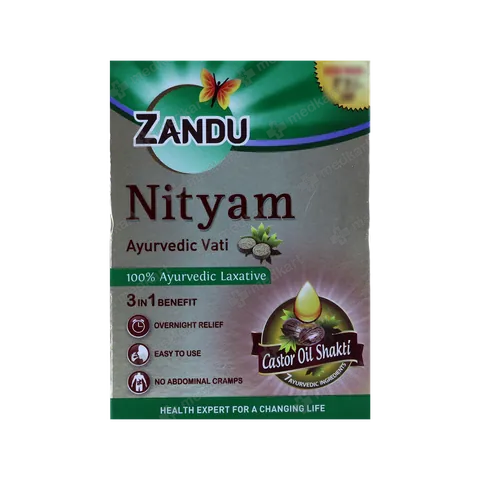
NITYAM 10MG TABLET 10'S is a medicine used to treat constipation.
The main ingredient in NITYAM 10MG TABLET 10'S is Senna, a natural laxative.
NITYAM 10MG TABLET 10'S is usually taken at night, before sleeping, with water. Follow the dosage prescribed by your doctor.
Common side effects of NITYAM 10MG TABLET 10'S may include abdominal cramps, diarrhea, and dehydration.
Consult a doctor before taking NITYAM 10MG TABLET 10'S during pregnancy.
Prolonged use of NITYAM 10MG TABLET 10'S can alter bowel habits, so it should be used only when needed.
NITYAM 10MG TABLET 10'S can be taken with or without food, but it is best to take it with water.
NITYAM 10MG TABLET 10'S can interfere with other medications, so tell your doctor about all the medicines you are taking.
Store NITYAM 10MG TABLET 10'S at room temperature, away from direct sunlight and moisture.
In case of an overdose of NITYAM 10MG TABLET 10'S, contact a doctor immediately.
Consult a doctor before giving NITYAM 10MG TABLET 10'S to children.
NITYAM 10MG TABLET 10'S does not have any specific effect on the ability to drive, but if you feel dizzy, do not drive.
Consult a doctor before taking NITYAM 10MG TABLET 10'S with alcohol.
If you miss a dose of NITYAM 10MG TABLET 10'S, take it as soon as possible. If it is almost time for your next dose, skip the missed dose and continue with your regular schedule.
Consult a doctor before using NITYAM 10MG TABLET 10'S for a long time, as it can alter bowel habits.
Nityam tablet is primarily used for the short-term relief of constipation and to support regular bowel movements. It is an Ayurvedic or herbal-based laxative that may help soften stools, reduce straining, and relieve a sense of abdominal heaviness associated with sluggish bowels. Some formulations also claim benefits in reducing bloating and supporting digestion, but these claims may not be supported by robust clinical trial data. It should not be used as a long-term solution for chronic constipation without medical supervision.
Nityam tablet typically contains a combination of herbal ingredients that act as mild laxatives. These herbs may increase intestinal motility, draw water into the bowel, and soften the stool, making it easier to pass. Some components may have a stimulant effect on the colon, while others may have a bulk-forming or stool-softening action. Because formulations differ between manufacturers and detailed pharmacological studies are limited, the exact mechanism can vary, and individual response may differ.
Nityam tablet is generally intended for short-term or intermittent use to relieve occasional constipation. Long-term daily use of any laxative, including herbal products, can lead to dependence, where the bowel becomes less responsive without the medicine. Prolonged overuse may also cause electrolyte imbalances, dehydration, and, in some cases, worsening constipation when the medicine is stopped. If you need a laxative regularly for more than a few days or weeks, you should consult a healthcare professional to identify and treat the underlying cause.
Safety data for Nityam tablet in pregnancy are limited, and herbal combinations can vary between brands. Some herbal laxatives may stimulate uterine contractions or cause significant fluid and electrolyte loss if diarrhea occurs. Therefore, Nityam tablet should not be used in pregnancy without explicit advice from an obstetrician or qualified healthcare professional. For pregnant women, non-pharmacological measures such as increased dietary fiber, adequate hydration, and gentle physical activity are usually preferred first-line approaches for constipation.
There is insufficient high-quality evidence regarding the safety of Nityam tablet during breastfeeding. Certain herbal components or their metabolites may pass into breast milk and could potentially affect the nursing infant, for example by causing loose stools. Breastfeeding mothers should consult their doctor before using Nityam tablet or any herbal laxative. If a laxative is needed, a clinician can recommend options with better-established safety profiles in lactation.
Common side effects associated with herbal laxatives like Nityam tablet may include abdominal cramps, increased bowel frequency, loose stools or diarrhea, and occasional nausea. Excessive dosing or sensitive individuals may experience significant diarrhea, leading to dehydration, dizziness, or weakness. Rarely, electrolyte disturbances such as low potassium can occur with prolonged or heavy use. If you experience severe abdominal pain, blood in stools, persistent vomiting, or symptoms of dehydration, you should stop the medicine and seek medical attention promptly.
Nityam tablet should generally be avoided in people with known intestinal obstruction, severe abdominal pain of unknown origin, suspected appendicitis, acute surgical abdomen, severe dehydration, or active inflammatory bowel disease flare unless specifically advised by a specialist. Individuals with significant kidney or heart disease, elderly patients, and those on multiple medicines should use it only under medical supervision due to the risk of electrolyte imbalance. People with known allergy or hypersensitivity to any of the herbal ingredients should not take Nityam tablet.
Nityam tablet may affect the absorption of other oral medicines by altering intestinal transit time, especially if it causes diarrhea. Medicines with a narrow therapeutic index, such as certain cardiac drugs, antiepileptics, anticoagulants, or immunosuppressants, may be particularly affected. To reduce interaction risk, a healthcare professional may advise spacing Nityam tablet and other medicines by several hours. You should inform your doctor and pharmacist about all prescription medicines, over-the-counter products, and herbal supplements you are taking before starting Nityam tablet.
Safety and efficacy data for Nityam tablet in children are limited, and the herbal composition and strength can vary between brands. Children are more vulnerable to dehydration and electrolyte disturbances from diarrhea or overuse of laxatives. Therefore, Nityam tablet should not be given to children without direct medical advice. Pediatric constipation should be evaluated by a healthcare professional, who can recommend age-appropriate dietary measures and, if needed, medicines with established pediatric dosing and safety profiles.
Even when using Nityam tablet, lifestyle measures remain essential for managing constipation and preventing recurrence. These include drinking adequate fluids unless medically restricted, consuming a diet rich in fiber from fruits, vegetables, and whole grains, engaging in regular physical activity, and responding promptly to the urge to pass stools rather than delaying. Establishing a regular toilet routine, such as attempting bowel movements after meals, can also help. If constipation persists despite these measures and short-term laxative use, a medical evaluation is recommended.
With frequent or prolonged use, stimulant or herbal laxatives like some formulations of Nityam tablet can lead to laxative dependence. In this situation, the colon may become less responsive, and normal bowel movements may be difficult without the medicine. Over time, this can paradoxically worsen constipation when the laxative is reduced or stopped. To minimize this risk, Nityam tablet should be used at the lowest effective frequency for the shortest possible duration, and persistent constipation should be assessed by a healthcare professional.
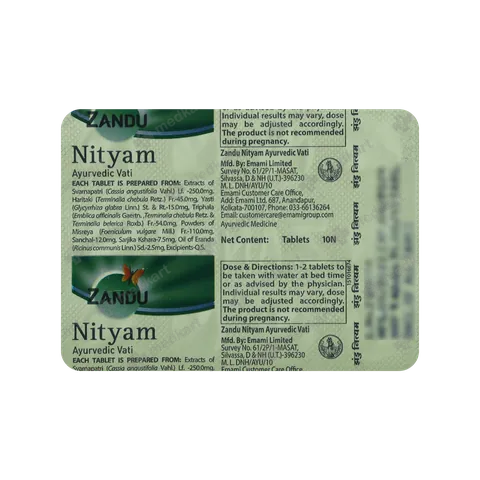
Nityam 10MG Tablet 10's contains Ayurvedic.
Nityam 10MG Tablet 10's is listed at Rs. 41.8 on Medkart. Prices can change — check the product page for the current price and pack size.
The dose of Nityam 10MG Tablet 10's depends on your condition, age, weight and other medicines you take, so it must be decided by your doctor. Follow the dose and duration on your prescription and do not change it on your own.
A generic medicine is one with the same active composition as the branded product — for Nityam 10MG Tablet 10's that is Ayurvedic. Medkart lists generic options by composition so you can compare. Ask your doctor or pharmacist before switching from Nityam 10MG Tablet 10's.
Nityam 10MG Tablet 10's is listed as not requiring a prescription. Check with your pharmacist if unsure.
Nityam 10MG Tablet 10's is manufactured by Emami Limited (zandu).
Nityam 10MG Tablet 10's is supplied as a tablet and is taken by the oral route.
Whether Nityam 10MG Tablet 10's can be taken daily, and for how long, depends on your condition and must be decided by your doctor. Do not start, extend or repeat a course of Nityam 10MG Tablet 10's on your own.
The timing of Nityam 10MG Tablet 10's depends on the dose your doctor prescribes and on the other medicines you take. Follow the timing on your prescription or ask your pharmacist.
Nityam 10MG Tablet 10's is listed as not requiring a prescription, but it is still safest to check with a doctor or pharmacist before taking it, especially alongside other medicines.
Store Nityam 10MG Tablet 10's in its original pack, below 25°C unless the pack states otherwise, away from direct sunlight and moisture, and out of the reach of children. Do not use it after the expiry date on the pack.


Good discount available on Generic medicines and supportive staff. Thank you.
ujjawal bhatt
•
Reviewed on 08-01-2024

(5/5)
Very good place for medicine allmost all the medicine are available at discounted rate.
Sachin Dodhiwala
•
Reviewed on 10-03-2024
(5/5)
Good
Dhara Patva
•
Reviewed on 10-02-2024
(5/5)
Good
tarif Malek
•
Reviewed on 15-01-2024
(5/5)
Generic medicines at reasonable rates.
Narmawala Anzar Mo.Ilyas
•
Reviewed on 22-04-2024
(5/5)
EMAMI LIMITED (ZANDU)
Country of Origin -
India
MRP
₹
44
₹41.8
5 % OFF
Quick Links

Medkart's sole intention is to ensure that its consumers get information that is expert-reviewed, accurate and trustworthy. However, the information contained herein should NOT be used as a substitute for the advice of a qualified physician. The information provided here is for informational purposes only. This may not cover everything about particular health conditions, medicines, generic alternatives, all possible side effects, drug interactions, warnings, alerts, lab tests, etc. Please consult your doctor and discuss all your queries related to any disease or medicine. We intend to support, not replace, the doctor-patient relationship.
10 Lakh+
Happy customers
35000+
Pin-codes Covered
75 Lakh+
Orders Delivered

Authentic Products
All WHO-GMP Certified Medicines






©2025 Medkart Pharmacy. All Rights Reserved






 10's_1.webp)