
Prescription Required

Authentic Product

India's Leading Generic Pharmacy

Secure Payment

By ARISTO PHARMACEUTICALS PRIVATE LIMITED
MRP
₹
100.03
₹85.03
15 % OFF

Check Delivery
--

Content Reviewed By:
Dr. Manoj Shah
, (MBBS)
Written By:
Ms. Priyanka Shah
, (B.Pharm)
While SMUTH Suspension is generally well-tolerated, some individuals may experience side effects. These can include: * **Common Side Effects:** * Nausea * Vomiting * Diarrhea * Constipation * Abdominal discomfort or cramping * Loss of appetite * **Uncommon Side Effects:** * Allergic reactions (rash, itching, hives, swelling of the face, lips, or tongue) * Dizziness * Headache **Important Considerations:** * This is not an exhaustive list of all possible side effects. If you experience any unusual symptoms while taking SMUTH Suspension, consult your doctor or pharmacist immediately. * The frequency and severity of side effects can vary from person to person. * Inform your doctor about any pre-existing medical conditions or medications you are taking, as they may influence the risk of side effects.

Allergies
Contraindicated if allergicDo not use Smuth syrup if you are known to be allergic to any of its ingredients.
Smuth Suspension 110 ml is an antacid and anti-ulcer medicine used to treat acidity, heartburn, and stomach ulcers.
Smuth Suspension 110 ml is used to treat acidity, heartburn, stomach ulcers, and esophagitis.
Smuth Suspension 110 ml works by neutralizing the acid in the stomach, providing relief from acidity and heartburn.
The dosage of Smuth Suspension 110 ml is determined by the doctor. Generally, it is taken 2-3 times a day after meals.
Common side effects of Smuth Suspension 110 ml include constipation, diarrhea, and abdominal pain.
Pregnant women should consult a doctor before using Smuth Suspension 110 ml.
Breastfeeding women should consult a doctor before using Smuth Suspension 110 ml.
Store Smuth Suspension 110 ml at room temperature, away from direct sunlight and heat.
Smuth Suspension 110 ml may interact with certain medications. Therefore, inform your doctor about all your medications.
An overdose of Smuth Suspension 110 ml can be dangerous. Seek immediate medical attention if you overdose.
Drinking alcohol with Smuth Suspension 110 ml may increase side effects. Consult a doctor before drinking alcohol.
Smuth Suspension 110 ml usually starts to take effect within 15-30 minutes.
Smuth Suspension 110 ml is usually taken after meals, but it can also be taken on an empty stomach as advised by the doctor.
If you miss a dose of Smuth Suspension 110 ml, take it as soon as you remember. If it is close to the time for your next dose, skip the missed dose and continue with your regular dosing schedule.
Long-term use of Smuth Suspension 110 ml should be avoided without consulting a doctor.
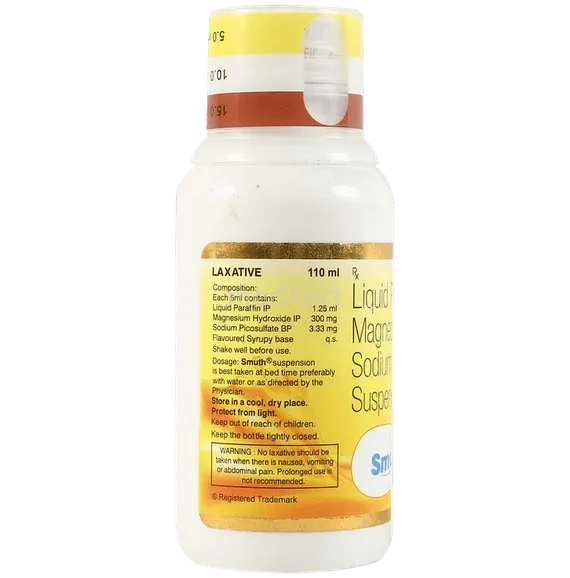
Smuth syrup is an oral laxative suspension that usually contains liquid paraffin, magnesium hydroxide, and sodium picosulfate. It is used for short‑term relief of constipation and to ease the passage of hard or painful stools. By softening the stool, drawing water into the bowel, and stimulating intestinal movements, it helps promote a more comfortable bowel movement. It may also be prescribed in certain anorectal conditions, such as haemorrhoids or anal fissures, where straining should be minimized, but only under medical supervision.
Smuth syrup works through three complementary mechanisms. Liquid paraffin acts as a lubricant, coating and softening the stool and intestinal lining to reduce friction during defecation. Magnesium hydroxide is an osmotic laxative that attracts water into the intestinal lumen, increasing stool bulk and softness, which stimulates peristalsis. Sodium picosulfate is a stimulant laxative that is converted in the colon into an active compound that directly stimulates the colonic nerve plexus, enhancing propulsive contractions. Together, these actions facilitate easier and more predictable bowel evacuation.
The onset of action of Smuth syrup can vary between individuals, but bowel movement typically occurs within several hours after administration, often within 6 to 12 hours. The timing may depend on factors such as the severity of constipation, individual bowel motility, diet, and fluid intake. Because of this delayed but predictable effect, some clinicians may advise taking it at a time of day that allows access to a toilet when the effect is expected, for example in the evening so that a bowel movement may occur the following morning. Always follow your doctor’s timing instructions.
Smuth syrup is not intended for long‑term or daily use without medical supervision. Prolonged or excessive use of stimulant laxatives such as sodium picosulfate can lead to dependence, reduced natural bowel motility, electrolyte disturbances, and worsening constipation when the medicine is stopped. If you find that you need a laxative frequently, you should consult a healthcare professional to identify underlying causes and to discuss safer long‑term strategies, such as dietary changes, increased fluid intake, physical activity, or alternative medications that are more suitable for chronic use.
Common side effects of Smuth syrup include abdominal cramps, colicky pain, bloating, flatulence, nausea, and a sense of urgency to pass stool. Loose stools or mild diarrhoea can occur, particularly if the amount taken is higher than needed or if you are sensitive to stimulant laxatives. In some individuals, rectal irritation or soreness may be noticed due to frequent bowel movements. These effects are usually mild and transient. However, if you experience persistent diarrhoea, severe abdominal pain, blood in stools, dizziness, or signs of dehydration such as excessive thirst or reduced urination, seek medical attention promptly.
Smuth syrup should generally be avoided in people with known or suspected intestinal obstruction, acute surgical abdomen, severe abdominal pain of unknown origin, active inflammatory bowel disease flare (such as severe ulcerative colitis or Crohn’s disease), severe dehydration, or significant electrolyte imbalance unless specifically advised by a specialist. It should also be avoided in individuals with known hypersensitivity to liquid paraffin, magnesium hydroxide, sodium picosulfate, or any excipients in the formulation. Patients with significant kidney impairment, heart failure, or those on medicines that affect electrolyte balance should use it only under close medical supervision.
Use of Smuth syrup during pregnancy should be based on a careful risk–benefit assessment by a healthcare professional. Data on the combined use of liquid paraffin, magnesium hydroxide, and sodium picosulfate in pregnancy are limited. While some components, such as magnesium hydroxide, are generally considered to have a relatively favourable safety profile when used appropriately, stimulant laxatives like sodium picosulfate are usually reserved for situations where non‑pharmacological measures and bulk‑forming agents have not been effective. Pregnant women should not self‑medicate with Smuth syrup and should consult their obstetrician before using any laxative.
Information on the excretion of the combined components of Smuth syrup into breast milk is limited. Magnesium salts and liquid paraffin are minimally absorbed systemically, so significant transfer into breast milk is unlikely, but sodium picosulfate is a stimulant laxative and its active metabolites may theoretically affect the nursing infant, for example by causing loose stools. Therefore, Smuth syrup should be used with caution during breastfeeding and only if clearly needed, after consultation with a healthcare professional. If used, the infant should be monitored for changes in stool frequency or consistency and for signs of dehydration.
Use of Smuth syrup in children should only occur under direct medical supervision. Children are more susceptible to fluid and electrolyte disturbances and may be more sensitive to stimulant laxatives. The appropriate choice of laxative, the amount, and the duration of use depend on the child’s age, weight, underlying cause of constipation, and overall health status. Parents or caregivers should not give Smuth syrup or any other stimulant‑containing laxative to a child without specific instructions from a paediatrician, and should seek medical advice if constipation is persistent or associated with pain, vomiting, or poor growth.
Yes, Smuth syrup can interact with other medicines. By accelerating intestinal transit, it may reduce the absorption and effectiveness of some orally administered drugs if taken too close together in time. Magnesium hydroxide can affect the absorption of certain medications, including some antibiotics and oral iron preparations, by altering gastric pH or binding to them. In addition, excessive use of laxatives can disturb electrolyte balance, which may influence the action of drugs such as cardiac glycosides and certain diuretics. To minimize interactions, other oral medicines are often taken at a different time of day, and you should inform your doctor and pharmacist about all medicines and supplements you are using.
If you are using Smuth syrup on a regular schedule and miss a dose, take it when you remember, unless it is almost time for the next scheduled administration. In that case, skip the missed dose and resume your usual schedule; do not take extra to make up for a missed dose. If you accidentally take more than recommended, you may experience pronounced diarrhoea, abdominal cramps, and possible dehydration or electrolyte imbalance. Drink adequate fluids and seek medical advice, especially if you develop persistent diarrhoea, dizziness, weakness, reduced urination, or if you have underlying kidney, heart, or elderly frailty, as closer monitoring may be required.
Smuth syrup is generally used to relieve constipation and to make stools softer and easier to pass. It is often recommended in conditions where straining is painful or harmful, such as anal fissures, hemorrhoids (piles), or after certain rectal or anal surgeries. By softening the stool and promoting smoother bowel movements, it helps reduce pain, discomfort, and further injury to the anal area.
Smuth syrup is usually intended for short‑term or intermittent use, not for long‑term daily use without medical supervision. Prolonged or excessive use of laxatives can lead to dependence, where your bowel becomes less responsive and natural bowel movements become difficult. It may also cause dehydration and disturbances in electrolytes such as potassium and sodium. If you need a laxative regularly for more than a few days, consult your doctor to identify and treat the underlying cause of constipation.
People with liver disease should use Smuth syrup only under medical supervision. Some laxative components can affect fluid and electrolyte balance, which may be more risky in patients with liver impairment, especially those with cirrhosis or fluid retention. Your doctor may adjust the dose, limit the duration, or choose an alternative treatment based on your liver function tests and overall condition. Do not self‑medicate if you have significant liver disease; always seek medical advice first.
Caution is advised when using Smuth syrup in people with kidney problems. Certain laxatives can alter electrolyte levels, and impaired kidneys may not correct these imbalances effectively, increasing the risk of complications such as high or low potassium. If you have chronic kidney disease, are on dialysis, or have a history of kidney impairment, you should consult your nephrologist or primary doctor before using Smuth syrup. They may recommend closer monitoring, a different product, or non‑pharmacological measures for constipation.
Use of Smuth syrup in pregnancy should be guided by a healthcare professional. Mild constipation is common in pregnancy, but not all laxatives are equally safe. Some ingredients are generally considered low risk when used short term, while others may not be recommended. Because formulations differ between brands and countries, you should not take Smuth syrup on your own if you are pregnant. Discuss your symptoms with your obstetrician, who can advise whether this product is appropriate for you or suggest safer alternatives and lifestyle measures.
Smuth syrup is not usually known to cause drowsiness or directly impair concentration, so most people can drive or operate machinery while taking it. However, some individuals may experience abdominal cramps, an urgent need to use the toilet, or general discomfort, which could distract them while driving. If you feel unwell, have severe cramps, or are unsure how the medicine affects you, avoid driving or operating heavy machinery until you feel normal and have discussed any concerns with your doctor.
There is no well‑established direct interaction between moderate alcohol intake and most common laxative ingredients found in products like Smuth syrup. However, alcohol can contribute to dehydration, which may worsen constipation or increase the risk of side effects such as dizziness or electrolyte imbalance, especially if the laxative causes loose stools. It is generally advisable to limit or avoid alcohol while treating constipation and to drink plenty of water instead. People with liver disease, heart problems, or on multiple medications should avoid alcohol unless their doctor says otherwise.
If you know you are allergic to any component listed on the Smuth syrup label, you should not take the medicine. Signs of an allergic reaction can include rash, itching, swelling of the face, lips, or tongue, difficulty breathing, or severe dizziness. If any of these occur after taking the syrup, stop using it immediately and seek urgent medical attention. Always inform your doctor and pharmacist about any previous drug or food allergies so they can help you choose a suitable alternative and avoid similar ingredients in the future.
Common side effects of laxative syrups like Smuth may include mild abdominal cramps, bloating, gas, and increased frequency of bowel movements. Some people may experience loose stools or diarrhea if the effect is too strong. Prolonged or high‑dose use can lead to dehydration and electrolyte disturbances, which may present as weakness, muscle cramps, irregular heartbeat, or dizziness. Serious side effects such as severe abdominal pain, vomiting, or signs of allergy are less common but require immediate medical attention. If any side effect worries you or persists, consult your doctor.


Geniune medicines available at good discounts
Vaishali Parikh
•
Reviewed on 05-12-2022

(5/5)
Good Medicines at affordable price. And good pharmacist who guide you with smile on their face.
Kaushal Parekh
•
Reviewed on 18-01-2024
(5/5)
The customer care was ans the response to customer was fabulo
sagar sonagra
•
Reviewed on 17-01-2024
(5/5)
Discount on medicine is good But OTC discount is zero and very low
Abhishek Solanki
•
Reviewed on 05-12-2022

(3/5)
Best pharmacy for all type medicine specialy for generic medicine
Sandeep kumar Mudotiya
•
Reviewed on 13-01-2024
(5/5)
ARISTO PHARMACEUTICALS PRIVATE LIMITED
Country of Origin -
India
MRP
₹
100.03
₹85.03
15 % OFF
Quick Links

Medkart's sole intention is to ensure that its consumers get information that is expert-reviewed, accurate and trustworthy. However, the information contained herein should NOT be used as a substitute for the advice of a qualified physician. The information provided here is for informational purposes only. This may not cover everything about particular health conditions, medicines, generic alternatives, all possible side effects, drug interactions, warnings, alerts, lab tests, etc. Please consult your doctor and discuss all your queries related to any disease or medicine. We intend to support, not replace, the doctor-patient relationship.
10 Lakh+
Happy customers
35000+
Pin-codes Covered
75 Lakh+
Orders Delivered

Authentic Products
All WHO-GMP Certified Medicines






©2025 Medkart Pharmacy. All Rights Reserved