
Prescription Required

Authentic Product

India's Leading Generic Pharmacy

Secure Payment

By GSK (GLAXO SMITHKLINE) PHARMACEUTICALS LIMITED
MRP
₹
160.26
₹127
20.75 % OFF

Check Delivery
--

Content Reviewed By:
Dr. Anil Gupta
, (MBBS)
Written By:
Mr. Ankit Jain
, (B.Pharm)
Side effects are unwanted symptoms caused by medicines. Even though all drugs cause side effects, not everyone gets them. Serious side effects include allergic reactions such as skin rash and blood vessel inflammation (red or purple spots), hyperactivity, and a decrease in white blood cell count. Common side effects include fever, joint pain, swelling in the neck, groin, or armpit, angioedema (swelling of the face or throat), difficulty in breathing, and diarrhea.

Gastrointestinal and Clostridioides difficile risk
Monitor for severe diarrheaLike other broad‑spectrum antibiotics, Inj Augmentin can disrupt normal intestinal flora and increase the risk of antibiotic‑associated colitis, including Clostridioides difficile‑associated diarrhea.
Serious side effects are rare, but they can occur. These include severe allergic reactions, liver damage, or a decrease in white blood cell count.
AUGMENTIN 1.2GM INJECTION is a penicillin-type antibiotic that works by stopping the growth of bacteria, while clavulanic acid extends the spectrum of amoxicillin's antibacterial activity and helps to prevent bacterial resistance.
If you have had a previous allergic reaction to penicillin, it's essential to inform your healthcare provider before starting treatment with AUGMENTIN 1.2GM INJECTION. Depending on the severity of your allergic reaction, your doctor may recommend an alternative medication.
If you experience any side effects, contact your healthcare provider immediately. Sometimes, they may advise you to stop taking the medication or switch to a different medication.
AUGMENTIN 1.2GM INJECTION can be taken during pregnancy or breastfeeding, but it's important to consult with a healthcare provider before taking any medication.
NULL interaction of AUGMENTIN 1.2GM INJECTION with other drungs
Report your doctor if you have or have a history of glandular fever, took treatment for liver or kidney problems, or have less urination. Taking AUGMENTIN 1.2GM INJECTION may worsen your existing condition. So inform if you any to you doctor. Regular kidney, liver, and urine tests will be taken to monitor its function. Notify your doctor if you take or take any other medicine. Underlying kidney conditions, patients should avoid discussion about dose alteration. Inform your doctor if you experience any side effects. Talk to your doctor if you are planning or are already pregnant or breastfeeding.
AMOXYCILLIN,CLAVULANIC ACID is molecule/combination used for making AUGMENTIN 1.2GM INJECTION.
AUGMENTIN 1.2GM INJECTION is prescribed for Infectious Diseases.
Inj Augmentin is an injectable combination antibiotic containing amoxicillin and clavulanic acid. It is used to treat moderate to severe bacterial infections caused by susceptible organisms, particularly when resistance to amoxicillin alone is likely. Common uses include infections of the lungs and airways (such as pneumonia and severe bronchitis), complicated urinary tract infections, intra‑abdominal infections, skin and soft tissue infections, bone and joint infections, and certain gynecological or postoperative infections. The decision to use the injectable form is made by a doctor based on the severity of the infection and the patient’s ability to take oral medication.
Inj Augmentin contains two active components that work together. Amoxicillin is a penicillin‑class antibiotic that kills bacteria by interfering with the formation of their cell wall, which is essential for bacterial survival. Some bacteria produce enzymes called beta‑lactamases that can break down amoxicillin and make it ineffective. Clavulanic acid inhibits many of these beta‑lactamase enzymes, protecting amoxicillin from inactivation and extending its spectrum of activity. This combination allows Inj Augmentin to treat infections caused by many beta‑lactamase‑producing bacteria that would otherwise be resistant to amoxicillin alone.
Inj Augmentin is given only by healthcare professionals, usually in a hospital or clinical setting. It is administered by intravenous route, either as a slow injection or as an infusion diluted in a suitable fluid over a specified period. The exact method, dose, and frequency are determined by the treating physician based on the type and severity of infection, the patient’s age and body weight, and kidney and liver function. Patients should not attempt to self‑inject this medicine. If outpatient intravenous therapy is arranged, it should still be supervised by trained medical staff.
Common side effects of Inj Augmentin include gastrointestinal symptoms such as diarrhea, loose stools, nausea, vomiting, and abdominal discomfort. Some patients may experience headache, dizziness, or mild skin rash. Local reactions at the injection site, such as pain, redness, or inflammation, can also occur. These effects are often mild and temporary, but persistent or severe symptoms should be reported to the healthcare provider. Because this medicine can disturb normal gut bacteria, there is a risk of antibiotic‑associated colitis, including Clostridioides difficile‑associated diarrhea, particularly with prolonged use.
Yes, Inj Augmentin can cause allergic reactions, especially in individuals who are allergic to penicillins, cephalosporins, or other beta‑lactam antibiotics. Reactions may range from mild skin rash and itching to severe, potentially life‑threatening anaphylaxis. Signs of a serious allergic reaction include sudden rash, hives, swelling of the face, lips, tongue, or throat, difficulty breathing, wheezing, or a sudden drop in blood pressure. These require immediate medical attention. Patients should always inform their doctor about any previous allergic reactions to antibiotics before receiving Inj Augmentin.
Inj Augmentin can be used in patients with kidney impairment, but dose adjustment or extension of the dosing interval is often required because amoxicillin and its metabolites are primarily eliminated by the kidneys. In patients with significantly reduced kidney function, accumulation of the drug can increase the risk of side effects, including seizures in predisposed individuals. The treating physician will assess kidney function, usually by estimating creatinine clearance or glomerular filtration rate, and will modify the dosing regimen accordingly. Such patients should be monitored closely during therapy.
Inj Augmentin has been associated with liver‑related side effects in some patients. These may include elevations in liver enzymes, cholestatic jaundice, or hepatitis. Such reactions are generally reversible after discontinuation but can occasionally be serious. The risk appears higher in older adults, males, and with prolonged or repeated courses. Patients with pre‑existing liver disease should use this medicine with caution, and liver function tests may be monitored during treatment. Symptoms such as persistent nausea, vomiting, dark urine, pale stools, severe fatigue, or yellowing of the skin or eyes should be reported immediately.
Amoxicillin–clavulanic acid has been used during pregnancy when clearly needed, and available human data do not suggest a major increase in the risk of congenital malformations. However, as with all medicines, Inj Augmentin should be used during pregnancy only if the potential benefit justifies any potential risk to the mother and fetus. The decision is made by the treating physician after assessing the severity of the infection and alternative options. Pregnant patients should not start or stop this medicine on their own and should inform their doctor if they are pregnant or planning pregnancy.
Both amoxicillin and clavulanic acid pass into breast milk in small amounts. They are generally considered compatible with breastfeeding, but the infant should be observed for possible effects such as diarrhea, candidiasis (oral thrush or diaper rash), or rash. In most cases, breastfeeding can continue while the mother receives this antibiotic, provided the infant is monitored and the treatment is clinically necessary. The prescribing doctor will weigh the benefits of treatment for the mother against any potential risks to the breastfed child and may adjust therapy if concerning symptoms appear in the infant.
Before and during treatment with Inj Augmentin, inform your healthcare provider about any history of allergy to penicillins, cephalosporins, or other medicines; any liver or kidney disease; and all other medications or supplements you are taking. Do not use this medicine for viral infections such as colds or flu. Report any severe or persistent diarrhea, especially if it is watery or contains blood, as this may indicate antibiotic‑associated colitis. Inform your doctor if you develop skin rash, itching, breathing difficulty, yellowing of the eyes or skin, dark urine, or unusual bruising or bleeding. Complete the full prescribed course unless your doctor advises otherwise.
Yes, Inj Augmentin can interact with certain medicines. For example, it may affect the action of oral anticoagulants such as warfarin, potentially altering blood clotting parameters and increasing bleeding risk, so closer monitoring of coagulation tests may be required. Concomitant use with certain drugs that affect kidney function or are eliminated by the kidneys may influence blood levels of one or both agents. Allopurinol taken with amoxicillin has been associated with an increased risk of skin rash. High‑dose or prolonged use with other antibiotics can alter gut flora more extensively. Always inform your doctor about all prescription medicines, over‑the‑counter products, and herbal supplements you are using so that potential interactions can be assessed and monitored.
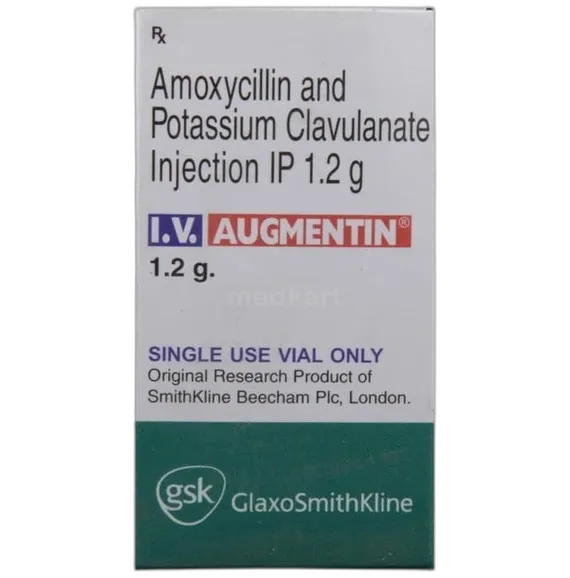
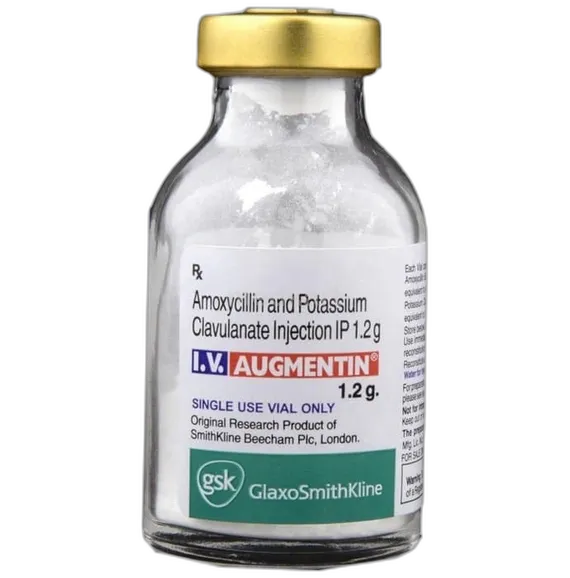
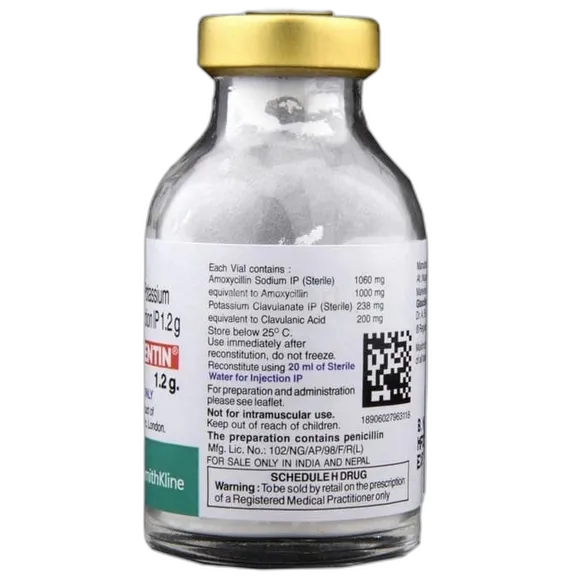
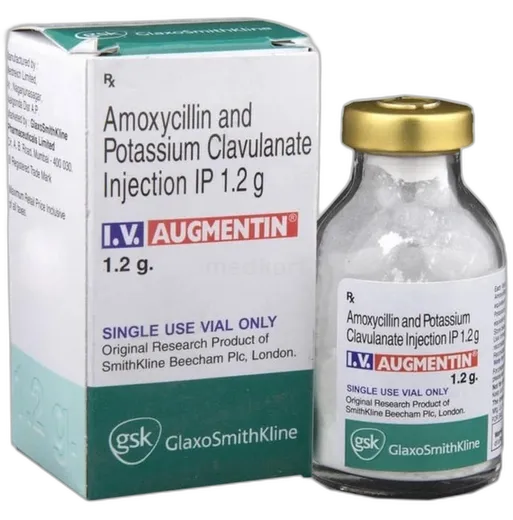
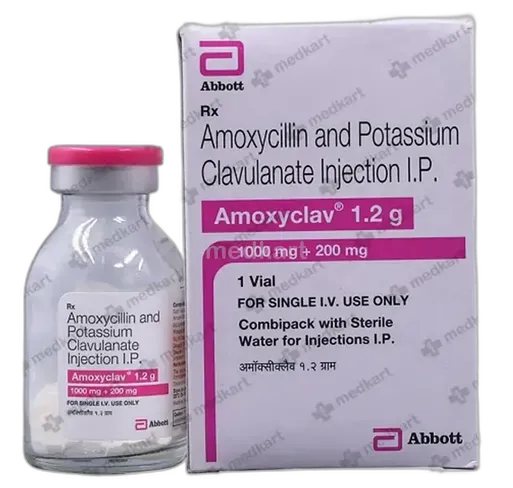
Augmentin 1.2GM Injection is used for bacterial infections of the respiratory tract, ear, nose, throat, urinary tract, skin and soft tissue; part of H. pylori eradication regimens; and given only in combination with a penicillin such as amoxicillin, to overcome bacterial resistance caused by beta-lactamase enzymes. Augmentin 1.2GM Injection contains Amoxicillin Trihydrate 1000 MG + Clavulanic Acid 200 MG. Always use Augmentin 1.2GM Injection as advised by your doctor.
Augmentin 1.2GM Injection contains Amoxicillin Trihydrate 1000 MG + Clavulanic Acid 200 MG. It is a aminopenicillin antibiotic; and beta-lactamase inhibitor.
Commonly reported side effects of Augmentin 1.2GM Injection include diarrhoea, nausea, rash, vomiting; and diarrhoea (more than with amoxicillin alone), nausea, vomiting, rash. Not everyone gets side effects. Tell your doctor or pharmacist if any effect persists or worries you.
Augmentin 1.2GM Injection is listed at Rs. 127 on Medkart. Prices can change — check the product page for the current price and pack size.
Not effective against viral infections such as colds and flu; and The clavulanate component is the main driver of diarrhoea in these combinations. Tell your doctor about all other medicines you take before starting Augmentin 1.2GM Injection.
The dose of Augmentin 1.2GM Injection depends on your condition, age, weight and other medicines you take, so it must be decided by your doctor. Follow the dose and duration on your prescription and do not change it on your own.
A generic medicine is one with the same active composition as the branded product — for Augmentin 1.2GM Injection that is Amoxicillin Trihydrate 1000 MG + Clavulanic Acid 200 MG. Medkart lists generic options by composition so you can compare. Ask your doctor or pharmacist before switching from Augmentin 1.2GM Injection.
Augmentin 1.2GM Injection contains Amoxicillin Trihydrate 1000 MG + Clavulanic Acid 200 MG, a aminopenicillin antibiotic; and beta-lactamase inhibitor. It is used for bacterial infections of the respiratory tract, ear, nose, throat, urinary tract, skin and soft tissue.
Yes. Augmentin 1.2GM Injection requires a valid doctor's prescription.
Augmentin 1.2GM Injection is manufactured by Gsk (glaxo Smithkline) Pharmaceuticals Limited.
Augmentin 1.2GM Injection is supplied as a injection and is taken by the parenteral route.
Augmentin 1.2GM Injection contains Amoxicillin Trihydrate 1000 MG + Clavulanic Acid 200 MG. It is used for bacterial infections of the respiratory tract, ear, nose, throat, urinary tract, skin and soft tissue; part of H. pylori eradication regimens; and given only in combination with a penicillin such as amoxicillin, to overcome bacterial resistance caused by beta-lactamase enzymes. The benefit you get depends on the condition your doctor prescribed Augmentin 1.2GM Injection for.
Whether Augmentin 1.2GM Injection can be taken daily, and for how long, depends on your condition and must be decided by your doctor. Do not start, extend or repeat a course of Augmentin 1.2GM Injection on your own.
The timing of Augmentin 1.2GM Injection depends on the dose your doctor prescribes and on the other medicines you take. Follow the timing on your prescription or ask your pharmacist.
No. Augmentin 1.2GM Injection is a prescription medicine and should only be taken on a doctor's advice.
Check with your doctor before drinking alcohol while taking Augmentin 1.2GM Injection. Alcohol can add to side effects such as drowsiness and can affect how some medicines work.
Store Augmentin 1.2GM Injection in its original pack, below 25°C unless the pack states otherwise, away from direct sunlight and moisture, and out of the reach of children. Do not use it after the expiry date on the pack.
Best and cheapest medicine.
Shubham Jain
•
Reviewed on 23-11-2022

(5/5)
Good service. Public relations are very good.
Pallav Bhatt
•
Reviewed on 22-11-2022
(5/5)
Proper medicine at big saving rate
Mukesh Jain
•
Reviewed on 24-01-2024
(5/5)
Excellent service
Ali Akhtar
•
Reviewed on 26-07-2023
(5/5)
It's good work and always best treatment and every time attend coustomer properly and perfectly
Shraddha Landge
•
Reviewed on 23-01-2024
(5/5)
GSK (GLAXO SMITHKLINE) PHARMACEUTICALS LIMITED
Country of Origin -
India
MRP
₹
160.26
₹127
20.75 % OFF
Quick Links

Medkart's sole intention is to ensure that its consumers get information that is expert-reviewed, accurate and trustworthy. However, the information contained herein should NOT be used as a substitute for the advice of a qualified physician. The information provided here is for informational purposes only. This may not cover everything about particular health conditions, medicines, generic alternatives, all possible side effects, drug interactions, warnings, alerts, lab tests, etc. Please consult your doctor and discuss all your queries related to any disease or medicine. We intend to support, not replace, the doctor-patient relationship.
10 Lakh+
Happy customers
35000+
Pin-codes Covered
75 Lakh+
Orders Delivered

Authentic Products
All WHO-GMP Certified Medicines






©2025 Medkart Pharmacy. All Rights Reserved












 10's_1.webp)