

Authentic Product

India's Leading Generic Pharmacy

Secure Payment

By INTAS PHARMACEUTICALS LIMITED
MRP
₹
87.66
₹19
78.33 % OFF
₹1.27 Only /
Tablet
Check Delivery
--

Composition

Content Reviewed By:
Dr. Amit Patel
, (MBBS)
Written By:
Ms. Kavita Desai
, (B.Pharm)
Common side effects of Lactolus DS Tablet may include: Nausea, Vomiting, Diarrhea, Abdominal cramping, Gas (flatulence), Bloating, Electrolyte imbalance (due to excessive diarrhea). Less common or rare side effects may include: Allergic reactions (rash, itching, swelling), Dehydration, Dizziness, Headache. If you experience any severe or persistent side effects, discontinue use and consult your doctor.

General precautions and other conditions
Use under medical supervision in special populationsPatients with diabetes mellitus should use lactulose cautiously, as it is a synthetic sugar and some formulations may influence glycaemic control, particularly at higher doses.
Lactolus DS Tablet is a synthetic sugar used to treat constipation. It works by drawing water into the intestine, which softens the stool and makes it easier to pass. It is also used to treat hepatic encephalopathy (a decline in brain function due to liver disease).
Lactolus DS Tablet works by drawing water into the intestine, which softens the stool and makes it easier to pass. In hepatic encephalopathy, it works by removing ammonia from the blood, thereby improving brain function.
The dosage of Lactolus DS Tablet depends on the individual's age, health condition, and the condition being treated. Please follow the dosage prescribed by your doctor.
Common side effects of Lactolus DS Tablet include abdominal pain, bloating, gas, and diarrhea. If you experience any severe side effects, please contact your doctor.
Consult your doctor before using Lactolus DS Tablet during pregnancy.
Consult your doctor before using Lactolus DS Tablet during breastfeeding.
Lactolus DS Tablet can be taken with or without food, but it is best to take it at the same time each day.
Store Lactolus DS Tablet at room temperature, away from direct sunlight and moisture.
An overdose of Lactolus DS Tablet can cause severe diarrhea and dehydration. If you think you have taken too much Lactolus DS Tablet, contact your doctor immediately.
If you miss a dose of Lactolus DS Tablet, take it as soon as you remember. However, if it is almost time for your next dose, skip the missed dose and continue with your regular dosing schedule. Do not double the dose.
Lactolus DS Tablet can interact with certain medications, such as antibiotics and antacids. Tell your doctor if you are taking any other medications.
Before taking Lactolus DS Tablet, tell your doctor about all your medical conditions, allergies, and all the medications you are taking.
Avoid drinking alcohol while taking Lactolus DS Tablet, as it may increase the risk of side effects.
Lactolus DS Tablet is not habit-forming.
Consult your doctor before using Lactolus DS Tablet for a long time. Prolonged use may alter bowel function.
Lactulose tablet is mainly used to treat constipation and to help prevent or manage hepatic encephalopathy in people with chronic liver disease, such as cirrhosis. In constipation, it works as an osmotic laxative to soften stools and increase bowel movements. In hepatic encephalopathy, it helps reduce the absorption of ammonia and other toxins from the gut, which can improve mental status and reduce the risk of confusion or coma when used as part of a broader treatment plan.
Lactulose is a synthetic sugar that is poorly absorbed in the small intestine and reaches the colon largely unchanged. There, colonic bacteria break it down into organic acids, which increase the osmotic pressure in the colon. This draws water into the bowel, softens the stool, and stimulates peristalsis, leading to easier and more frequent bowel movements. The effect is usually gradual and may take one or more days to become fully apparent.
The onset of action of lactulose in constipation is not immediate. Many patients experience a bowel movement within 24 to 48 hours after starting therapy, but the response can vary. Some individuals may require several days of regular dosing before achieving consistent relief. In hepatic encephalopathy, improvement in mental status may also take time and depends on disease severity, concurrent treatments, and adherence to the prescribed regimen.
Long-term daily use of lactulose may be appropriate in certain conditions, such as chronic hepatic encephalopathy, but it should only be done under medical supervision. For simple constipation, lactulose is usually recommended for short-term use while underlying causes are assessed and lifestyle measures are optimised. Prolonged or excessive use can lead to diarrhoea, dehydration, and electrolyte imbalances. Your doctor will decide the appropriate duration and monitor for potential complications if long-term therapy is needed.
Common side effects of lactulose tablet include flatulence, abdominal bloating, cramping, and mild nausea, especially at the beginning of treatment. Diarrhoea can occur if the dose is too high or if the individual is particularly sensitive. With prolonged diarrhoea, there is a risk of dehydration and disturbances in electrolytes such as sodium and potassium. Most mild gastrointestinal side effects improve as the body adjusts or after dose adjustment. Any severe, persistent, or worsening symptoms should be reported to a healthcare professional.
Lactulose has been used in pregnancy for the treatment of constipation and is generally considered to have a low risk when used as directed. Because it is minimally absorbed from the gastrointestinal tract, systemic exposure is limited. However, any medicine in pregnancy should be used only when clearly needed and after discussion with a healthcare professional, who will weigh the potential benefits against any theoretical risks and consider non-pharmacological measures first where appropriate.
Lactulose is poorly absorbed from the maternal gastrointestinal tract, and only very small amounts, if any, are expected to pass into breast milk. It is generally regarded as compatible with breastfeeding when used at recommended doses. Nonetheless, breastfeeding mothers should consult their doctor before starting lactulose to ensure it is appropriate for their situation and to receive guidance on monitoring for any unexpected effects in themselves or the infant, such as changes in stool pattern.
Lactulose is a synthetic sugar, and some formulations may contain small amounts of other sugars. Although systemic absorption is limited, lactulose can potentially influence blood glucose control, particularly at higher doses or with prolonged use. People with diabetes should use lactulose cautiously and only under medical advice. Blood glucose monitoring may need to be adjusted, and the healthcare professional may recommend alternative options or specific precautions depending on the individual’s glycaemic control and overall health status.
Lactulose has relatively few direct drug–drug interactions, but its laxative effect can influence the absorption of other oral medicines by accelerating intestinal transit. This may reduce the effectiveness of some drugs if diarrhoea occurs. In addition, prolonged use leading to electrolyte disturbances can enhance the toxicity of certain medicines, such as cardiac glycosides. Patients should inform their doctor and pharmacist about all medicines and supplements they are taking so that potential interactions can be assessed and dosing schedules adjusted if necessary.
Lactulose tablet should not be used by individuals with known hypersensitivity to lactulose or any component of the formulation. It is generally contraindicated in patients with galactosaemia and should be used with caution in those requiring strict avoidance of certain sugars. People with intestinal obstruction, suspected perforation, or inflammatory bowel conditions associated with severe abdominal pain and fever should not use laxatives like lactulose without urgent medical evaluation. Patients with significant electrolyte disturbances, severe dehydration, or poorly controlled diabetes require careful assessment before starting lactulose.
If you miss a dose of lactulose tablet, take it as soon as you remember, unless it is almost time for your next scheduled dose. In that case, skip the missed dose and resume your regular dosing schedule. Do not take a double dose to make up for the missed one, as this may increase the risk of diarrhoea and abdominal discomfort. If you frequently forget doses, discuss strategies with your healthcare professional to improve adherence or to adjust the regimen if appropriate.
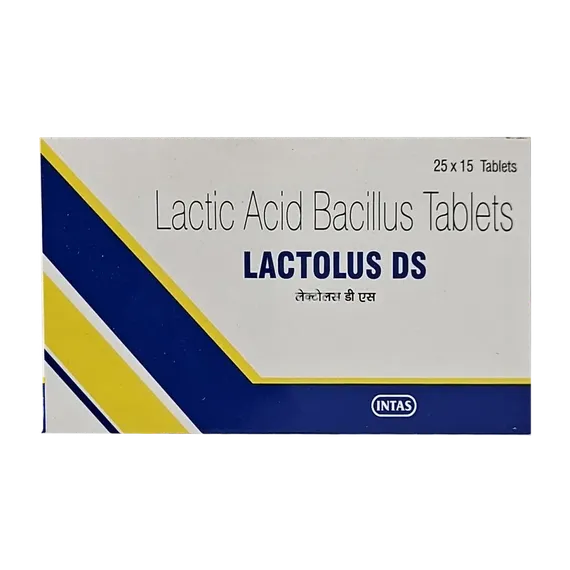
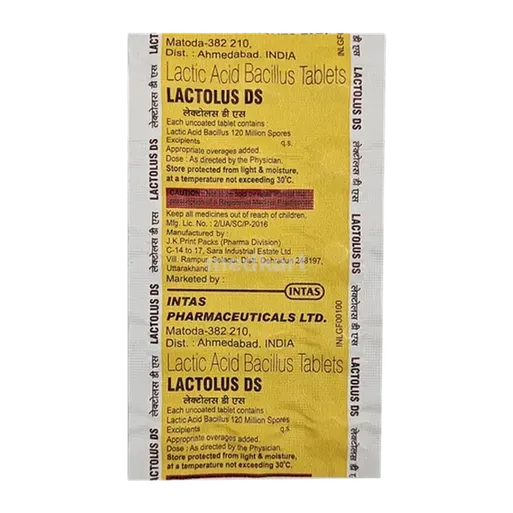
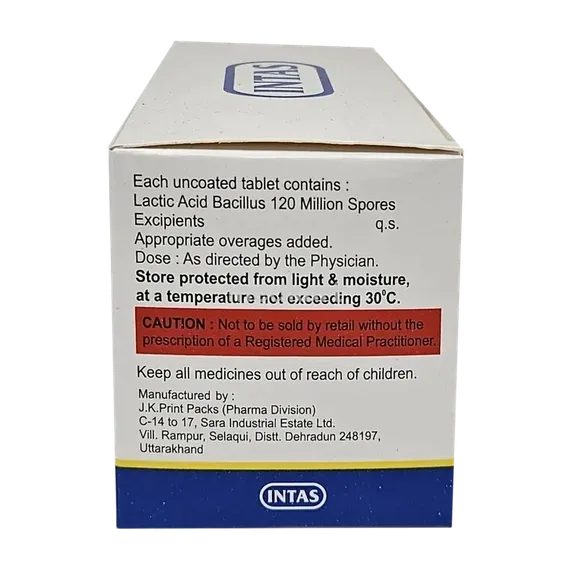
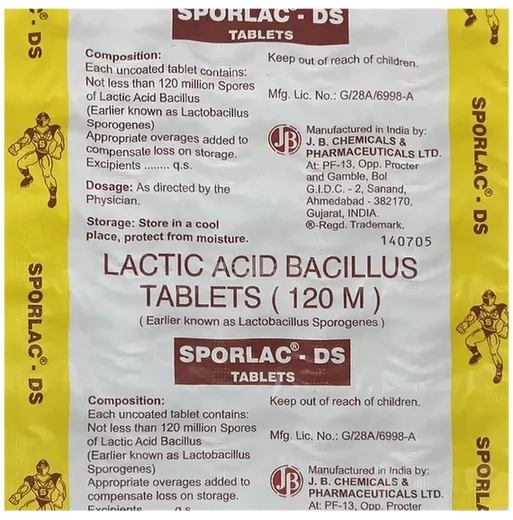
Lactolus DS Tablet 15's contains Lactobacillus 120 Million Cells.
Lactolus DS Tablet 15's is listed at Rs. 19 on Medkart. Prices can change — check the product page for the current price and pack size.
The dose of Lactolus DS Tablet 15's depends on your condition, age, weight and other medicines you take, so it must be decided by your doctor. Follow the dose and duration on your prescription and do not change it on your own.
A generic medicine is one with the same active composition as the branded product — for Lactolus DS Tablet 15's that is Lactobacillus 120 Million Cells. Medkart lists generic options by composition so you can compare. Ask your doctor or pharmacist before switching from Lactolus DS Tablet 15's.
Lactolus DS Tablet 15's is listed as not requiring a prescription. Check with your pharmacist if unsure.
Lactolus DS Tablet 15's is manufactured by Intas Pharmaceuticals Limited.
Lactolus DS Tablet 15's is supplied as a tablet and is taken by the oral route.
Whether Lactolus DS Tablet 15's can be taken daily, and for how long, depends on your condition and must be decided by your doctor. Do not start, extend or repeat a course of Lactolus DS Tablet 15's on your own.
The timing of Lactolus DS Tablet 15's depends on the dose your doctor prescribes and on the other medicines you take. Follow the timing on your prescription or ask your pharmacist.
Lactolus DS Tablet 15's is listed as not requiring a prescription, but it is still safest to check with a doctor or pharmacist before taking it, especially alongside other medicines.
Store Lactolus DS Tablet 15's in its original pack, below 25°C unless the pack states otherwise, away from direct sunlight and moisture, and out of the reach of children. Do not use it after the expiry date on the pack.


Best for medicine and helpfull.😊
Dilip Darji
•
Reviewed on 02-02-2024

(5/5)
Awesome experience every time i get medicine on time and they have delivery on time also staff are very cooperative and knowledgeable
Tarun Ezava
•
Reviewed on 22-06-2023
(5/5)
Best service always... Best staff ..thank u being over life part
Nisha Khan
•
Reviewed on 01-07-2023
(5/5)
Geniune medicines available at good discounts
Vaishali Parikh
•
Reviewed on 05-12-2022
(5/5)
Excellent Customer service
Ashish Makwana
•
Reviewed on 12-01-2024
(5/5)
INTAS PHARMACEUTICALS LIMITED
Country of Origin -
India
MRP
₹
87.66
₹19
78.33 % OFF
Quick Links

Medkart's sole intention is to ensure that its consumers get information that is expert-reviewed, accurate and trustworthy. However, the information contained herein should NOT be used as a substitute for the advice of a qualified physician. The information provided here is for informational purposes only. This may not cover everything about particular health conditions, medicines, generic alternatives, all possible side effects, drug interactions, warnings, alerts, lab tests, etc. Please consult your doctor and discuss all your queries related to any disease or medicine. We intend to support, not replace, the doctor-patient relationship.
10 Lakh+
Happy customers
35000+
Pin-codes Covered
75 Lakh+
Orders Delivered

Authentic Products
All WHO-GMP Certified Medicines






©2025 Medkart Pharmacy. All Rights Reserved









 10's_1.webp)