
Prescription Required

Authentic Product

India's Leading Generic Pharmacy

Secure Payment

By SUN PHARMACEUTICAL INDUSTRIES LTD
MRP
₹
197
₹167.45
15 % OFF
₹16.75 Only /
Tablet
Check Delivery
--

Content Reviewed By:
Dr. Sanjay Mehta
, (MBBS)
Written By:
Ms. Kavita Desai
, (B.Pharm)
Common side effects of Panazep LS Tablet may include drowsiness, dizziness, lightheadedness, unsteadiness, blurred vision, dry mouth, constipation, increased appetite, and weight gain. Less common but potentially serious side effects include confusion, memory problems, difficulty concentrating, slurred speech, loss of coordination, muscle stiffness, tremors, seizures, changes in heart rhythm, and allergic reactions (rash, itching, swelling). Psychiatric side effects such as depression, anxiety, agitation, and suicidal thoughts are also possible. Contact your doctor immediately if you experience any unusual or severe symptoms.

General precautions and dependence
Use under strict medical supervisionPanazep LS should be used only under the guidance of a qualified healthcare professional, preferably a psychiatrist, with regular follow‑up to assess efficacy, side effects, and the ongoing need for treatment.
Panazep LS Tablet 10's is a combination medicine primarily used to treat anxiety disorders and seizures (fits).
Panazep LS Tablet 10's is a combination of two medicines, Clonazepam and Escitalopram. Clonazepam is a benzodiazepine that works by decreasing the abnormal and excessive activity of the nerve cells in the brain. Escitalopram is a selective serotonin reuptake inhibitor (SSRI) that works by increasing the levels of serotonin in the brain, thereby improving mood.
Common side effects of Panazep LS Tablet 10's include nausea, vomiting, diarrhea, constipation, decreased appetite, fatigue, dizziness, blurred vision, and decreased sexual desire.
Yes, Panazep LS Tablet 10's contains Clonazepam, which is a benzodiazepine. Benzodiazepines can be habit-forming, so take it only as prescribed by your doctor.
Store Panazep LS Tablet 10's at room temperature, away from heat and moisture. Keep it out of reach of children and pets.
You should avoid drinking alcohol while taking Panazep LS Tablet 10's, as it can increase side effects such as dizziness and drowsiness.
Consult your doctor before taking Panazep LS Tablet 10's during pregnancy, as it may harm the unborn baby.
Consult your doctor before taking Panazep LS Tablet 10's during breastfeeding, as it may pass into breast milk and harm the baby.
Symptoms of an overdose of Panazep LS Tablet 10's include drowsiness, confusion, slow reflexes, difficulty breathing, and loss of consciousness.
If you miss a dose of Panazep LS Tablet 10's, take it as soon as you remember. If it is almost time for your next dose, skip the missed dose and continue with your regular dosing schedule. Do not take a double dose.
Yes, Panazep LS Tablet 10's can interact with certain other medications. Tell your doctor about all the medications you are taking, including prescription, over-the-counter medications, and herbal supplements.
Alternatives to Panazep LS Tablet 10's include other antidepressants, anti-anxiety medications, and therapy. Talk to your doctor about what option is best for you.
It may take a few weeks for Panazep LS Tablet 10's to start working. Be patient and continue taking the medication as prescribed by your doctor, even if you do not feel better right away.
Do not stop taking Panazep LS Tablet 10's abruptly. This can cause withdrawal symptoms. Talk to your doctor before stopping the medication, and they will gradually reduce the dosage.
The price of Panazep LS Tablet 10's may vary depending on the brand, dosage, and pharmacy.
Panazep LS is a combination medicine containing clonazepam and paroxetine, used primarily for the treatment of anxiety disorders, panic disorder, and depressive episodes associated with significant anxiety. The clonazepam component provides short‑term relief from anxiety and agitation, while paroxetine, an SSRI antidepressant, helps improve mood and reduce long‑term anxiety and panic symptoms. The exact indication and treatment plan should be determined by a psychiatrist or other qualified physician.
Panazep LS works through two different mechanisms. Clonazepam enhances the effect of gamma‑aminobutyric acid (GABA), an inhibitory neurotransmitter in the brain, leading to reduced neuronal excitability and producing anxiolytic, sedative, and anticonvulsant effects. Paroxetine selectively inhibits the reuptake of serotonin into presynaptic neurons, increasing serotonin levels in the synaptic cleft and helping to regulate mood, anxiety, and panic symptoms. Together, these actions provide both rapid and longer‑term control of anxiety and related mood symptoms.
The clonazepam component of Panazep LS may start to reduce anxiety and agitation within hours to a few days of starting treatment. However, the paroxetine component typically requires 1 to 2 weeks to begin showing noticeable improvement in mood and anxiety, and up to 4 to 6 weeks to achieve full therapeutic effect. Patients should continue taking the medicine as prescribed and not stop early because they feel no immediate improvement, unless advised by their doctor. Regular follow‑up is important to assess response and tolerability.
Panazep LS should not be stopped abruptly without medical supervision. Sudden discontinuation of clonazepam can lead to withdrawal symptoms such as anxiety rebound, insomnia, irritability, tremors, sweating, palpitations, and in severe cases, seizures. Stopping paroxetine suddenly may cause discontinuation symptoms such as dizziness, flu‑like feelings, sensory disturbances, sleep problems, and mood changes. Your doctor will usually recommend a gradual dose reduction over days to weeks, or longer if needed, to minimize withdrawal or rebound symptoms.
The clonazepam component of Panazep LS is a benzodiazepine and can cause physical dependence and tolerance, especially with prolonged use, higher doses, or use in individuals with a history of substance misuse. This means that stopping it suddenly may cause withdrawal symptoms, and some people may feel a strong urge to continue taking it. Paroxetine itself is not considered addictive in the traditional sense, but it can cause discontinuation symptoms if stopped abruptly. To reduce the risk of dependence, Panazep LS should be used at the lowest effective dose for the shortest duration necessary, under close medical supervision.
Common side effects of Panazep LS include drowsiness, dizziness, fatigue, slowed thinking or reaction time, impaired concentration, dry mouth, nausea, vomiting, constipation or diarrhea, increased sweating, decreased appetite or weight changes, sexual dysfunction (such as decreased libido or difficulty achieving orgasm), and sleep disturbances. Some people may experience restlessness, tremor, or mild headache. Many of these effects are dose‑related and may lessen as the body adjusts to treatment. Persistent, severe, or distressing side effects should be discussed with your doctor.
Alcohol should be avoided while taking Panazep LS. Both clonazepam and alcohol depress the central nervous system and can have additive effects, leading to excessive drowsiness, impaired coordination, slowed breathing, and increased risk of accidents or falls. Alcohol can also worsen anxiety, depression, and sleep quality, counteracting the benefits of treatment. If you have difficulty avoiding alcohol, discuss this with your healthcare provider so that appropriate support and monitoring can be arranged.
Use of Panazep LS during pregnancy requires careful risk–benefit assessment by a specialist. Paroxetine has been associated in some studies with an increased risk of certain congenital malformations, particularly when used in the first trimester, and with neonatal adaptation syndrome or persistent pulmonary hypertension of the newborn when used late in pregnancy. Benzodiazepines like clonazepam, if used in late pregnancy or at high doses, may cause neonatal respiratory depression, hypotonia (floppy infant), and withdrawal symptoms in the newborn. Panazep LS is generally avoided in pregnancy unless the potential benefit to the mother clearly outweighs the potential risks to the fetus, and alternative options are unsuitable.
Both clonazepam and paroxetine can pass into breast milk. Paroxetine is often considered one of the preferred SSRIs during breastfeeding because infant exposure is relatively low, but monitoring is still required. Clonazepam may cause sedation, poor feeding, or breathing difficulties in the breastfed infant, especially at higher maternal doses or when combined with other sedating medicines. The decision to use Panazep LS while breastfeeding should be individualized, taking into account the severity of the mother’s condition, alternative treatments, and the possibility of using a regimen without benzodiazepines. If Panazep LS is used, the infant should be monitored for excessive sleepiness, poor feeding, or breathing problems.
Panazep LS can interact with several other medicines. Paroxetine should not be used with monoamine oxidase inhibitors (MAOIs) or within the recommended washout periods due to the risk of serious reactions including serotonin syndrome. Caution is needed with other serotonergic drugs such as other SSRIs, SNRIs, certain migraine medicines (triptans), tramadol, linezolid, and St. John’s wort. Clonazepam may have additive sedative effects with other central nervous system depressants such as opioids, other benzodiazepines, sedating antihistamines, antipsychotics, and alcohol. Paroxetine can also affect the metabolism of some drugs via cytochrome P450 inhibition. Always inform your doctor and pharmacist about all prescription medicines, over‑the‑counter products, and herbal supplements you are taking before starting Panazep LS.
Panazep LS is generally not recommended in individuals with known hypersensitivity to clonazepam, paroxetine, other benzodiazepines, or any excipients in the formulation. It should be avoided or used with great caution in patients taking MAOIs or within the required washout period, in those with severe respiratory insufficiency, severe hepatic impairment, acute narrow‑angle glaucoma, or a history of benzodiazepine or substance dependence unless under strict specialist supervision. Caution is also required in people with bipolar disorder, a history of seizures not appropriately managed, suicidal ideation, significant kidney disease, or elderly patients who are at higher risk of falls and confusion. A full medical evaluation is essential before prescribing.
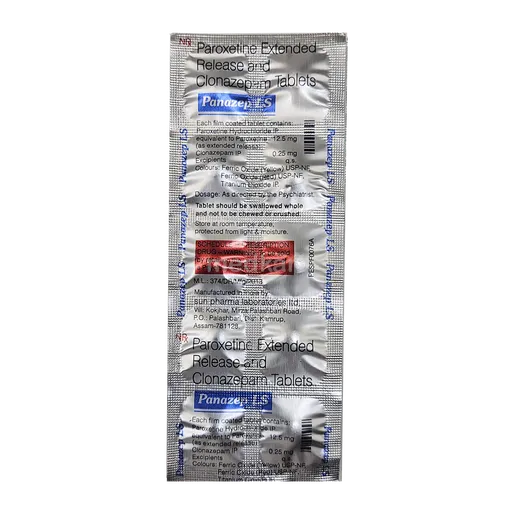
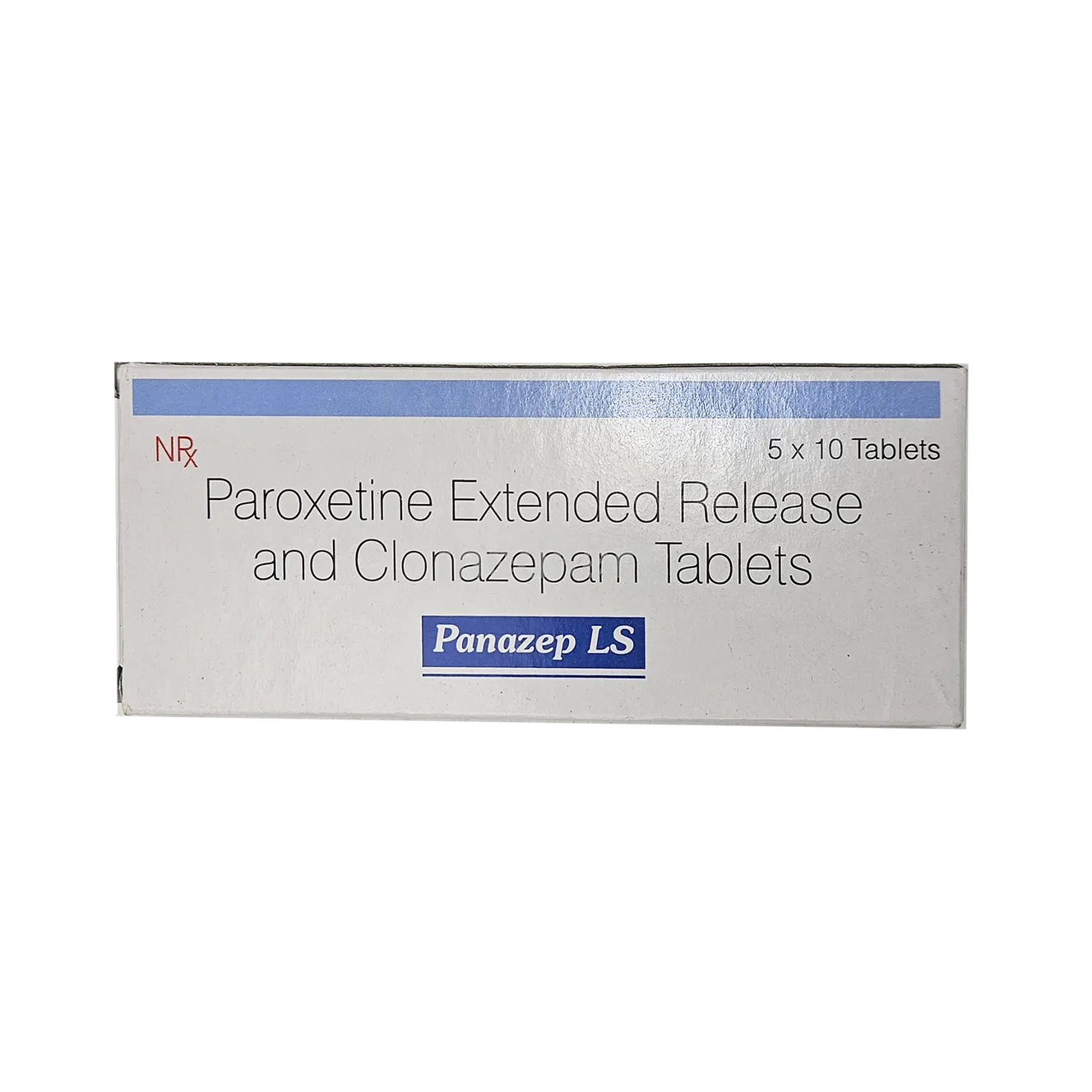
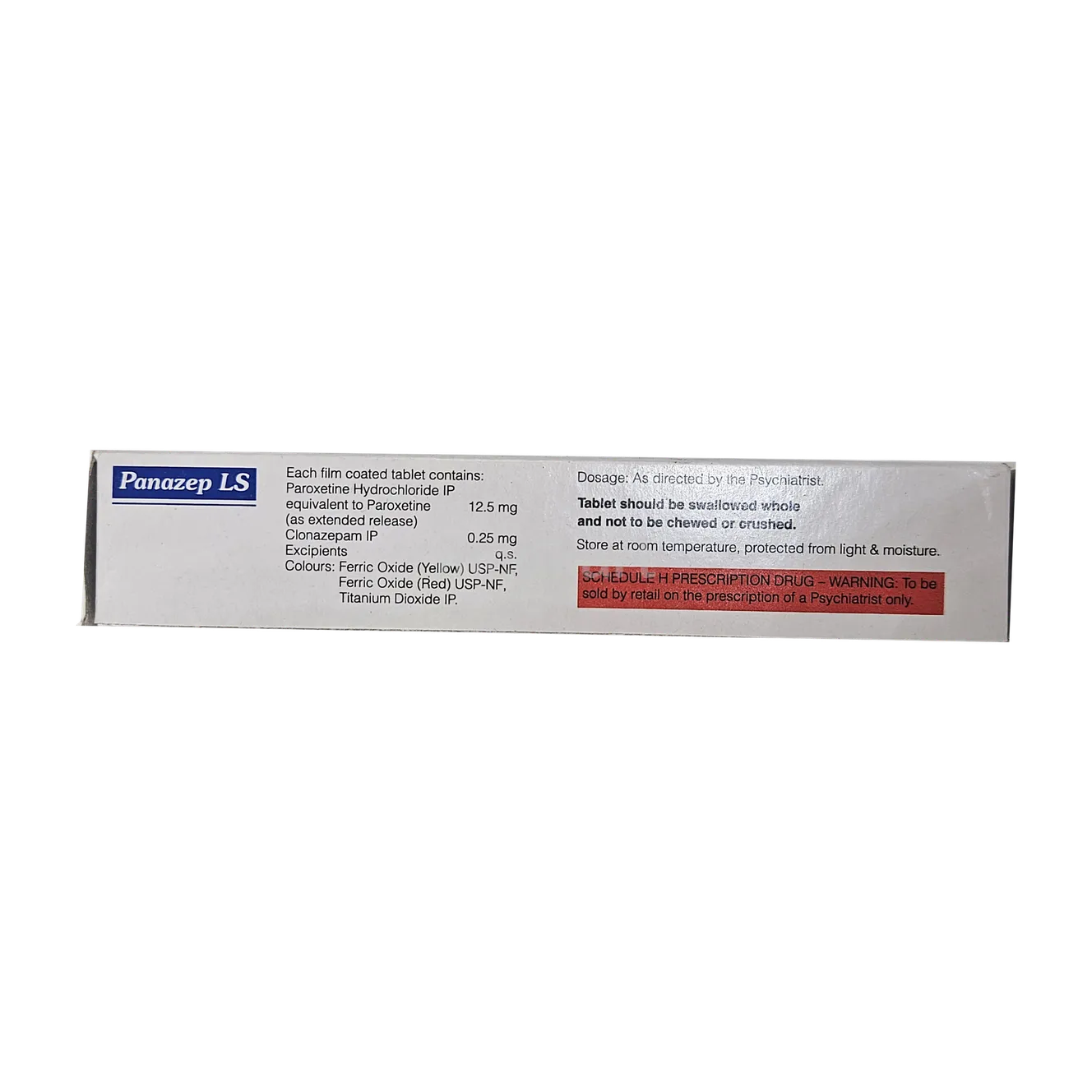
Panazep LS Tablet 10's contains Clonazepam 0.25 MG + Paroxetine 12.5 MG Sustained Release.
The dose of Panazep LS Tablet 10's depends on your condition, age, weight and other medicines you take, so it must be decided by your doctor. Follow the dose and duration on your prescription and do not change it on your own.
A generic medicine is one with the same active composition as the branded product — for Panazep LS Tablet 10's that is Clonazepam 0.25 MG + Paroxetine 12.5 MG Sustained Release. Medkart lists generic options by composition so you can compare. Ask your doctor or pharmacist before switching from Panazep LS Tablet 10's.
Yes. Panazep LS Tablet 10's requires a valid doctor's prescription.
Panazep LS Tablet 10's is manufactured by Sun Pharmaceutical Industries Ltd.
Panazep LS Tablet 10's is supplied as a tablet and is taken by the oral route.
Whether Panazep LS Tablet 10's can be taken daily, and for how long, depends on your condition and must be decided by your doctor. Do not start, extend or repeat a course of Panazep LS Tablet 10's on your own.
The timing of Panazep LS Tablet 10's depends on the dose your doctor prescribes and on the other medicines you take. Follow the timing on your prescription or ask your pharmacist.
No. Panazep LS Tablet 10's is a prescription medicine and should only be taken on a doctor's advice.
Store Panazep LS Tablet 10's in its original pack, below 25°C unless the pack states otherwise, away from direct sunlight and moisture, and out of the reach of children. Do not use it after the expiry date on the pack.


Great experience👍🏻
PRASHANT KATARIYA
•
Reviewed on 29-01-2024

(5/5)
Very very very excellent services and ease of getting medicines with great discounts. I recommend users to go for Medikart for all medicines. Thank you
Deepa Sippy
•
Reviewed on 11-03-2024
(5/5)
Great offers, great medicines availability
Pankaj Bhojwani
•
Reviewed on 10-03-2023
(5/5)
Good service and they have too many varieties of products
shah dhruvi
•
Reviewed on 13-03-2024
(5/5)
Best and Affordable medicine Store thank you medkart.
Javed Malek
•
Reviewed on 09-07-2023
(5/5)
SUN PHARMACEUTICAL INDUSTRIES LTD
Country of Origin -
India
Medkart's sole intention is to ensure that its consumers get information that is expert-reviewed, accurate and trustworthy. However, the information contained herein should NOT be used as a substitute for the advice of a qualified physician. The information provided here is for informational purposes only. This may not cover everything about particular health conditions, medicines, generic alternatives, all possible side effects, drug interactions, warnings, alerts, lab tests, etc. Please consult your doctor and discuss all your queries related to any disease or medicine. We intend to support, not replace, the doctor-patient relationship.
10 Lakh+
Happy customers
35000+
Pin-codes Covered
75 Lakh+
Orders Delivered

Authentic Products
All WHO-GMP Certified Medicines






©2025 Medkart Pharmacy. All Rights Reserved









 10's_1.webp)