Search results for: “all”

  • How are companies able to provide generic less than their MRP?

    How are companies able to provide generic less than their MRP?

    How are companies able to provide generic less than their MRP

    There are several factors that can contribute to the lower cost of generic medications compared to their brand-name counterparts. One reason is that generic drug manufacturers do not have the same development and marketing expenses as the companies that produce the brand-name drugs. When a new drug is developed, the company that developed it usually holds the patent for a certain number of years. During this time, the company has the exclusive right to sell the drug, and it can set the price at a level that covers its development and marketing costs, as well as generates a profit. Once the patent expires, other companies can start selling generic versions of the drug. Because they do not have the same development and marketing costs, they can offer the drug at a lower price.

    Another reason for the lower cost of generic medications is that they often face less competition than brand-name drugs. When a generic drug enters the market, it may be the only generic version of that drug available, allowing the manufacturer to charge a lower price. As more generic versions of the drug become available, competition among the manufacturers can increase, leading to further price decreases.

    It is also worth noting that the prices of both brand-name and generic drugs can be influenced by various factors, such as the availability of raw materials, the cost of production, and negotiations with insurers and pharmacy benefit managers.

    Visit Medkart pharmacy and get up to 85% discount on medicines.

    To know more watch – https://youtube.com/shorts/Kop2tfT1G4I

  • Are generics approved by Indian Government?

    Are generics approved by Indian Government?

    generics approved by Government

    In India, generic drugs must be approved by the Central Drugs Standard Control Organization (CDSCO), which is the national regulatory agency responsible for evaluating the safety, efficacy, and quality of all drugs, including generic drugs.

    Once a generic drug has been approved by the CDSCO, it can be sold in India. The availability of specific generic drugs will depend on factors such as the specific drug that is being sought and the market demand for the drug.

    To know more watch – https://youtube.com/shorts/3fPk3iYF7Bw

    At Medkart you can find WHO-GMP certified top quality generics

  • 9 Ways to Manage BMI better (Calculate BMI) | Normal BMI Range

    9 Ways to Manage BMI better (Calculate BMI) | Normal BMI Range

    ways to manage BMIWays to Manage BMI better at Home

    You must have heard a word when someone talked about good health. But what is BMI? And how is it related to good health? BMI is the BODY MASS INDEX, which indicates the ratio of weight to the height. In other words, BMI is a tool to measure a person’s weight according to his/her height.

    BMI is the main index for weight to height and helps to classify a person as underweight, healthy/standard, and overweight or obese. The national institute of health, now, also defined weight according to BMI. The widely accepted normal range of BMI is 18 to 25 kg/m2. Below than this is called underweight, and above this is known as overweight. If BMI is over 30, then the person is classified as obese.
    On the one hand, overweight or obesity increases the risk of diseases like kidney problems, heart problems, diabetes, hypertension, arthritis, coronary artery disease, stroke, and so on. On the other hand, an underweight person has a risk of decreased immune function, vitamin deficiency, anemia, fatigue, and risk of complications after surgery, infections, and so on. Therefore, to live a healthy life, one should manage BMI.

    Nine ways to manage BMI and keep it within a healthy range.

    1. Exercise  (Regular physical activity)

    Exercise is an essential activity to live a healthy life. Nowadays, most people are involved in a desk job or even working from home that forces them to work long hours leading a sedentary life. No physical activities lead to obesity that is detrimental to health. Thus, exercise is needed to manage BMI as exercise can burn fat in overweight people while giving strength and muscle growth to underweight people.

    • Consult with the gym trainer to gain mass if you are underweight as the combination of specific exercises and food is needed to gain weight.
    • Do exercise at least 3 or 4 times a week.
    • Move frequently while sitting for long.
    • Participate in sports such as football, swimming, marathon, and so on.
    • On busy days at least walk for 30 minutes.

    2. Change your food habits (Balanced and healthy diet)

    Food habits play an essential role in health: time, type, and frequency of meal or food change many things in the body. Processed or junk food has long term adverse effects on the body. Constant intake of salty, sugary, and fatty diet will put health at risk and make people vulnerable to diseases such as diabetes, hypertension, cholesterol, and so on. 

    When a person has an irregular meal schedule and tendency to have a ready-made meal or junk food or sleep immediately after having food at night. All these eventually affects ones BMI. Such habits either increase the BMI or lower the immune system.
    Following a regular schedule for snacks and meals will reduce the BMI and maintain the internal body clock. It also helps in digestion and keeps digestion problems away.

    • Make a meal plan and eat at the same time every day; follow the schedule.
    • Lower the consumption of processed/ salty/sugary foods, carbonated drinks.
    • Increase intake of fruits, whole grain, and green vegetables. Underweight or people who have lower BMI should include dry fruits, vegetables, protein, and whole grain in everyday meals.
    • Don’t eat food to fill tummy; instead, opt for healthy eating.

    14 Healthy foods to add in your Diet List of Foods

    3. Never skip your breakfast

    Everyone needs breakfast – kids or adults; however, due to busy life, we have started to skip breakfast. But no one knows how detrimental it is for the body. Breakfast is the first heavy meal we give to the body, which fuels our body to work all day. When one skips breakfast, the body doesn’t get the energy to work for long and make one feel fatigued and hungry, which will lead to the consumption of more food and sweetened drink later. This way, it increases BMI.

    The body nutrients that are neglected during the day are provided with a well-balanced breakfast. People who are underweight or want to increase BMI should incorporate fruits, dry fruits, protein shakes, whole grains, and nutritious food in breakfast. Thus, to manage BMI better, well-balanced breakfast serves as an important meal and you shouldn’t skip it.

    4. Get enough Sleep

    Nothing works if you don’t get a sound sleep. Even though you eat nutritious food and do vigorous exercise, if you don’t get enough sleep, you will fail to manage healthy weight or BMI. During sleep, our bodies get a chance to recover and repair the cells from day-to-day wear and tear. Sleep deprivation will cause biochemical changes in the body that make you feel hungrier and less full after a meal. Also, lack of sleep causes a shift in hormones that control hunger and appetite, which will lead to unnecessary food craving. So ultimately, less sleep will make you hungry and obese.

    However, excessive sleep will cause energy loss and make you thin but in the wrong way. When you sleep in the day time and don’t give fuel to yourself, the body takes energy from body cells, causing thinning of muscle mass. Consequently, the body loses minerals and vitamins and increases the risk of infection by lowering immunity. Thus, to manage BMI and keep yourself healthy, get at least 6 -7 hours of sound sleep. It is not only helpful in the regulation of hormones but also strengthen the body’s repair mechanism.

    5. Ensure Effective Stress Management

    Stress is inevitable, so its management has become essential. Excessive stress has harmful effects on the body as stress changes many-body mechanisms from the heart rate to hormones to perspiration. Stress is one of the hurdles in the management of BMI because stress causes weight loss or weight gain- It varies from person to person. During stress, some people do not feel hungry, and some crave sugary, fatty foods. It also slows down metabolism due to the stress hormone effect and makes one obese. So to manage BMI better, stress management is needed.

    • Practice yoga and meditation.
    • Play sports or do any favorite activities.
    • Watch funny movies or comedy shows to relax.
    • Get relaxation body and head massage.
    • Plan a day to curb unnecessary daily stress.

    6. Portion control

    Paying attention to portion sizes and avoiding overeating can help manage BMI. Eating smaller, balanced meals throughout the day and avoiding large portion sizes can help prevent excessive calorie intake.

    7. Lifestyle changes

    Making healthy lifestyle changes such as reducing sedentary behavior, getting enough sleep, managing stress, and avoiding excessive alcohol consumption can also contribute to managing BMI. These factors can affect appetite, metabolism, and overall health.

    8. Seek professional help

    If you’re struggling with managing your BMI, consider seeking guidance from a healthcare professional, such as a registered dietitian or a healthcare provider. They can provide personalized recommendations based on your individual health needs and help you develop a plan tailored to your specific situation.

    9. Avoid crash diets or extreme measures

    It’s important to avoid crash diets or extreme measures that promise rapid weight loss, as these can be harmful to your health and may not be sustainable in the long term. Slow and steady weight loss through healthy lifestyle changes is generally recommended for long-term success.

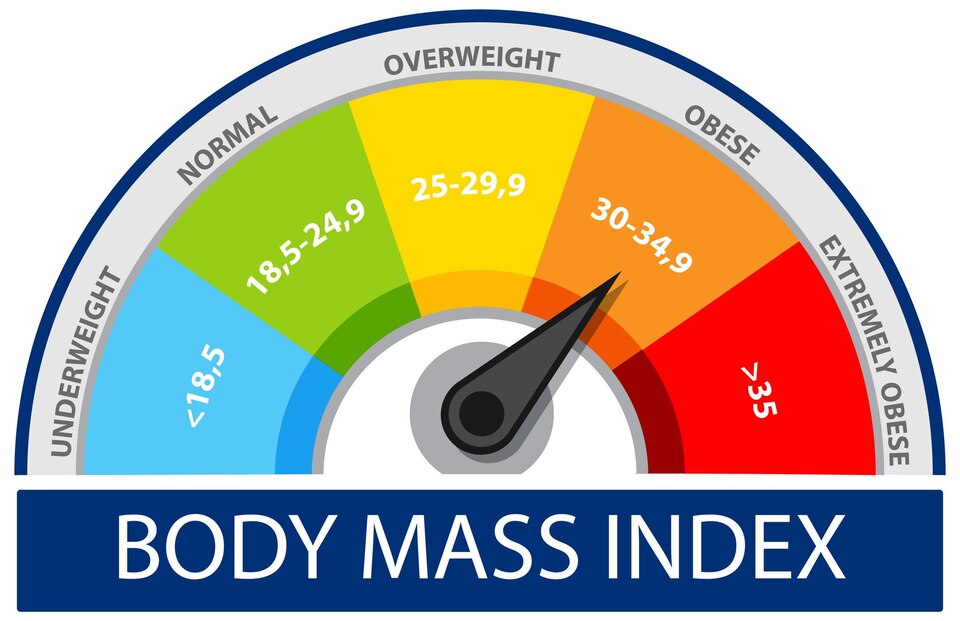
    Normal Healthy BMI Range Chart


    BMI range chartHow to calculate BMI at home

    The Body Mass Index (BMI) is a measure used to estimate whether an individual’s weight is within a healthy range for their height. It is calculated by dividing a person’s weight in kilograms by the square of their height in meters. Here’s the BMI formula to calculate BMI at home:

    BMI FORMULA = weight (kg) / height^2 (m^2)

    Step-by-step instructions to calculate BMI with BMI formula:

    • Step 1: Measure your weight in kilograms (kg). If your weight is given in pounds (lbs), you can convert it to kilograms by dividing it by 2.20462, as 1 kg is approximately equal to 2.20462 lbs.
    • Step 2: Measure your height in meters (m). If your height is given in feet (ft) and inches (in), you can convert it to meters by multiplying the feet by 0.3048 and adding the inches multiplied by 0.0254. This will give you the height in meters.

    For example, if a person weighs 70 kg and has a height of 1.75 meters, the calculation would be as follows:

    Weight = 70 kg

    Height = 1.75 m

    BMI = 70 / (1.75^2)

    BMI = 70 / 3.0625

    BMI = 22.86

    • Step 3: Once you have the weight and height in the appropriate units, divide the weight by the square of the height to get the BMI.
    • Step 4: Interpret the BMI result. BMI falls into different categories to determine whether a person’s weight is within a healthy range. The World Health Organization (WHO) has established the following BMI categories for adults:

    BMI HEALTHY RANGE CHART is as follows

    • Underweight: BMI less than 18.5
    • Normal weight: BMI 18.5 to 24.9
    • Overweight: BMI 25 to 29.9
    • Obese: BMI 30 or greater

    It’s important to note that while BMI can be a useful screening tool, it does not take into consideration other factors such as body composition, muscle mass, and individual variations, and should be used in conjunction with other assessments for a comprehensive evaluation of a person’s health. It’s always recommended to consult with a healthcare professional for a proper assessment of your health and weight status.

    BMI FORMULA – BMI = weight (kg) / height^2 (m^2)

     Use this BMI formula to Calculate BMI at home and Healthy Normal BMI range is given above With BMI range chart.

    The Takeaway

    To maintain a healthy BMI, one should deliberately change his or her way of living. Daily exercise, nutritious foods, disciplinary life, proper sleep, and stress management are the critical factors in managing BMI better and living a long healthy life.

  • What does Medkart means?

    Medkart Pharmacy is a pharmacy chain in India that provides a range of healthcare services, including the sale of prescription and over-the-counter medications, as well as health and wellness products.

    Medkart Pharmacy operates a network of retail pharmacies across the country, and also offers online services, including the ability to order medications and other products online and have them delivered to your home. The company’s website (www.medkart.in/blog) indicates that it is focused on providing high-quality products and services to its customers, and that it aims to make healthcare more accessible and affordable for all.

    To know more watch – https://youtube.com/shorts/Kop2tfT1G4I

  • Are generics approved by Government?

    In many countries, generic drugs must be approved by the appropriate regulatory agency before they can be sold to the public. These regulatory agencies are responsible for evaluating the safety, efficacy, and quality of all medications, including generic drugs, and ensuring that they meet the necessary standards.

    Overall, the process for approving generic drugs is designed to ensure that they are safe and effective for use, and that they meet the same standards as brand-name drugs.

    To know more watch – https://youtube.com/shorts/22FhiARl3QY

    At Medkart you can find WHO-GMP certified top quality generics

  • Is there any quality mark on Indian medicines?

    Is there any quality mark on Indian medicines?

    quality mark on Indian medicines

    In India, there are several quality marks or symbols that are used to indicate that a medication has been approved for sale and meets the necessary standards of safety, efficacy, and quality. These marks or symbols may be included on the packaging of the medication or on the medication itself.

    For example, all medications sold in India must be approved by the Central Drugs Standard Control Organization (CDSCO), which is the national regulatory agency responsible for evaluating the safety, efficacy, and quality of all drugs. The CDSCO may require that certain medications bear a quality mark or symbol to indicate that they have been approved for sale in India.

    In addition, many medications sold in India are required to bear the “Pharmaceutical Inspection Co-operation Scheme” (PIC/S) mark, which indicates that the medication has been manufactured according to internationally recognized quality standards.

    Overall, the presence of a quality mark or symbol can provide assurance to consumers that a medication has been properly regulated and is safe and effective for use. It is important to note, however, that the presence of a quality mark or symbol does not guarantee the safety or effectiveness of a medication, and it is always important to consult with a healthcare professional before taking any medication.

    To know more watch – https://youtube.com/shorts/KecDZZ81MFE

    At Medkart you can find WHO-GMP certified top quality generics

  • Why Essential minerals are required for body | List of essential Minerals

    Essential minerals are required by body

    The mineral is a vital substance of every living thing, be it humans, animals, or plants. Every living organism needs minerals to run a life healthily. Minerals are sometimes referring to as micronutrients because their requirement is minor in the human body; however, failing of this can develop certain diseases.

    Minerals are like a little warrior that helps the body in regeneration and repair of cells, energy transmission, nerve signaling, strengthening muscle and bone, healing of wounds, boost immunity, and many more. 

    Why Essential minerals are required for body

    Buy MultivitaminBuy 

    Thousand of mechanisms in our body need the necessary amount of different minerals. To perform, day to day activities smoothly, everyone should incorporate minerals in daily habits. But do we know which minerals are essential and which are less? And how can one take minerals via food instead of medicine? Well, for that, it is divided into major and trace minerals. Below are the lists of essential major minerals:

    1.    CALCIUM:

    Calcium is one of the most important minerals for bone and teeth. It makes skeletal strong- give solid, static structure. Other than that, it builds bone, improves healing, regulates blood pressure, activates enzymes throughout the body, and helps in muscle movements. Calcium is one of the essential mineral required by the body.

    Deficiency of this substance can lead to bone problems, muscle fatigue, growth retardation, teeth anomalies, and so on. So to take enough calcium, one should incorporate dairy foods (yogurt, milk, tofu, cheese) in everyday meals. Also, certain leafy vegetables like broccoli and kale have nutrition’s in it. Non vegetarian people can have fish like sardines and salmons for calcium.

    2. PHOSPHORUS:

    Same as calcium phosphorus has a significant role in the formation of bone and teeth. The human body takes 80 percent of phosphorus for skeletal growth or remodeling of bone. It is also essential for the body to create protein for cell tissue development, maintenance, and repair. It also helps in energy storage. Phosphprus is one of the essential mineral required by the body

    Less intake or deficiency can cause weakness, bone demineralization, teeth loss, calcium deficiency, and consequences of low calcium. Laos over intake can cause kidney problems. So any mineral should be taken in adequate amount.

    One can get phosphorus from red meat, fish, eggs, poultry, and vegetarians can get it from whole grains, oats, bread, rice, milk, cheese. It also said that phosphorus could be found with calcium. So a food that provides calcium also provides phosphorus.

    3. MAGNESIUM:

    Magnesium is a mineral for hard and soft tissue. It is not only required for bone structure but also activation of enzymes, nerve and muscle activity, protein synthesis, the necessary release of energy, regulation of body temperature, and fat metabolism.   It is interrelated with calcium, phosphorus, and sodium, which are minerals of bone and brain. So it can be said that magnesium is essential for every human activity. Magnesium is one of the essential mineral required by the body

    But what if the insufficiency is present in the body? Then it shows signs like migraine or headache, restless leg, anxiety, muscle cramps, especially legs, irritability, body muscle ache, etc.  So to overcome this problem, one should take magnesium from nuts, milk, whole grain cereals, green leafy vegetables, and also from some animal products.

    4. SODIUM, POTASSIUM, CHLORIDE

    These minerals control electrolyte balance, and body water content or body fluid balance. However, potassium has some other role, too, such as maintenance of cardiovascular health and nerve – cell function regulation.  These three minerals are essential for the management of body fluids. They work together for the regulation of eater during muscle contractions, nerve reaction or brain function, absorption of certain nutrients and water from the intestine, protein synthesis, and acid regulation for digestion.

    Deficiency of any of these can cause blood pressure problems, fluid retention, digestion issues, weakness, mental confusion, muscle cramps, ankle swelling, and so on; if reach to severity, then paralysis or heart failure.

    Everyone knows salt is the best source for these minerals, as it contains sodium chloride. For potassium, fruits are the best source- Banana, pumpkin, orange, dates. Then nuts, seeds, pulses, yogurt, milk, soybeans. Some non-vegetarian options like meat, fish, and shellfish.

    20 Questions to Ask Doctor About Your Prescribed Medication – Questions

    5. IRON:

    Everyone knows how vital iron is. Though it comes under the category of trace minerals, its function for the body should not be overlooked. Iron is necessary for blood production, transport of oxygen, and proper immune function. Furthermore, it is needed for healthy energy metabolism and metabolism of certain drugs / foreign substances which need to be excreted from the body. Iron is one of the essential mineral required by the body

    Its insufficiency causes iron deficiency anemia, fatigue, weakness, shortness of breath, muscle pain, dizziness, glossitis /inflamed tongue, headache. Very low or deficiency of this trace mineral can become life-threatening. So to make you healthy, take foods with a rich source of iron such as nuts, dark green leafy vegetables, beans and lentils, cashews, whole grain cereals, beef, oysters, chicken, and turkey.

    6. Trace minerals:

    Although minerals mentioned above have prime importance, never forget other trace minerals; as they too participate in many body functions. Trans minerals are one of the essential mineral required by the body

    Trace minerals are zinc, fluoride, copper, manganese, iodine, selenium, chromium. Everyone has its function. For example, zinc has a significant role in the metabolism of fat, lipid, protein, carbohydrate, and enzymes. Also, participate in cell growth; wound healing, and regeneration of skin cells. Iodine is essential for thyroid hormone regulation and, consequently, physical and mental development. Manganese acts as an antioxidant enzyme.

    • Zinc – Important for immune function, enzyme function, and wound healing.
    • Copper – Essential for iron metabolism, connective tissue formation, and antioxidant function.
    • Manganese – Required for bone formation, metabolism, and antioxidant function.
    • Selenium – Important for antioxidant function, thyroid function, and immune function.
    • Iodine – Essential for thyroid function and proper metabolism.
    • Chromium – Necessary for glucose metabolism and insulin function.
    • Molybdenum – Required for enzyme function and metabolism of certain amino acids.
    • Fluoride – Essential for tooth and bone health.
    • Cobalt – Essential component of vitamin B12, which is necessary for red blood cell production and nerve function.

    These essential minerals are typically obtained through a balanced diet that includes a variety of foods, such as fruits, vegetables, whole grains, nuts, seeds, dairy or dairy alternatives, meat, fish, and legumes. In some cases, mineral supplements may be recommended by healthcare professionals for individuals with specific nutrient deficiencies or medical conditions. It’s important to consult with a healthcare professional before starting any new mineral supplement regimen to ensure appropriate dosages and avoid potential interactions with medications or other health conditions.

    Benefits of Essential minerals

    Essential minerals play crucial roles in maintaining overall health and wellbeing. Some of the benefits of essential minerals include:

    • Bone health: Minerals like calcium, phosphorus, magnesium, and fluoride are essential for the formation and maintenance of healthy bones and teeth. They contribute to bone density, strength, and integrity, and help prevent conditions such as osteoporosis.
    • Nerve function: Minerals like sodium, potassium, magnesium, and calcium are critical for nerve function. They help transmit nerve signals, regulate nerve impulses, and maintain proper nerve function throughout the body.
    • Muscle function: Minerals like calcium, magnesium, and potassium are essential for proper muscle function. They are involved in muscle contraction and relaxation, and help maintain normal muscle tone and strength.
    • Energy production: Minerals like phosphorus, magnesium, and manganese are required for energy production in the body. They are involved in various metabolic processes that produce ATP (adenosine triphosphate), which is the primary source of energy for cells.
    • Enzyme function: Many minerals, such as zinc, copper, manganese, and molybdenum, are necessary as cofactors for enzymes. Enzymes are proteins that facilitate chemical reactions in the body, and minerals play a crucial role in their proper functioning.
    • Immune function: Minerals like zinc, copper, selenium, and iron are important for immune function. They are involved in the production of immune cells, antioxidant activity, and defense against infections.
    • Hormone regulation: Some minerals, such as iodine, are essential for the production of hormones in the body. For example, iodine is necessary for the production of thyroid hormones, which regulate metabolism and energy production.
    • Acid-base balance: Minerals like sodium, potassium, and chloride play a role in maintaining proper acid-base balance in the body, which is important for maintaining pH levels and overall physiological function.
    • Antioxidant activity: Minerals like zinc, copper, selenium, and manganese are involved in antioxidant activity, which helps protect cells from damage caused by free radicals, unstable molecules that can damage cells and contribute to various health issues.
    • Other functions: Essential minerals also have various other functions in the body, such as regulating blood pressure, supporting heart health, contributing to DNA synthesis and repair, and aiding in wound healing.

    It’s important to note that the benefits of essential minerals are interconnected, and they work together in complex ways to support overall health and wellbeing. It’s essential to maintain a balanced diet that includes a variety of foods to ensure adequate intake of essential minerals, and consulting with a healthcare professional or registered dietitian is recommended for personalized nutrient recommendations based on individual health needs.

    The Bottomline:

    So this way, other trace minerals play vital roles in bone and teeth strengthening/mineralization, regulation of enzymes, brain development, building strong immunity, in wound healing, and so on. Though they are required in a little amount, deficiency of these minerals can create many abnormalities in bodies. These trace minerals are present in all dairy products, seafood, nuts and pulses, wholegrain cereals, iodized salt, meat products, and so on.

    This is how minerals run our bodies in all manners. So to keep yourself energetic and disease-free, incorporate a healthy diet to get maximum nutrients.


  • “I am also a consumer and I have the right to Choose”: An Anonymous Patient

    The “Consumer Rights” in its third Right i.e. “Right to Choose” states:
    “Means right to be assured, wherever possible of access to variety of goods and services at competitive price. In case of monopolies, it means right to be assured of satisfactory quality and service at a fair price. It also includes right to basic goods and services. This is because unrestricted right of the minority to choose can mean a denial for the majority of its fair share. This right can be better exercised in a competitive market where a variety of goods are available at competitive prices.”

    How does a patient get his Right to Choose, a difficult yet pertinent question which is striking every concerned patient today.

    In the country today there are over 3000 manufacturers right from USFDA approved ones to those conforming to virtually no guidelines. The prescriptions contain products from any and every company who can reach the doctor. The price of a drug from any company does not remotely correlate with the quality of the product. The price difference between the companies for the same drug (off patent) can be as much as 95%. Trade margins to retailers have reached unbelievable limits so much so that every other doctor has an attached medical store. To make matters worse doctors have started prescribing brands which are only available at their next door store and nowhere else (sometimes even made to order).
    On May 13, 2016, the Drugs Technical Advisory Board (DTAB) of the Union health ministry had turned down a proposal by the ministry to amend Rule 65 of the Drugs and Cosmetics Rules, 1945 to provide that the chemist may offer for supply a drug formulation containing the same ingredients but in generic or other cheaper brand name. It felt that there is no guarantee that the bioavailability of the generic medicine so offered by the chemist will be the same as prescribed by the physician and the lack of same effectiveness of the generic medicine may lead to harmful effect on the patient.
    The above paragraphs are in complete coherence and forces us to believe that there are vested interests behind such decisions. A recent book “Dissenting Diagnostics” talks about the ill-practices and its origin in a profession which is portrayed closest to GOD. The rot is not stopping anywhere and needs a solution.
    According to an official Government of Gujarat release:
    • WHO says that 65% of the Indian population still lacks regular access to essential medicines.
    • Over 23% of the sick don’t seek treatment because they are not having enough money to spend
    • A World Bank study shows that as a result of single hospitalization 24% of people fall below poverty line.
    • 74% of total private out of pocket expenses are on drugs.
    • Drug prices have risen sharply in recent decades

    The MCI Code of ethics 2002 which says “Every physician should, as far as possible, prescribe drugs with generic names and he/she shall ensure that there is a rational prescription and use of drugs” if implemented in full shall be an effective tool to rescue a patient.
    Given the will of the various authorities safeguarding this Nobel profession in the most unethical ways it seems unlikely that anyone including the government would be interested in taking on either the doctors or the pharma companies to task given their enormous and proven lobbying capacity. It is time that the legal fraternity i.e. the courts who have from time to time come to the rescue of the individual be coming forth to clarify, enact or force the government to act in the interest of the nation at large.
    In one such instance the High Court of Rajasthan in it’s judgment said: “No person and particularly, the have-nots cannot be made to suffer as they cannot afford the luxury of purchasing the branded medicines at much more cost than generic medicines. The right to obtain treatment is tacit of Article 21 of the Constitution of India and right to obtain treatment at affordable prices of medicines is one of the concomitant of the same. Not prescribing the medicines in generic names may in given facts tantamount to violation of Article 21 of the Constitution of India. The combination of drugs and life saving drugs which are available in generic names, have to be prescribed in generic names otherwise the action would amount to violation to right to life itself.”
    A prescription with generic medicines would give the patient/customer the right to choose the company at his price, a right he must have. But, ground reality is that the patients are being denied their RIGHT TO LIVE!! as they cannot afford the expensive medicines and are denied the affordable cheaper alternatives known as generics!!

  • Where are generic manufactured in India?

    In India, generic medicines are manufactured by a variety of companies in different locations around the country. India has a large and diverse pharmaceutical industry, and the country is often referred to as the “pharmacy of the developing world” due to its production and export of generic medicines.

    In order to be approved for sale in India, a generic medicine must meet the same standards of safety, efficacy, and quality as its brand-name counterpart. This includes demonstrating that the generic medicine is the same as the brand-name medicine in terms of its active ingredient, dosage form, strength, intended use, and the conditions it is used to treat.

    The Central Drugs Standard Control Organization (CDSCO) is the national regulatory authority for pharmaceuticals and medical devices in India. The CDSCO is responsible for ensuring that all medicines, including generic medicines, sold in India meet appropriate standards of quality, safety, and efficacy. The CDSCO has systems in place to ensure that generic medicines are manufactured in facilities that meet specific quality standards and that the medicines themselves meet the required standards of safety, efficacy, and quality.

    Overall, generic medicines are widely available in India and are subject to rigorous regulatory oversight to ensure their safety, efficacy, and quality.

    Looking for quality generics in India??? do visit www.medkart.in/blog or download Medkart application. 

    To know more watch – https://youtube.com/shorts/KecDZZ81MFE

  • Can you provide any layman example of generic?

    Can you provide any layman example of generic?

    examples of generic medicines

    Yes, here are a few examples of generic medicines:

    Aspirin: Aspirin is a common pain reliever and anti-inflammatory medication. It is available in both brand-name and generic form. The generic version of aspirin is often less expensive than the brand-name version and is just as effective in relieving pain and reducing inflammation.

    Amoxicillin: Amoxicillin is an antibiotic used to treat a variety of infections. It is available in both brand-name and generic form. The generic version of amoxicillin is often less expensive than the brand-name version and is just as effective at treating infections.

    Atorvastatin: Atorvastatin is a cholesterol-lowering medication used to treat high cholesterol and prevent heart disease. It is available in both brand-name and generic form. The generic version of atorvastatin is often less expensive than the brand-name version and is just as effective at lowering cholesterol and reducing the risk of heart disease.

    These are just a few examples of generic medicines, and there are many other medications that are available in both brand-name and generic form. You can find WHO-GMP certified medicines for all the chronic illness at www.medkart.in/blog.

    To know more watch –  https://youtube.com/shorts/22FhiARl3QY