
Prescription Required

Authentic Product

India's Leading Generic Pharmacy

Secure Payment

By INTAS PHARMACEUTICALS LIMITED
MRP
₹
167.34
₹86
48.61 % OFF
₹5.73 Only /
Tablet
Check Delivery
--

Composition

Content Reviewed By:
Dr. Anil Gupta
, (MBBS)
Written By:
Mr. Ankit Jain
, (B.Pharm)
Most side effects do not require any medical attention and disappear as your body adjusts to the medicine. Consult your doctor if they persist or if you’re worried about them.

Pregnancy
Not recommendedUse of Intacoxia 90 during pregnancy is generally contraindicated, particularly in the third trimester, due to the risk of fetal cardiovascular and renal complications and potential prolongation of labour.

BreastFeeding
Use with caution / Generally avoidThere is limited information on the excretion of etoricoxib into human breast milk and its effects on the breastfed infant.

Alcohol
Limit or avoidConcurrent use of alcohol with Intacoxia 90 can increase the risk of gastrointestinal irritation, gastritis, and bleeding.

Allergies
Contraindicated in hypersensitivityIntacoxia 90 is contraindicated in patients with known hypersensitivity to etoricoxib or any component of the formulation.

Cardiovascular Health
Use with extreme cautionEtoricoxib has been associated with an increased risk of serious cardiovascular thrombotic events, including myocardial infarction and stroke, particularly at higher doses and with long‑term use.
Intacoxia 90 (etoricoxib 90 mg) is used to relieve pain and inflammation in conditions such as osteoarthritis, rheumatoid arthritis, ankylosing spondylitis, acute gouty arthritis, and other musculoskeletal pain states where a COX‑2 selective NSAID is considered appropriate by the prescriber. It provides symptomatic relief of pain, swelling, and stiffness but does not cure the underlying disease.
Intacoxia 90 is both a painkiller and an anti‑inflammatory medicine. It belongs to the class of selective COX‑2 inhibitor NSAIDs. By reducing prostaglandin production, it helps decrease pain perception and also reduces inflammation, swelling, and joint stiffness associated with various arthritic and musculoskeletal conditions.
Intacoxia 90 may be used for long‑term management of chronic arthritis pain only under close medical supervision. Long‑term use of etoricoxib is associated with potential cardiovascular, kidney, liver, and gastrointestinal risks. Your doctor will weigh the benefits against these risks, review your cardiovascular profile, and may recommend periodic monitoring of blood pressure, kidney function, and liver enzymes. The lowest effective dose for the shortest duration should always be used.
Etoricoxib, the active ingredient in Intacoxia 90, can increase the risk of serious cardiovascular events such as heart attack and stroke, especially at higher doses or with prolonged use. It is generally contraindicated in patients with established ischaemic heart disease, peripheral arterial disease, cerebrovascular disease, or uncontrolled hypertension. In patients with controlled hypertension or other cardiovascular risk factors, it should be used with great caution, only if clearly needed, and with regular monitoring of blood pressure and cardiovascular status.
Concomitant use of Intacoxia 90 with other NSAIDs such as ibuprofen, diclofenac, naproxen, or high‑dose aspirin is generally not recommended. Combining NSAIDs increases the risk of gastrointestinal bleeding, kidney impairment, and other adverse effects without providing proportional additional benefit. If additional pain control is required, your doctor may consider alternative options such as paracetamol or non‑pharmacological measures rather than adding another NSAID.
As a selective COX‑2 inhibitor, etoricoxib tends to cause less gastric irritation and ulceration than many traditional non‑selective NSAIDs. However, the risk is not eliminated. Intacoxia 90 can still cause dyspepsia, gastritis, peptic ulcers, and gastrointestinal bleeding, particularly in older adults, patients with a history of ulcers, those taking anticoagulants, antiplatelet agents, corticosteroids, or consuming alcohol regularly. Any symptoms such as severe abdominal pain, black or tarry stools, or vomiting blood require urgent medical evaluation.
Use of Intacoxia 90 during pregnancy is generally not recommended. NSAIDs, including selective COX‑2 inhibitors, may increase the risk of miscarriage in early pregnancy and can cause serious fetal and neonatal complications, particularly in the third trimester, such as premature closure of the ductus arteriosus, renal dysfunction, and oligohydramnios. Women who are pregnant, planning pregnancy, or could become pregnant should consult their doctor before using this medicine, and alternative treatments are usually preferred.
Data on the excretion of etoricoxib into human breast milk are limited. Because of the potential for serious adverse reactions in the breastfed infant, the use of Intacoxia 90 during breastfeeding is generally not advised unless the expected benefit to the mother clearly outweighs any possible risk to the infant. A healthcare professional may recommend either an alternative analgesic with a better‑established safety profile in lactation or advise temporary interruption of breastfeeding if etoricoxib is considered essential.
Alcohol consumption while taking Intacoxia 90 should be minimised or avoided. Alcohol can increase the risk of gastrointestinal irritation, gastritis, and bleeding associated with NSAIDs, and may also contribute to liver strain, especially in patients with pre‑existing hepatic impairment or those taking other hepatotoxic medicines. If you consume alcohol, discuss the quantity and frequency with your doctor so that overall risk can be assessed.
Commonly reported side effects of etoricoxib include headache, dizziness, fatigue, dyspepsia, heartburn, abdominal pain, nausea, diarrhoea, peripheral oedema (swelling of legs or ankles), increased blood pressure, and mild elevations in liver enzymes. Most are mild and transient, but persistent or severe symptoms should be reported to a healthcare professional. Rare but serious adverse events include gastrointestinal bleeding, severe liver injury, kidney impairment, and cardiovascular events such as heart attack or stroke.
Yes, like other NSAIDs, Intacoxia 90 can affect kidney function by reducing renal blood flow and altering prostaglandin‑mediated regulation of the kidneys. This may lead to fluid retention, worsening of hypertension, or acute kidney injury, particularly in patients with pre‑existing kidney disease, heart failure, dehydration, or those taking diuretics, ACE inhibitors, or angiotensin receptor blockers. Patients at risk should be monitored, and the medicine should be discontinued if significant renal impairment develops.
Some patients taking Intacoxia 90 may experience dizziness, drowsiness, fatigue, or visual disturbances. If you notice any of these effects, you should avoid driving, operating machinery, or performing tasks that require full alertness until you know how the medicine affects you. If no such symptoms occur, driving may be permissible, but caution is still advised, especially when starting treatment or when the dose is changed.
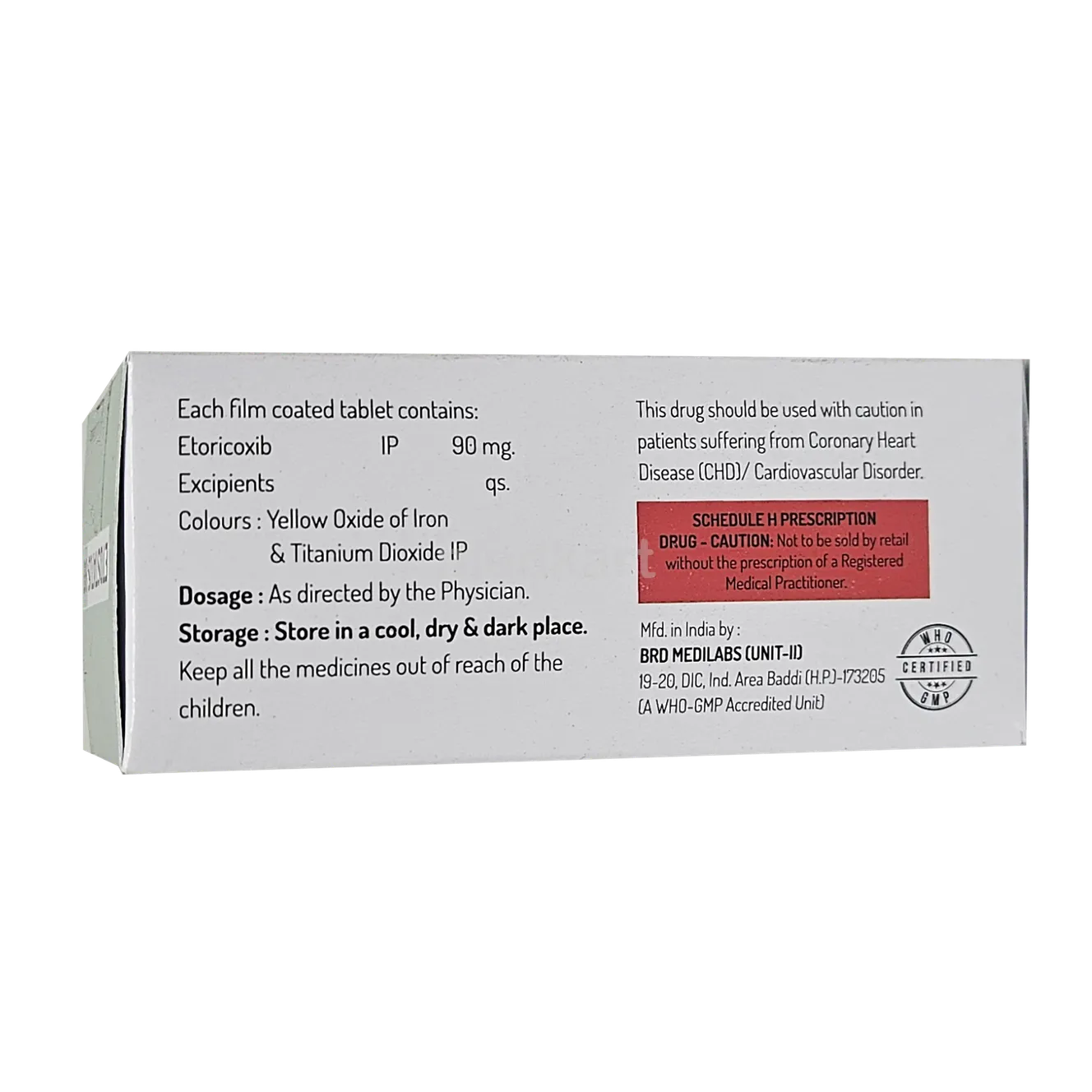
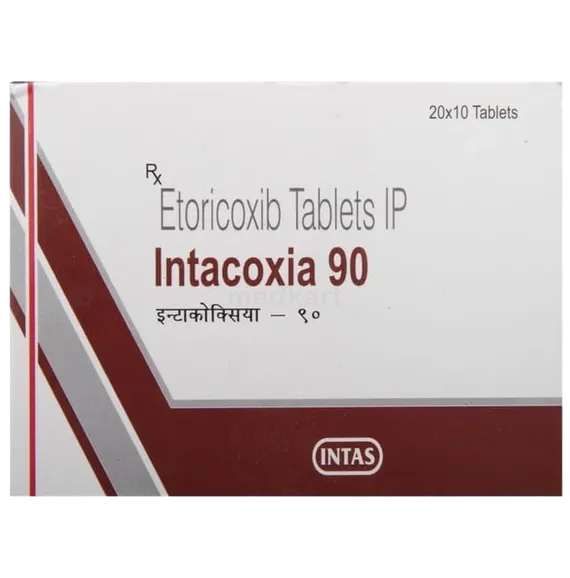
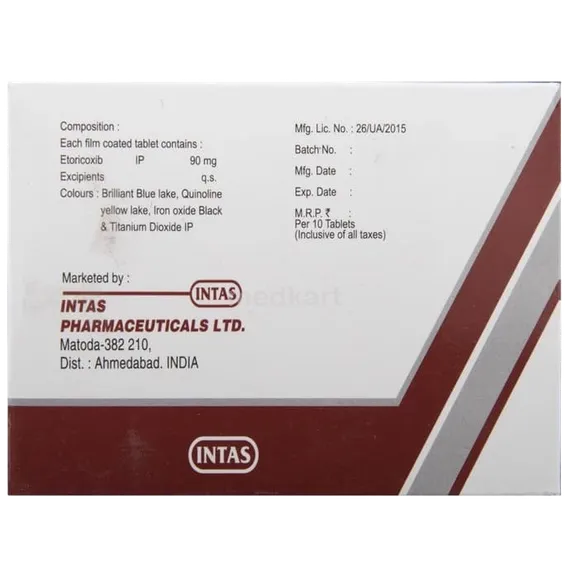
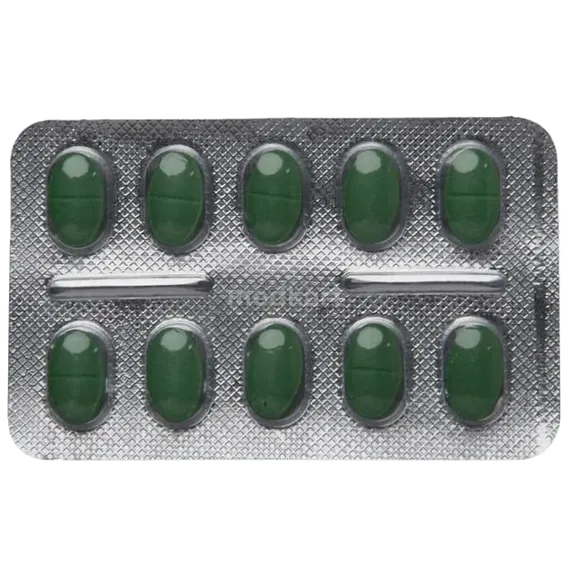
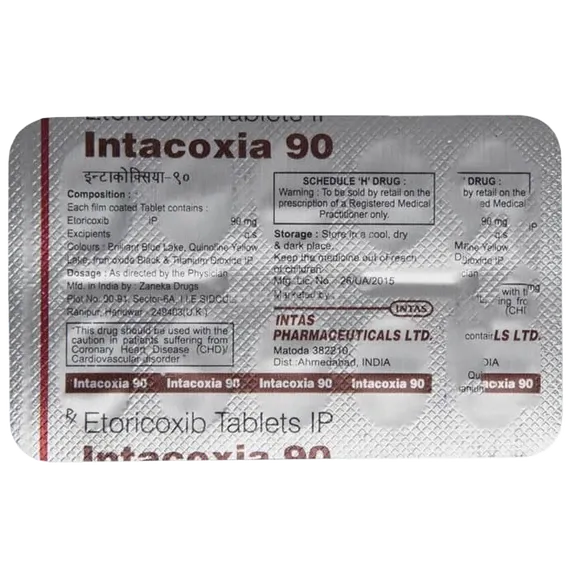
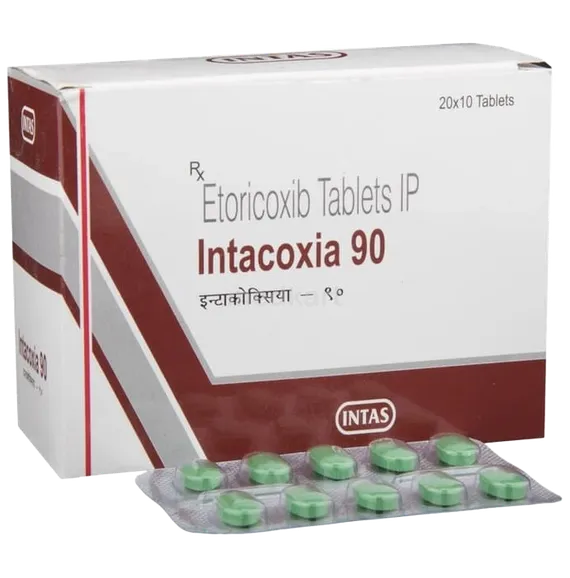
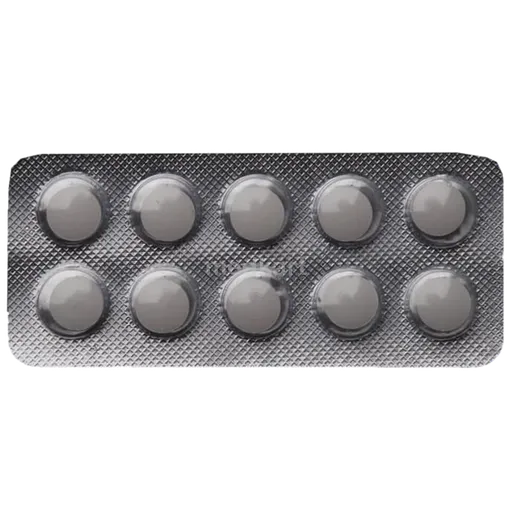
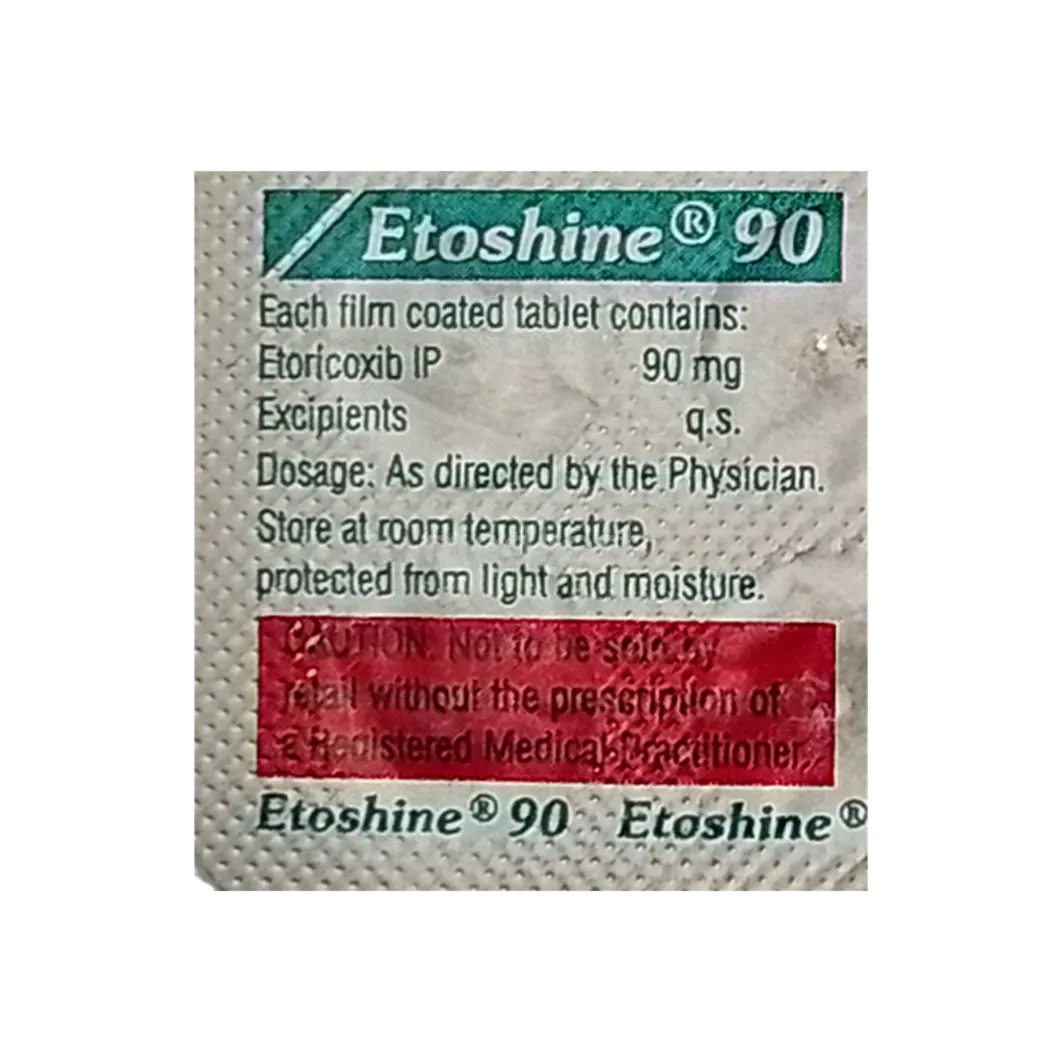
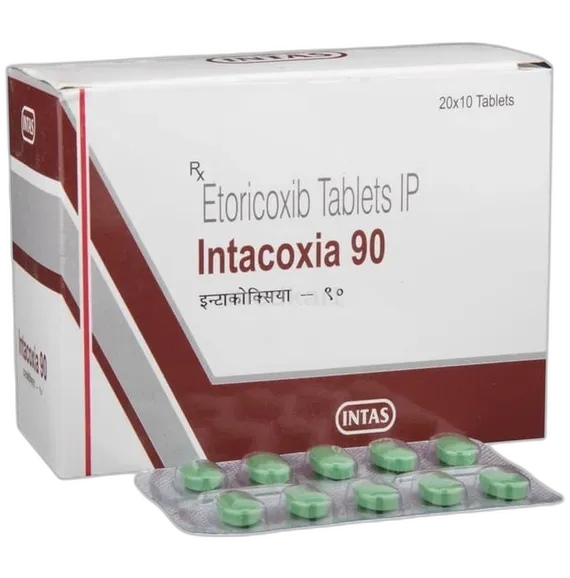
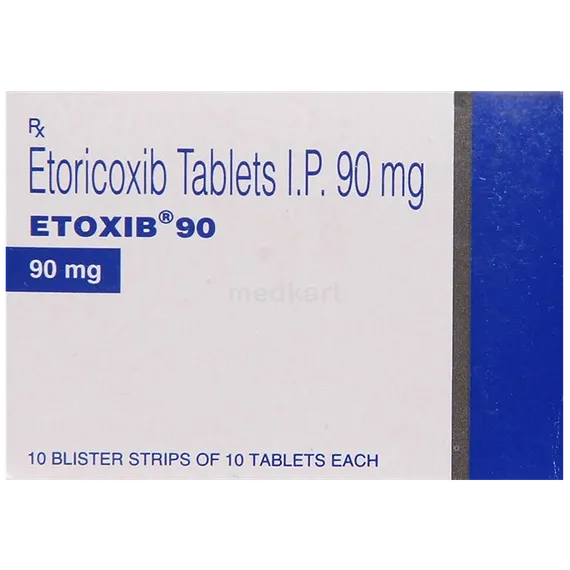
Intacoxia 90 Tablet 15's contains Etoricoxib 90 MG.
Intacoxia 90 Tablet 15's is listed at Rs. 86 on Medkart. Prices can change — check the product page for the current price and pack size.
The dose of Intacoxia 90 Tablet 15's depends on your condition, age, weight and other medicines you take, so it must be decided by your doctor. Follow the dose and duration on your prescription and do not change it on your own.
A generic medicine is one with the same active composition as the branded product — for Intacoxia 90 Tablet 15's that is Etoricoxib 90 MG. Medkart lists generic options by composition so you can compare. Ask your doctor or pharmacist before switching from Intacoxia 90 Tablet 15's.
Yes. Intacoxia 90 Tablet 15's requires a valid doctor's prescription.
Intacoxia 90 Tablet 15's is manufactured by Intas Pharmaceuticals Limited.
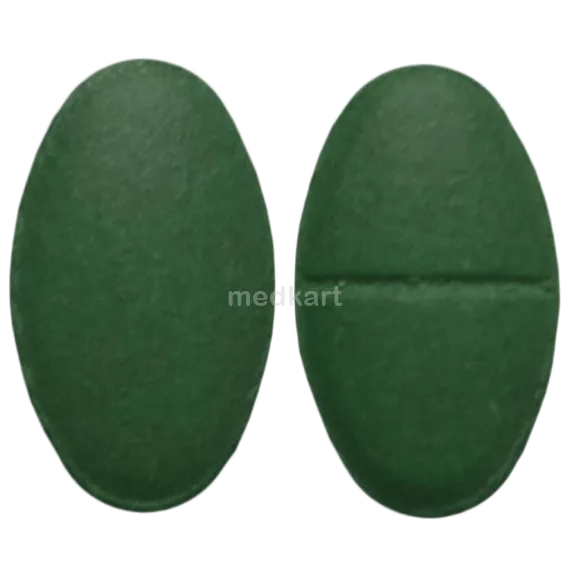
Intacoxia 90 Tablet 15's is supplied as a tablet and is taken by the oral route.
Whether Intacoxia 90 Tablet 15's can be taken daily, and for how long, depends on your condition and must be decided by your doctor. Do not start, extend or repeat a course of Intacoxia 90 Tablet 15's on your own.
The timing of Intacoxia 90 Tablet 15's depends on the dose your doctor prescribes and on the other medicines you take. Follow the timing on your prescription or ask your pharmacist.
No. Intacoxia 90 Tablet 15's is a prescription medicine and should only be taken on a doctor's advice.
Store Intacoxia 90 Tablet 15's in its original pack, below 25°C unless the pack states otherwise, away from direct sunlight and moisture, and out of the reach of children. Do not use it after the expiry date on the pack.
Intacoxia 90 Tablet 15's is marked discontinued on Medkart and cannot be ordered. Speak to your doctor or pharmacist about alternatives with the same composition.


WHO GMP certified generic medicines at affordable prices are available
Dhaval Talaviya
•
Reviewed on 23-05-2023

(5/5)
Service and prize is good
Bhavin Shah
•
Reviewed on 13-04-2024
(5/5)
Good
Dhara Patva
•
Reviewed on 10-02-2024
(5/5)
So good it's give information with medicine
sunil Nayi
•
Reviewed on 21-04-2024
(5/5)
Medicines at affordable and discounted rates... Good service...
George Thomas
•
Reviewed on 24-01-2024
(5/5)
INTAS PHARMACEUTICALS LIMITED
Country of Origin -
India
Medkart's sole intention is to ensure that its consumers get information that is expert-reviewed, accurate and trustworthy. However, the information contained herein should NOT be used as a substitute for the advice of a qualified physician. The information provided here is for informational purposes only. This may not cover everything about particular health conditions, medicines, generic alternatives, all possible side effects, drug interactions, warnings, alerts, lab tests, etc. Please consult your doctor and discuss all your queries related to any disease or medicine. We intend to support, not replace, the doctor-patient relationship.
10 Lakh+
Happy customers
35000+
Pin-codes Covered
75 Lakh+
Orders Delivered

Authentic Products
All WHO-GMP Certified Medicines






©2025 Medkart Pharmacy. All Rights Reserved






 10's_1.webp)