
Prescription Required


Authentic Product

India's Leading Generic Pharmacy

Secure Payment

By WOCKHARDT LIMITED
MRP
₹
651.99
₹554.19
15 % OFF

Check Delivery
--

Composition

Content Reviewed By:
Dr. Amit Patel
, (MBBS)
Written By:
Ms. Kavita Desai
, (B.Pharm)
Most side effects are temporary and disappear as your body gets used to GLARITUS PENFILL 3 ML. However, if these side effects persist or cause you concern, it is important to consult your doctor.

Allergies
Contraindicated in severe allergyDo not use Glaritus insulin if you have a known hypersensitivity to insulin glargine or any of the excipients in the formulation.
GLARITUS PENFILL 3 ML is a man-made insulin that is very similar to human insulin. It has a long and steady (constant) effect on blood sugar levels, lasting an entire day. This makes it suitable for use once daily. It treats type 2 diabetes mellitus in adults and type 1 diabetes mellitus in adults and children.
GLARITUS PENFILL 3 ML is injected under the skin (subcutaneously) with a pen-like device or an insulin syringe and needle. There are various areas on the body where insulin can be injected, such as the abdomen (stomach area), thighs (upper portion of legs), upper arms, hips, or buttocks. Your doctor will show you the area of your skin where you should inject it. Never inject it directly into a vein or a muscle. Before using GLARITUS PENFILL 3 ML, make sure the solution is colorless and free of particles. It should strictly be taken in the dose that has been prescribed to you. Follow your doctor’s instructions on administering GLARITUS PENFILL 3 ML correctly and monitor your blood sugar levels regularly.
GLARITUS PENFILL 3 ML is injected just below the skin (subcutaneously). Your doctor will train you on the correct method and the areas (abdomen or stomach, thighs, arms, hips, or buttocks) where you should inject it. It is advised that the injection site should be changed within the chosen skin area for every dose. For example, if you have been advised to inject it into the skin of your stomach, avoid puncturing the same point on your stomach every day. Instead, inject the needle at a site that is slightly away, say around 1cm, from the previous injection. You can also consider switching sides while injecting, like choosing the right side on one day and the left side on the next day. This way, you can reduce the complications associated with repeated injections in the same site, such as thickening of the fat tissue below the skin, known as lipodystrophy, irritation, pain, etc. After one to two weeks, you should move to another area of your body (e.g., from the stomach to the arms or thighs) as your doctor advises. Consult your doctor if you face any problems while injecting GLARITUS PENFILL 3 ML.
GLARITUS PENFILL 3 ML is long-acting and usually prescribed to be taken once daily. It can be taken at any time, but try to take it at the same time each day.
If you have accidentally taken more than the prescribed dose of GLARITUS PENFILL 3 ML, your blood sugar levels may become too low (hypoglycemia). This hypoglycemia may be mild or severe. Monitor your blood sugar levels more frequently for the next 24 hours. Mild episodes of hypoglycemia (with symptoms like anxiety, sweating, weakness, tremors, and fast heartbeat) can usually be corrected with the help of sugary foods such as sugary candy, fruit juice, and glucose. However, it is important to consult your doctor to decide on a further course of treatment. More severe episodes of hypoglycemia may even lead to a seizure (fit) or unconsciousness. This can be life-threatening, and the patient should be rushed to an emergency.
Keep this medication out of the reach of children in the container it came in. Store unopened vials and pens in the refrigerator, but do not freeze them. An unopened GLARITUS PENFILL 3 ML can be stored in the refrigerator until the date shown on the company's label. Moreover, never use GLARITUS PENFILL 3 ML that has been frozen or defrosted. If a refrigerator is unavailable, the vials can be stored at room temperature and away from direct sunlight and extreme heat. It should appear as a clear, colorless solution free from particles.
You should consult your doctor about the scenarios where you may need to adjust your insulin dose. For example, if you are ill, you should monitor your blood sugar levels more closely. You must tell your doctor about all the medicines you are taking because many medicines can affect how insulin acts, and you may need to modify your dose. Your eating habits may also affect your dose; for example, if you eat less someday, skip a meal, or eat more than usual. Your blood sugar level may alter depending on your exercise regime, alcohol consumption, or stress. Pregnant and breastfeeding mothers should consult their doctor before taking GLARITUS PENFILL 3 ML as they may need to change their dose.
Serious side effects are rare with GLARITUS PENFILL 3 ML. Sometimes, severe allergic reactions may be seen with it. This can lead to rash, hives, itching all over the body, trouble breathing (wheezing), fast heart rate, and low blood pressure. Get medical help right away if you develop any of these symptoms. Other side effects include severe hypoglycemia (low blood sugar levels), which can cause dizziness, sweating, anxiety, confusion, headache, blurred vision, slurred speech, shakiness, fast heartbeat, seizure (fit), and unconsciousness. Taking certain medicines such as TZDs (thiazolidinediones) may cause heart failure in some people, even if they have never had any heart problems before. Some people may also notice sudden weight gain and swelling (edema) of ankles or feet. Consult your doctor immediately if you notice any of these side effects.
Glaritus insulin is a long-acting insulin glargine preparation used to control blood sugar in people with diabetes mellitus. It is commonly prescribed for adults and children with type 1 diabetes as the basal component of insulin therapy, and for adults with type 2 diabetes when diet, exercise, and oral antidiabetic medicines are not enough to maintain good blood glucose control.
Glaritus insulin contains insulin glargine, a modified form of human insulin that is slowly released from the injection site. After subcutaneous injection, it forms microprecipitates in the fatty tissue, from which small amounts of insulin are gradually released over about 24 hours. This provides a relatively constant, peakless basal insulin level that helps control blood sugar between meals and overnight.
Yes, Glaritus insulin can be used in patients with kidney (renal) impairment, but with caution. Reduced kidney function can decrease insulin clearance, increasing the risk of hypoglycemia. Patients with chronic kidney disease may require lower insulin doses and more frequent blood glucose monitoring. Dose adjustments should always be made by a healthcare professional based on regular glucose readings and overall clinical status.
Glaritus insulin can be used in people with liver (hepatic) impairment, but careful monitoring is required. Liver disease can alter glucose production and insulin metabolism, which may increase the risk of both low and high blood sugar. In such patients, the insulin dose may need to be reduced and adjusted more cautiously, with close supervision by a doctor and frequent blood glucose checks.
Insulin is the preferred treatment for diabetes during pregnancy, and long-acting insulin glargine preparations like Glaritus are generally considered acceptable when clinically indicated. However, pregnancy changes insulin requirements, especially in the second and third trimesters. If you are pregnant or planning to become pregnant, your doctor will carefully assess the benefits and risks, may adjust your insulin regimen, and will recommend close monitoring of blood glucose to reduce risks to both mother and baby.
Insulin, including insulin glargine, is considered compatible with breastfeeding because it is a large peptide that, if present in breast milk, is likely to be broken down in the infant’s digestive tract. Glaritus insulin can usually be continued during breastfeeding, but insulin needs may change after delivery. Your doctor may adjust your dose and will advise you on monitoring your blood sugar closely in the postpartum period.
Alcohol can affect blood sugar levels and increase the risk of hypoglycemia, especially when combined with insulin. If you drink alcohol while using Glaritus insulin, do so in moderation, avoid drinking on an empty stomach, and monitor your blood glucose more frequently. Symptoms of low blood sugar can be mistaken for intoxication, so it is important to inform those around you that you have diabetes and to carry a source of fast-acting carbohydrate.
You can usually drive while using Glaritus insulin as long as your blood sugar is well controlled and you are able to recognize and manage hypoglycemia. Low blood sugar can impair concentration, reaction time, and judgment, increasing the risk of accidents. Check your blood glucose before driving, especially on long journeys, keep snacks or glucose tablets in the vehicle, and avoid driving if you have frequent or unawareness of hypoglycemia. Discuss any driving concerns with your doctor.
Allergic reactions to modern insulin preparations are uncommon but can occur. Mild reactions may include redness, itching, or swelling at the injection site. Severe allergy can cause rash, generalized itching, swelling of the face or throat, difficulty breathing, or dizziness, which require urgent medical attention. If you suspect an allergy to Glaritus insulin or any of its components, contact your doctor immediately. Do not stop insulin abruptly without medical advice, as this can lead to serious high blood sugar or ketoacidosis.
You should not change your Glaritus insulin dose on your own without consulting your healthcare provider. Insulin dosing is individualized and based on blood glucose readings, diet, physical activity, other medications, and medical conditions such as kidney or liver disease. Incorrect dose adjustments can lead to hypoglycemia or poor blood sugar control. Always follow your doctor’s instructions and share your glucose records regularly so that safe, gradual dose changes can be made if needed.
The most common side effect of Glaritus insulin is hypoglycemia (low blood sugar), which may cause sweating, tremor, hunger, headache, palpitations, confusion, or in severe cases, seizures or loss of consciousness. Other possible side effects include injection-site reactions such as redness, swelling, or itching, and changes in fat tissue at injection sites (lipohypertrophy or lipoatrophy). Rotating injection sites and using proper injection technique can help reduce local reactions. If you experience repeated or severe low blood sugar episodes, contact your doctor promptly.
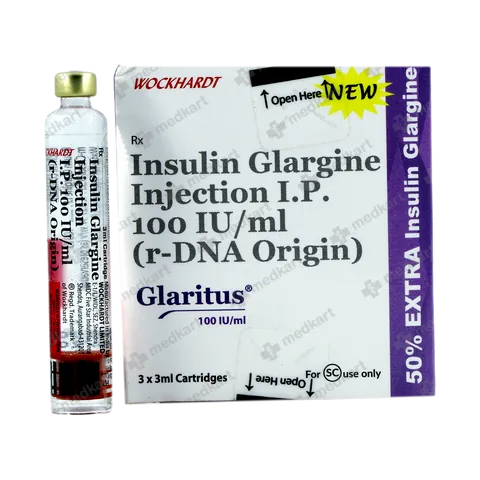
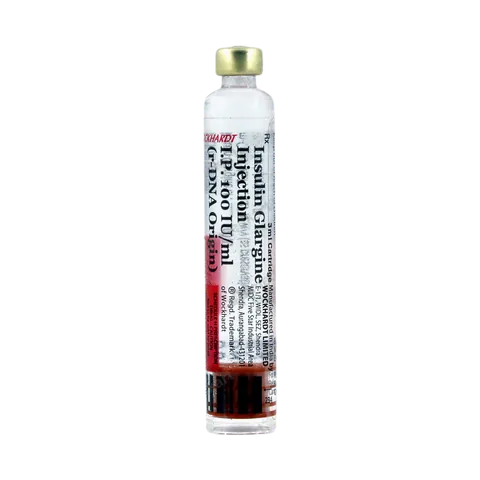
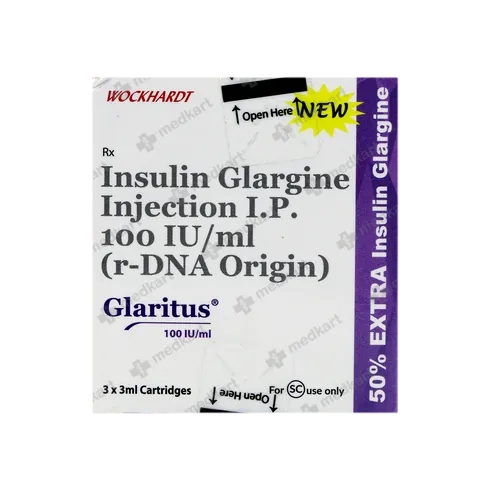
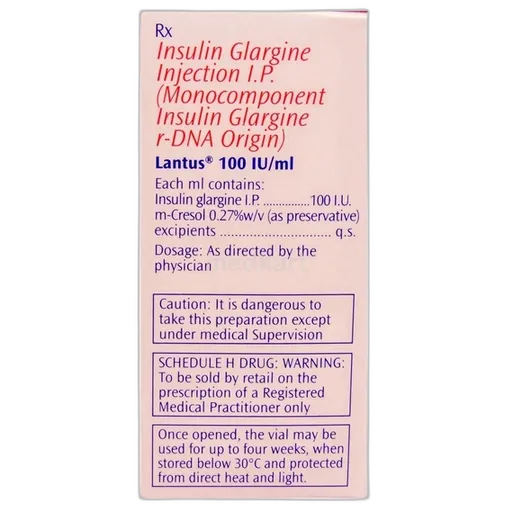
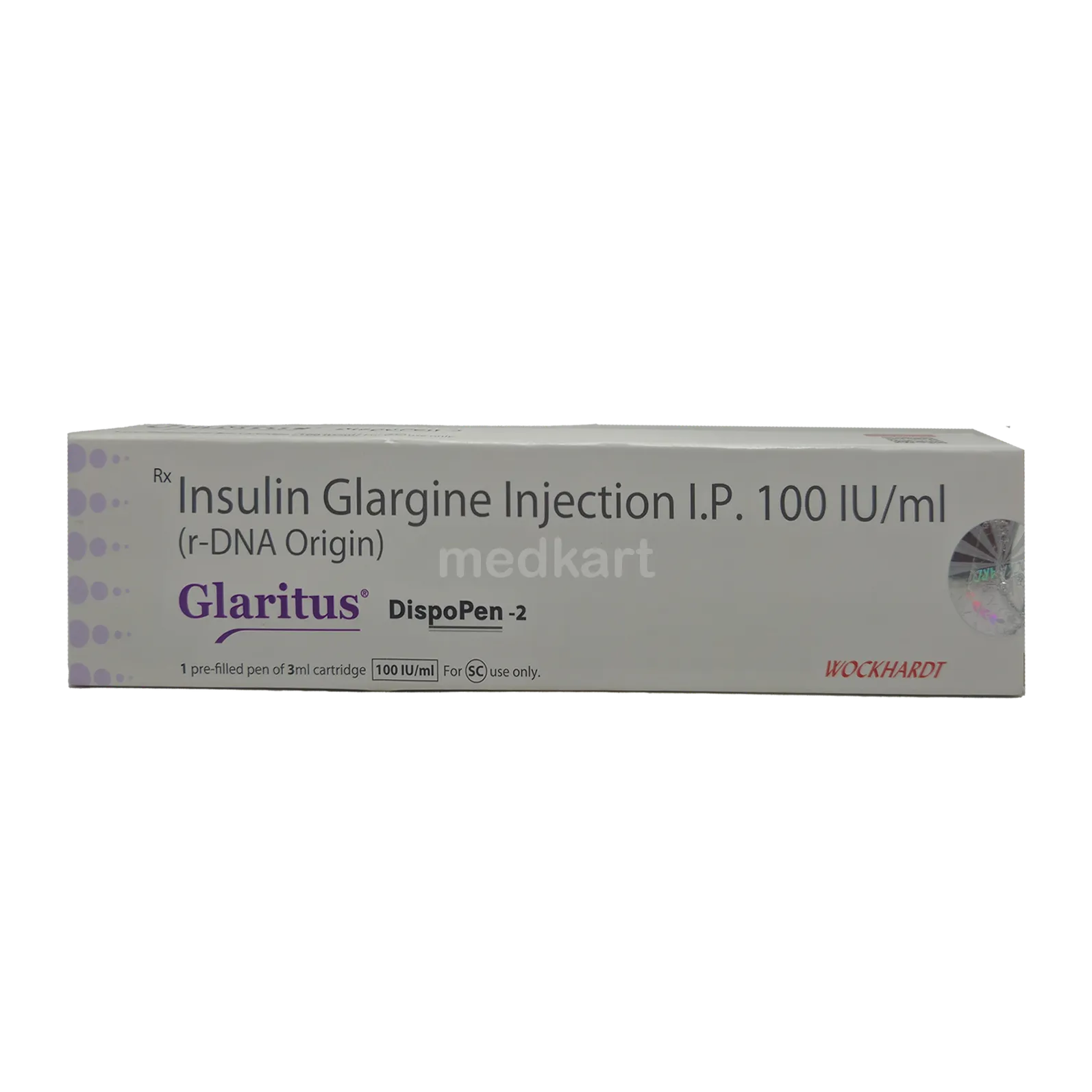
Glaritus Penfill 3 ML contains Insulin Glargine 100 IU.
Glaritus Penfill 3 ML is listed at Rs. 554.19 on Medkart. Prices can change — check the product page for the current price and pack size.
The dose of Glaritus Penfill 3 ML depends on your condition, age, weight and other medicines you take, so it must be decided by your doctor. Follow the dose and duration on your prescription and do not change it on your own.
A generic medicine is one with the same active composition as the branded product — for Glaritus Penfill 3 ML that is Insulin Glargine 100 IU. Medkart lists generic options by composition so you can compare. Ask your doctor or pharmacist before switching from Glaritus Penfill 3 ML.
Yes. Glaritus Penfill 3 ML requires a valid doctor's prescription.
Glaritus Penfill 3 ML is manufactured by Wockhardt Limited.
Glaritus Penfill 3 ML is supplied as a injection and is taken by the parenteral route.
Whether Glaritus Penfill 3 ML can be taken daily, and for how long, depends on your condition and must be decided by your doctor. Do not start, extend or repeat a course of Glaritus Penfill 3 ML on your own.
The timing of Glaritus Penfill 3 ML depends on the dose your doctor prescribes and on the other medicines you take. Follow the timing on your prescription or ask your pharmacist.
No. Glaritus Penfill 3 ML is a prescription medicine and should only be taken on a doctor's advice.


Very great service
Bored as hell
•
Reviewed on 30-12-2022

(5/5)
Good place to buy generic medicines
Patel Jinal
•
Reviewed on 24-05-2023
(5/5)
Service and prize is good
Bhavin Shah
•
Reviewed on 13-04-2024
(5/5)
Good pharmacy
shashiprakash sharma
•
Reviewed on 20-08-2023
(5/5)
Super
Piraram Desai
•
Reviewed on 18-05-2023
(5/5)
WOCKHARDT LIMITED
Country of Origin -
India
MRP
₹
651.99
₹554.19
15 % OFF
Quick Links

Medkart's sole intention is to ensure that its consumers get information that is expert-reviewed, accurate and trustworthy. However, the information contained herein should NOT be used as a substitute for the advice of a qualified physician. The information provided here is for informational purposes only. This may not cover everything about particular health conditions, medicines, generic alternatives, all possible side effects, drug interactions, warnings, alerts, lab tests, etc. Please consult your doctor and discuss all your queries related to any disease or medicine. We intend to support, not replace, the doctor-patient relationship.
10 Lakh+
Happy customers
35000+
Pin-codes Covered
75 Lakh+
Orders Delivered

Authentic Products
All WHO-GMP Certified Medicines






©2025 Medkart Pharmacy. All Rights Reserved











 10's_1.webp)