
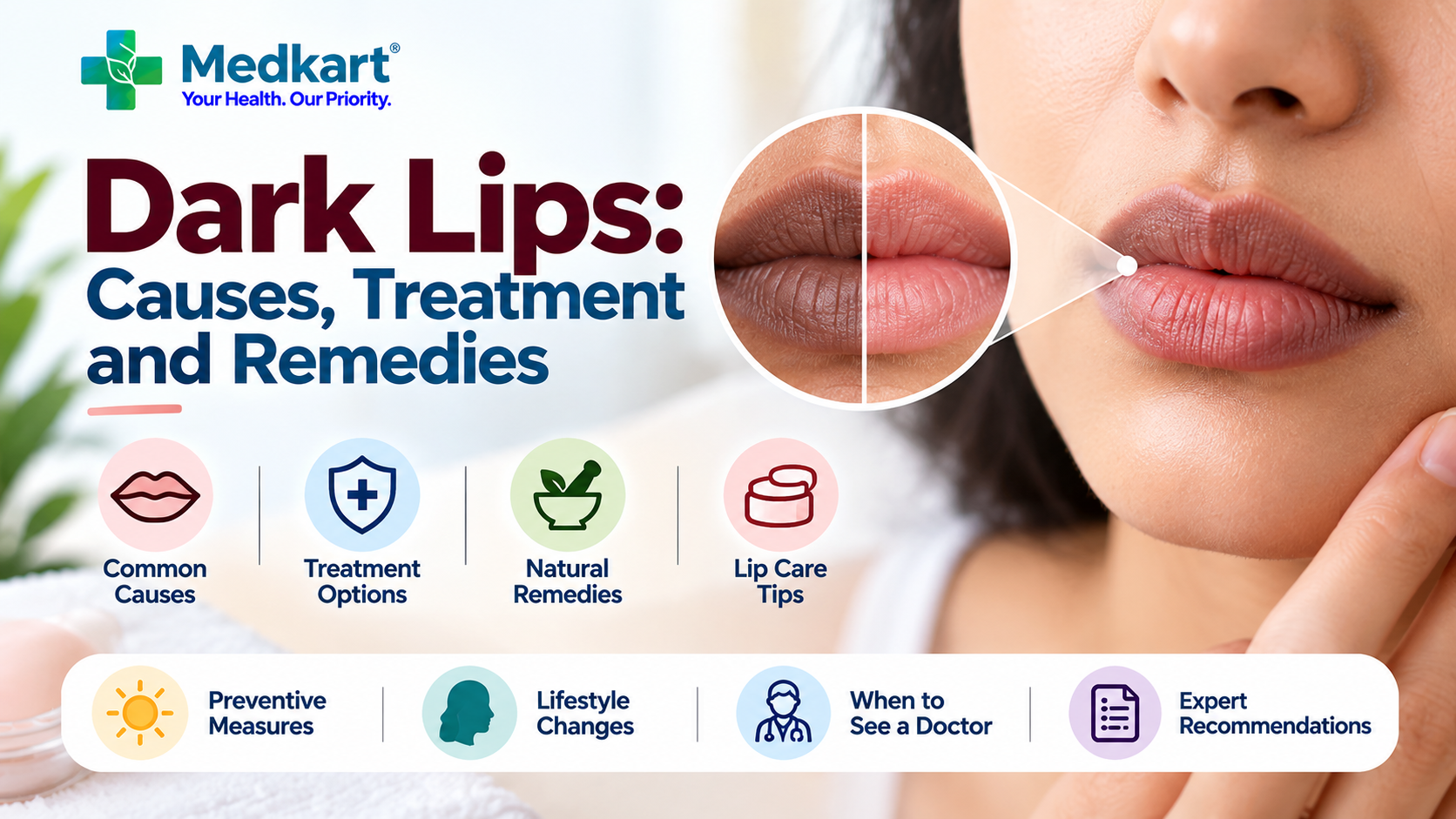
Lip colour comes from blood flow through thin skin and from melanin, the pigment made by cells called melanocytes. When lips darken, one of those two things has usually changed.
Two findings shape this article. The strongest measured cause of lip darkening is tobacco, and the most recent international guideline on pigmentation disorders does not cover the lip at all.
What Causes Dark Lips?
MedlinePlus[1] describes skin with too much melanin as hyperpigmented, and lists the general causes. The table sets out the ones that reach the lips, and it describes what the sources report rather than offering a way to self-diagnose.
| Feature | What The Sources Say |
| Smoking and tobacco | A case-control study of 213 men[2] found current smoking strongly associated with lip pigmentation. |
| Sun exposure | MedlinePlus names sun exposure among the causes of increased melanin, and the NHS[3] names sunlight among the risks to the lips. |
| Medicines | MedlinePlus names minocycline, some cancer chemotherapies and birth control pills among the drug causes. |
| Inflammation that has healed | MedlinePlus records darkening that follows skin inflammation, described as post-inflammatory hyperpigmentation. |
| Hormone conditions | MedlinePlus names Addison disease among the hormone system causes of darker skin. |
| Inherited syndromes | MedlinePlus Genetics[4] records dark spots on and around the lips as a feature of Peutz-Jeghers syndrome. |
Why Smoking Shows on the Lips
The 2007 study in Oral Diseases assessed photographs of 213 men and found that 73% of those with lip pigmentation were current smokers, against 33% of those without.
The odds ratio for current smoking against lip pigmentation was 5.6. Daily consumption, duration of smoking and lifetime exposure all correlated with how heavy the pigmentation was.
Can Dark Lips Be a Sign of Something Serious?
Usually not, and occasionally yes. The conditions below are uncommon, and they are the reason a persistent change is worth showing to a doctor rather than treating at home.
Addison’s disease is one. The NHS[5] lists areas of skin darker than the surrounding skin among its symptoms, alongside extreme tiredness, weight loss, salt cravings and dizziness on standing.
Peutz-Jeghers syndrome is another. MedlinePlus Genetics describes small dark spots on the lips, around and inside the mouth and near the eyes and nostrils. They appear in childhood, often fade with age, and belong to a condition carrying a high lifetime cancer risk.
Cancer of the lip itself is the third. The NHS[6] names a lump on the lip, a red or white patch inside the mouth, and a mouth ulcer lasting more than three weeks among mouth cancer symptoms.
Also Read: Preventing skin infections
What Treatment Do the Guidelines Describe?
Here the honest answer is a gap. A global consensus on the management of melanin hyperpigmentation disorders[7] was published in the Journal of the European Academy of Dermatology and Venereology in 2025. Ten experts across four continents developed it using a Delphi method.
It covers melasma, post-inflammatory hyperpigmentation, periorbital hyperpigmentation, freckles, photodamage and pigmentation of the skin folds. It does not address the lips or mucosal pigmentation.
What it does establish applies more widely. The consensus calls photoprotection key across every pigmentation disorder it covers, and describes broad-spectrum cover against ultraviolet and visible light. For the visible part it names tinted sunscreens containing iron oxide or titanium dioxide.
It also treats the strongest topical agents as restricted rather than routine. Hydroquinone appears in its recommendations with limits on how long it is used, which is a decision for a dermatologist rather than a shelf.
Do Home Remedies for Dark Lips Work?
No source retrieved for this article tested any of them. The guideline above does not reach the lips, and no trial of a household preparation on lip pigmentation was found.
The recipes that circulate are not evidence. They appear on commercial pages that publish no measurements, and repeating their quantities under a doctor’s byline would mean inventing a treatment.
That is a statement about the search rather than a verdict on any ingredient. What can be said is that the one intervention with measured support behind it is stopping tobacco, and that it costs nothing.
Are Skin Lightening Products Safe?
Some are actively dangerous, and the reason is worth reading twice. The World Health Organization[8] records mercury as a common ingredient in skin lightening creams and soaps, working by inhibiting the formation of melanin.
Its listed harms include the thing the buyer was trying to fix. The WHO names kidney damage, skin rashes, skin discolouration and scarring, reduced resistance to bacterial and fungal infections, anxiety, depression, psychosis and peripheral neuropathy.
Regulation exists and is widely outrun. The Minamata Convention sets a mercury limit for skin lightening products, and the WHO records that many exceed it to increase the whitening effect. Such products remain easy to obtain even where they are banned.
Mercury-free is not the same as safe. The WHO notes that products without mercury may contain other hazardous substances such as hydroquinone, and that buyers are often unaware of the risks.
The WHO also names the demand side plainly. It records that beauty standards promoted by media, advertising and marketing reinforce a bias that lighter skin is more desirable than darker skin.
How Can Further Darkening Be Prevented?
Three things have sources behind them. The first is tobacco, given the size of the association measured in the Oral Diseases study.
The second is sun. The consensus treats photoprotection as the foundation of managing pigmentation elsewhere on the body, and the NHS names sunlight and sunbeds among the exposures that affect the lips.
The third is avoidance. Nothing in the WHO note supports buying an unregulated lightening product, and its harm list includes further discolouration and scarring.
When Should You See a Doctor?
Book an appointment if the darkening is new, if it is spreading, or if one spot looks different from the rest. You do not need to work out the cause first.
| Situation | What To Do |
| A mouth ulcer lasting more than three weeks | See a doctor or a dentist. The NHS names this among mouth cancer symptoms. |
| A lump on the lip, or a red or white patch in the mouth | See a doctor or a dentist. The NHS lists all three together. |
| One spot that is changing shape, size or colour | See a doctor. MedlinePlus names a changing lesion as a reason to seek care. |
| Darkening with tiredness, weight loss or dizziness on standing | See a GP. The NHS lists these together among Addison’s disease symptoms. |
| Dark spots on the lips present since childhood | Raise it with a doctor. MedlinePlus Genetics describes this pattern in Peutz-Jeghers syndrome. |
| Darkening that started after a new medicine | Speak to the prescriber rather than stopping it. MedlinePlus names several drug causes. |
| Any reaction after using a lightening cream | Stop and seek advice. The WHO records rashes, discolouration and scarring among mercury effects. |
What This Article Cannot Tell You
It cannot say why any individual’s lips are dark. The same appearance follows from tobacco, sun, medicines, healed inflammation, an inherited syndrome and a hormone condition, and only examination separates them.
It cannot offer a method for lightening them. The guideline that governs pigmentation elsewhere does not extend to the lip, and no tested household preparation was retrieved.
It cannot say whether a given spot is harmless. That is what a doctor or dentist looks at.
It also cannot tell anyone what their lips should look like. Lip colour varies between people, and the WHO’s note on beauty standards is part of this subject rather than separate from it.
Where Can You Buy Lip Care and Quit-Smoking Products on Medkart?
The measure with the most evidence behind it here is stopping tobacco. Medkart sells medicines online and lists nicotine replacement products, including those containing nicotine in two listed strengths, such as Nicotex from Cipla. Which one suits a person is a question for a pharmacist.
Sun and moisture products sit in the personal care range. Listed items include the Cetaphil Sun SPF 50 Plus gel and Vaseline Deep Moisture Lotion, and nutritional supplements are listed separately.
Nothing here says any of these treats the condition, and no product on any pharmacy shelf has been shown in a retrieved source to lighten lips. Medkart lists these products and does not test or approve them. Availability and price can change.
Medkart’s medicine comparison tools can be used to compare listed options on:
- Active ingredient
- Strength
- Dosage form
- Manufacturer
- Pack size
- Current price
It is also possible to search by name, browse the full medicine list, or find the nearest Medkart store.
Key takeaways
- Lip colour comes from blood flow and from melanin, and darkening usually means one of those has changed.
- In a study of 213 men, 73% of those with lip pigmentation were current smokers against 33% of those without.
- The odds ratio for current smoking against lip pigmentation was 5.6, and it rose with how much and how long people smoked.
- Named causes also include sun, some medicines, healed inflammation, Addison’s disease and Peutz-Jeghers syndrome.
- The 2025 global consensus on pigmentation disorders does not cover the lips or mucosal pigmentation.
- No trial of a home remedy for dark lips was retrieved for this article.
- The WHO records mercury in lightening creams, whose harms include skin discolouration and scarring.
- Mercury-free lightening products may still contain other hazardous substances such as hydroquinone.
FAQs
Q. Do dark lips go away after quitting smoking?
The literature on smoking-related pigmentation describes it as fading rather than vanishing on a timetable. The case-control study opened here measured the association rather than following people who stopped, so it cannot give a schedule. What it does show is that the pigmentation tracked with how much and how long people had smoked.
Q. Can lip balm make lips pink again?
No retrieved source tested that. Balms address dryness and cracking, which are different problems from pigment sitting in the skin. The consensus on pigmentation disorders does not reach the lips at all, so there is no guideline position on any lip product either way.
Q. Is dark pigmentation on the lips normal?
Lip colour varies widely between people and within families. The sources opened here describe patterns that warrant a look, such as a single changing spot or spots present since childhood, rather than defining a correct shade.
Q. Does drinking more water lighten the lips?
Nothing retrieved for this article addresses it. Dehydration affects how dry lips feel and look, but no source opened here links fluid intake to melanin in the lip. The question has not been answered rather than answered in the negative.
Q. Why are the lips darker in the middle or in one patch?
A single well-defined dark spot on the lip has its own name in dermatology and its own list of possible causes, including ones that need ruling out. That is a reason for an examination rather than a home remedy, because appearance alone does not separate a harmless spot from one that matters.
Q. Are herbal or ayurvedic lightening creams safer than others?
Being herbal is not a safety claim the sources support. The WHO warns about hazardous ingredients in this product category generally, and records that buyers are frequently unaware of what they are applying. A pharmacist can check an ingredient list before anything goes on the skin.
References
- https://medlineplus.gov/ency/article/003242.htm
- https://pubmed.ncbi.nlm.nih.gov/17241433/
- https://www.nhs.uk/conditions/mouth-cancer/causes/
- https://medlineplus.gov/genetics/condition/peutz-jeghers-syndrome/
- https://www.nhs.uk/conditions/addisons-disease/symptoms/
- https://www.nhs.uk/conditions/mouth-cancer/symptoms/
- https://pmc.ncbi.nlm.nih.gov/articles/PMC13109754/
- https://www.who.int/publications/i/item/WHO-CED-PHE-EPE-19.13
Medical disclaimer: This article gives general information about lip pigmentation and is not a diagnosis. It cannot tell any individual why their lips have darkened or whether a spot is harmless, because those questions need a doctor or dentist and an examination. Nothing here is a method for lightening lips, unregulated skin lightening products carry documented harms, and no medicine or supplement should be started, stopped or changed without advice from the prescriber or a qualified pharmacist.
Leave a Reply