
Prescription Required

Authentic Product

India's Leading Generic Pharmacy

Secure Payment

By SUN PHARMACEUTICAL INDUSTRIES LTD
MRP
₹
237.18
₹201.6
15 % OFF
₹13.44 Only /
Tablet
Check Delivery
--

Content Reviewed By:
Dr. Amit Patel
, (MBBS)
Written By:
Ms. Kavita Desai
, (B.Pharm)
Common side effects of GEMER 2MG TABLET may include nausea, diarrhea, constipation, stomach upset, loss of appetite, and metallic taste. More serious side effects include hypoglycemia (low blood sugar), which can cause symptoms like shakiness, sweating, rapid heartbeat, confusion, and blurred vision. Allergic reactions such as skin rash, itching, and hives can occur. Liver problems, indicated by jaundice (yellowing of the skin or eyes), dark urine, and abdominal pain, are rare but possible. Other potential side effects are headache, dizziness, and weight gain. It is important to contact your doctor immediately if you experience any severe or persistent side effects.

General precautions and monitoring
Medical supervision advisedGemer should be taken exactly as prescribed, usually with meals, and patients should not change the dose or stop the medicine without consulting their doctor.
GEMER 2MG Tablet is used to treat type 2 diabetes mellitus when diet and exercise alone are not enough to control blood sugar levels.
GEMER 2MG Tablet works by increasing the release of insulin from the pancreas and by making the body more sensitive to insulin.
Common side effects of GEMER 2MG Tablet include low blood sugar (hypoglycemia), nausea, diarrhea, and abdominal pain.
The safety of GEMER 2MG Tablet during pregnancy has not been established. Therefore, it should only be used if the benefit outweighs the risks and only when advised by a doctor.
It is not known whether GEMER 2MG Tablet is excreted in breast milk. Breastfeeding women should consult a doctor before using this medication.
The dosage of GEMER 2MG Tablet is determined by the doctor. It is usually taken once daily with food.
If you miss a dose of GEMER 2MG Tablet, take it as soon as possible. However, if it is almost time for your next dose, skip the missed dose and continue with your regular schedule. Do not double the dose.
Drinking alcohol with GEMER 2MG Tablet may increase the risk of low blood sugar. Therefore, drinking alcohol with this medication should be avoided.
GEMER 2MG Tablet may interact with certain other medications, such as insulin, warfarin, and aspirin. It is important to tell your doctor if you are taking any other medications.
GEMER 2MG Tablet may cause weight gain in some patients. It is important to monitor your weight and talk to your doctor if you have any concerns.
Store GEMER 2MG Tablet at room temperature, away from heat and moisture. Keep it out of reach of children.
An overdose of GEMER 2MG Tablet can cause low blood sugar, which can be serious. If you suspect that you have taken an overdose, seek immediate medical attention.
GEMER 2MG Tablet is generally recommended to be taken with food to help reduce the risk of low blood sugar.
Alternatives to GEMER 2MG Tablet include other sulfonylureas, metformin, DPP-4 inhibitors, SGLT2 inhibitors, and insulin. Talk to your doctor about what is the best option for you.
GEMER 2MG Tablet should be used with caution in people with kidney disease, as it may worsen kidney problems. Dosage adjustments may be necessary. Consult your doctor.
Gemer is a combination oral antidiabetic medicine containing glimepiride and metformin (often in sustained‑release form). It is used in adults with type 2 diabetes mellitus to improve blood glucose control when diet, exercise, and single‑agent therapy do not provide adequate control. It helps reduce both fasting and post‑meal blood sugar levels.
Gemer works through two complementary mechanisms. Glimepiride, a sulfonylurea, stimulates the pancreas to release more insulin, thereby lowering blood glucose. Metformin, a biguanide, reduces glucose production by the liver, improves the body’s sensitivity to insulin, and decreases intestinal absorption of glucose. Together, these actions help achieve better glycaemic control in type 2 diabetes.
No, Gemer is not indicated for type 1 diabetes mellitus or for the treatment of diabetic ketoacidosis. Its glimepiride component requires functioning pancreatic beta cells to exert its effect, which are absent or severely impaired in type 1 diabetes. Insulin therapy is required for type 1 diabetes, and any changes in treatment should be made only under specialist supervision.
Common side effects of Gemer include hypoglycaemia (low blood sugar), especially if meals are delayed or missed, or if physical activity is increased without adjustment. Symptoms may include sweating, tremor, hunger, palpitations, dizziness, and headache. Metformin‑related gastrointestinal effects such as nausea, vomiting, abdominal discomfort, diarrhoea, and metallic taste are also common, particularly at the start of treatment. These are often mild and may improve with time.
Glimepiride, like other sulfonylureas, can be associated with modest weight gain due to increased insulin levels and improved glucose utilisation. Metformin, on the other hand, is generally weight‑neutral or may contribute to slight weight reduction in some patients. The overall effect of Gemer on body weight varies between individuals and is influenced by diet, physical activity, and other medications.
Yes. Because Gemer contains glimepiride, it can cause hypoglycaemia, particularly if you skip or delay meals, reduce food intake, consume alcohol, engage in unaccustomed strenuous exercise, or use it with other glucose‑lowering medicines. Patients should be educated about recognising symptoms of low blood sugar and how to manage them, such as taking fast‑acting carbohydrates and seeking medical help if symptoms are severe or persistent.
Gemer must be used with caution in patients with reduced kidney function because metformin is eliminated through the kidneys and can accumulate, increasing the risk of lactic acidosis. In moderate to severe renal impairment, Gemer may be contraindicated or require dose adjustment, depending on kidney function tests (such as estimated glomerular filtration rate). Patients with any degree of kidney disease should use Gemer only under close medical supervision with regular monitoring.
Use of Gemer during pregnancy is generally not recommended unless specifically advised by a specialist. Insulin is usually preferred for managing diabetes in pregnancy because it allows tighter control and has a more established safety profile. Women who are pregnant, planning to become pregnant, or who discover they are pregnant while taking Gemer should consult their doctor promptly to review and adjust their diabetes treatment plan.
Both glimepiride and metformin may pass into breast milk to some extent. The safety of Gemer during breastfeeding has not been firmly established, and there is a potential risk of hypoglycaemia in the nursing infant. The decision to use Gemer while breastfeeding should be made by the treating physician after weighing the benefits of breastfeeding, the clinical need for Gemer, and possible risks to the infant. Alternative treatments, including insulin, may be considered.
Alcohol intake should be limited while taking Gemer. Alcohol can increase the risk of hypoglycaemia, especially when combined with sulfonylureas like glimepiride. In addition, excessive alcohol use, acute or chronic, can increase the risk of metformin‑associated lactic acidosis. Patients should discuss their alcohol consumption with their doctor and avoid binge drinking or drinking on an empty stomach.
If you miss a dose of Gemer, take it as soon as you remember, provided it is not almost time for your next scheduled dose. If it is close to the next dose, skip the missed dose and continue with your regular dosing schedule. Do not take a double dose to make up for a missed one, as this may increase the risk of hypoglycaemia. If you are unsure, seek advice from your doctor or pharmacist.
Serious but less common risks with Gemer include severe hypoglycaemia, which can lead to loss of consciousness or seizures, and metformin‑associated lactic acidosis, a rare but potentially life‑threatening condition. Lactic acidosis is more likely in patients with significant kidney impairment, severe infections, dehydration, heart failure, liver disease, or heavy alcohol use. Symptoms include unexplained fatigue, muscle pain, abdominal discomfort, rapid or difficult breathing, and drowsiness. Immediate medical attention is required if these occur.
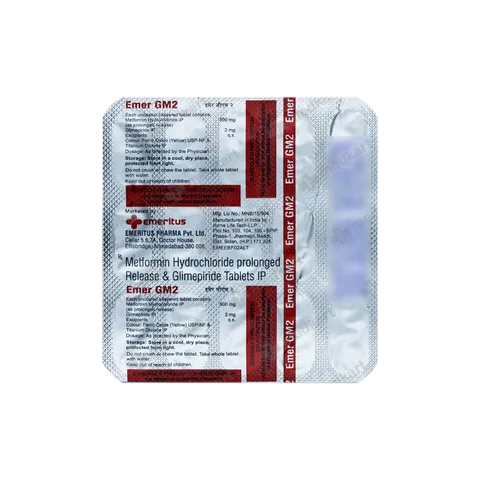
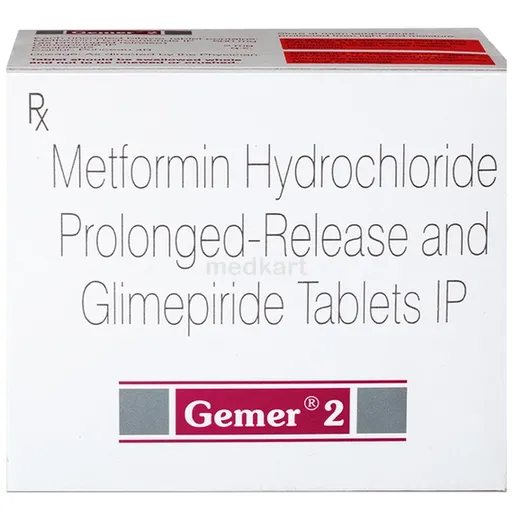
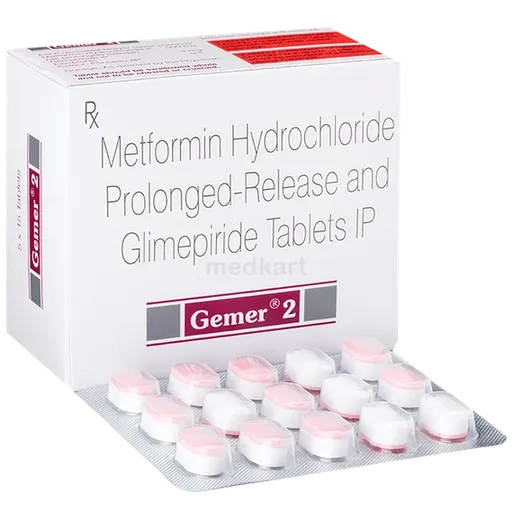
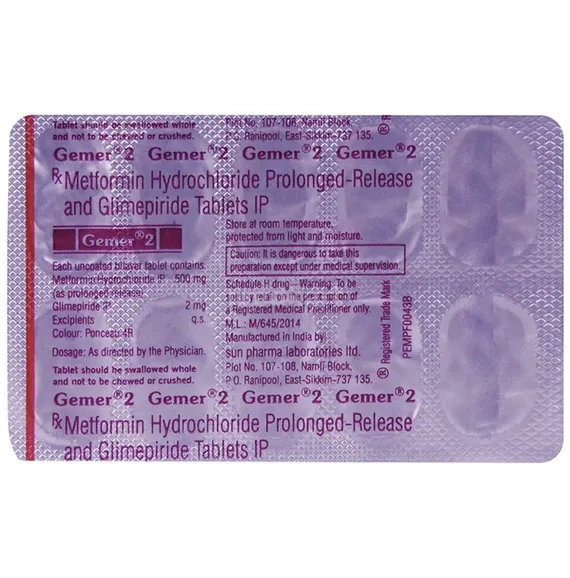
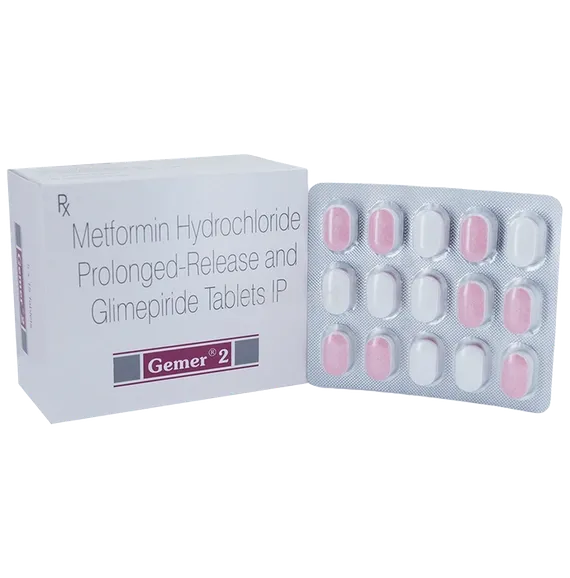
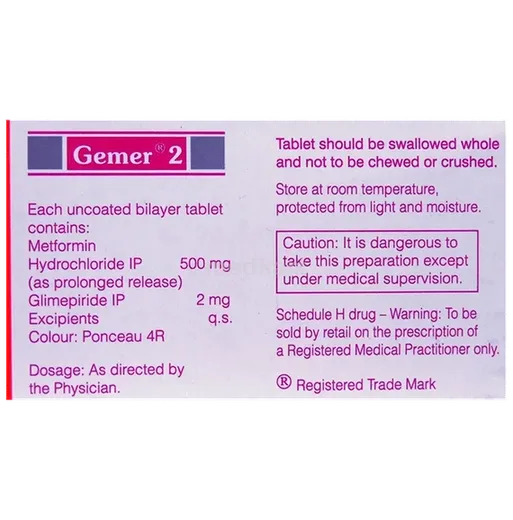
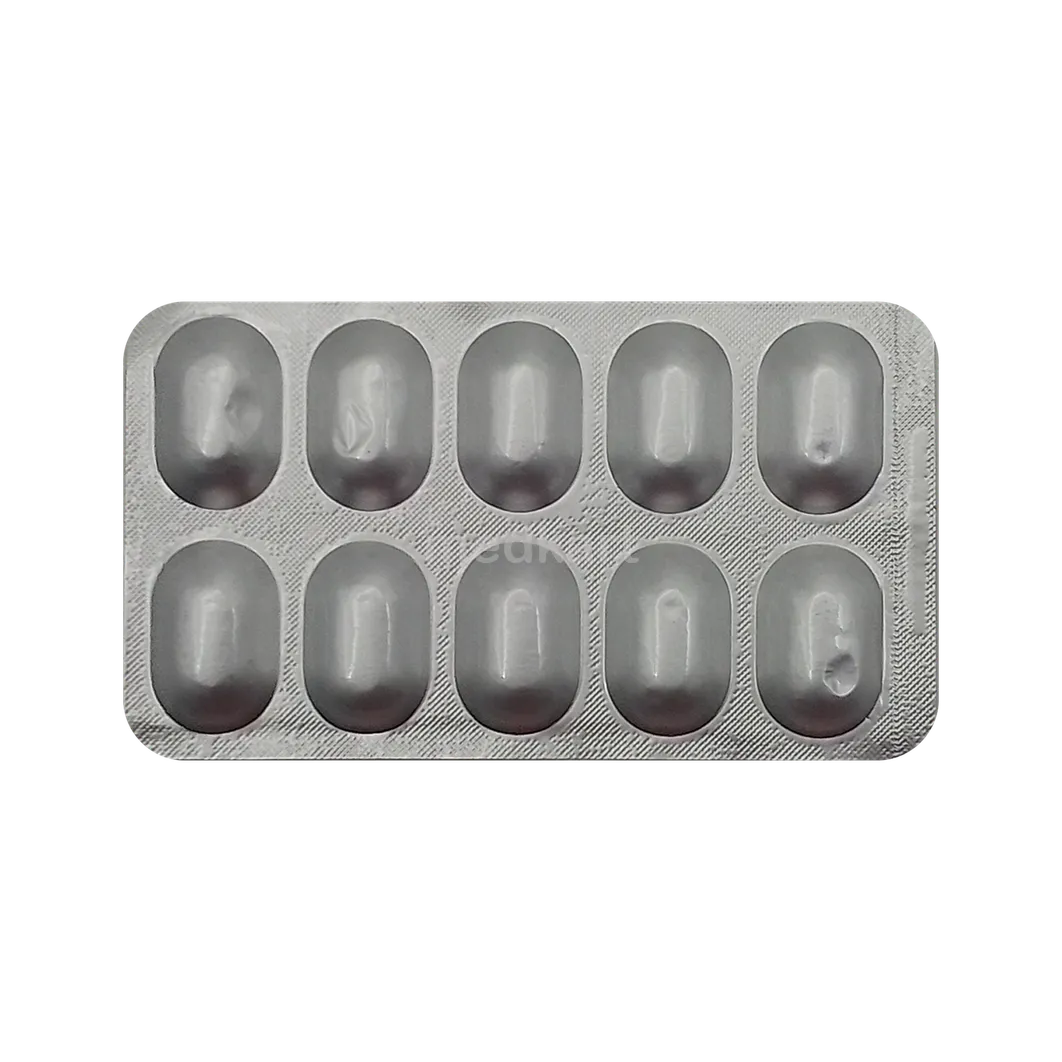
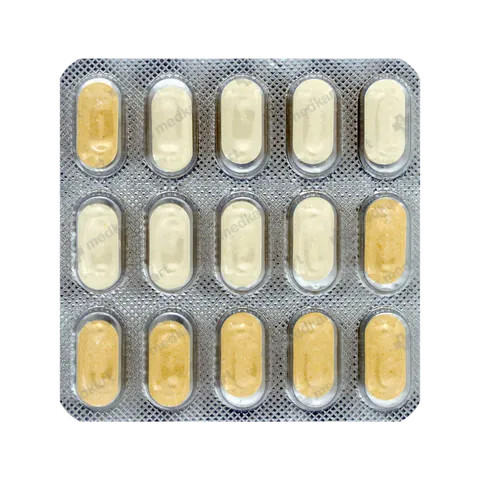
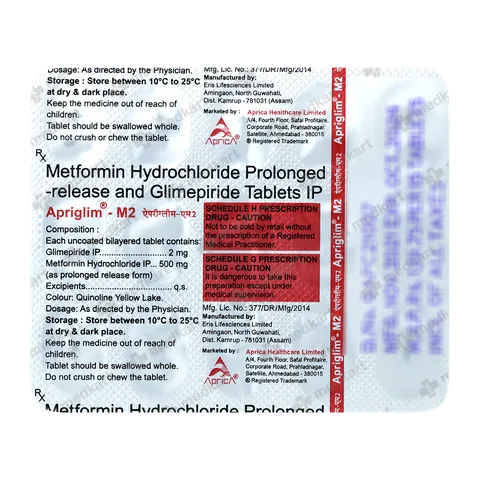
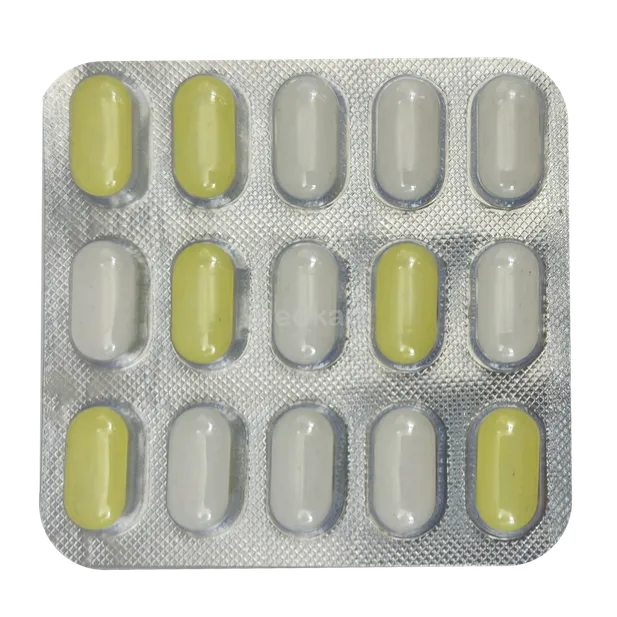
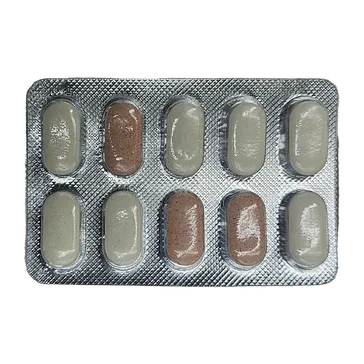
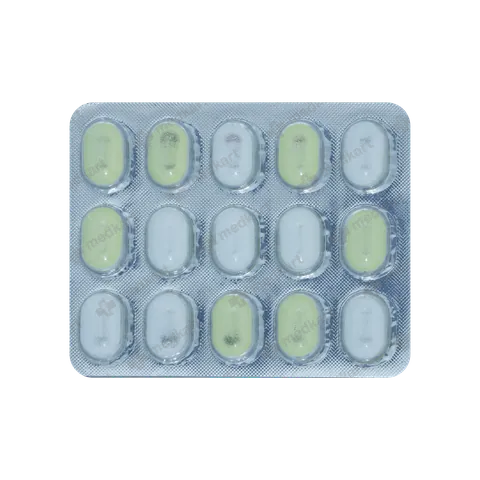
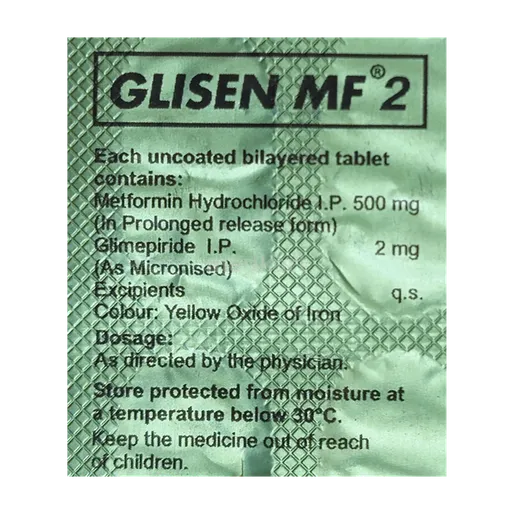
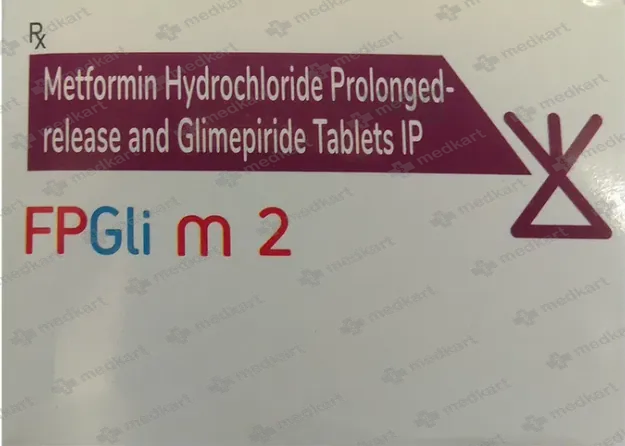
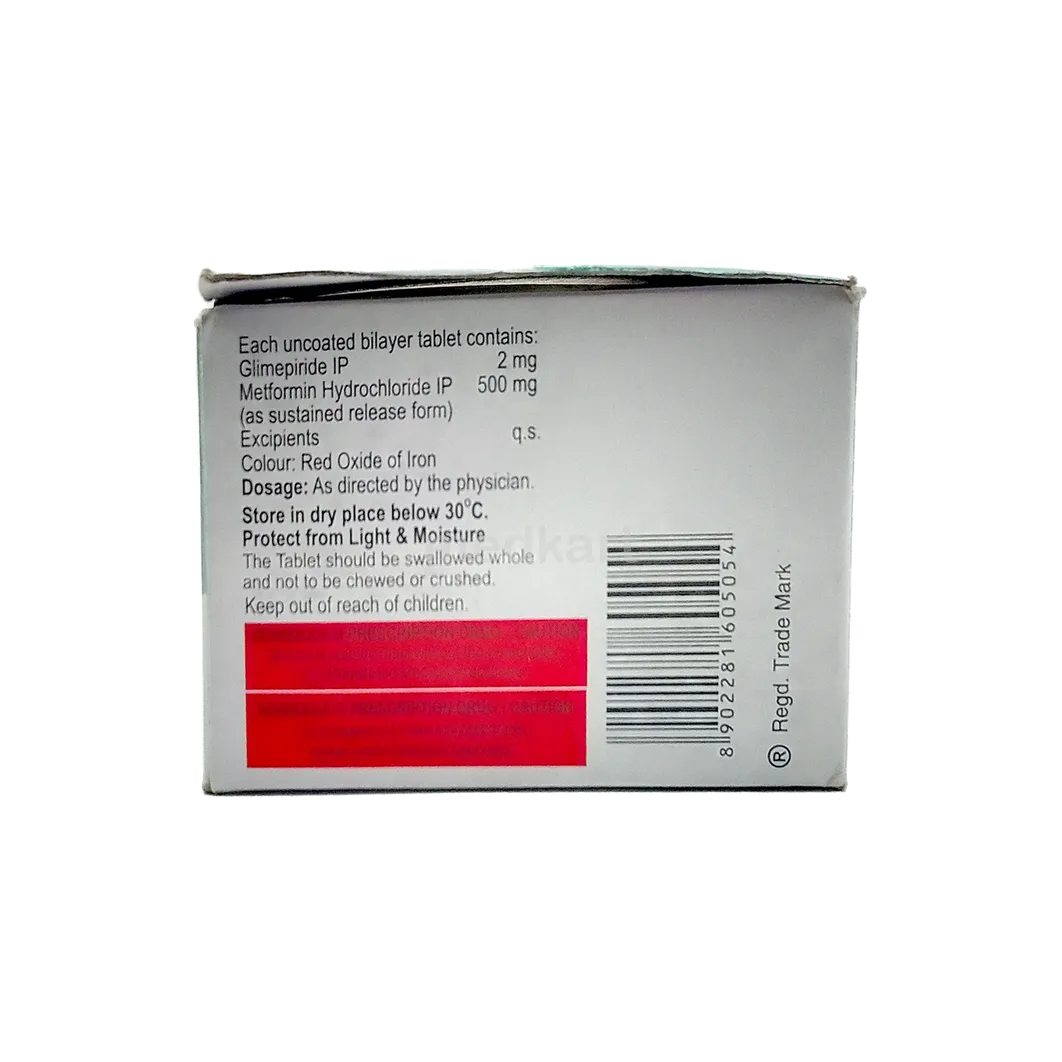
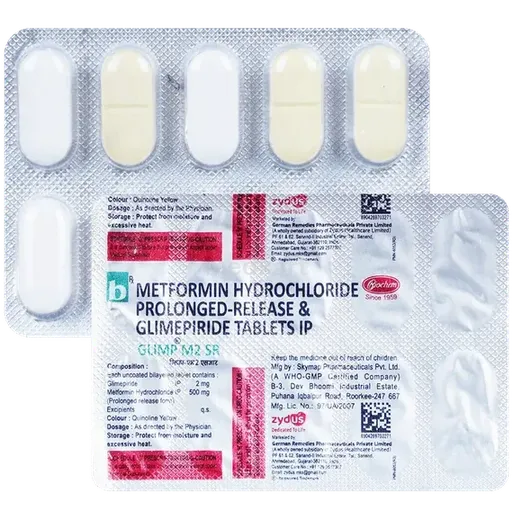
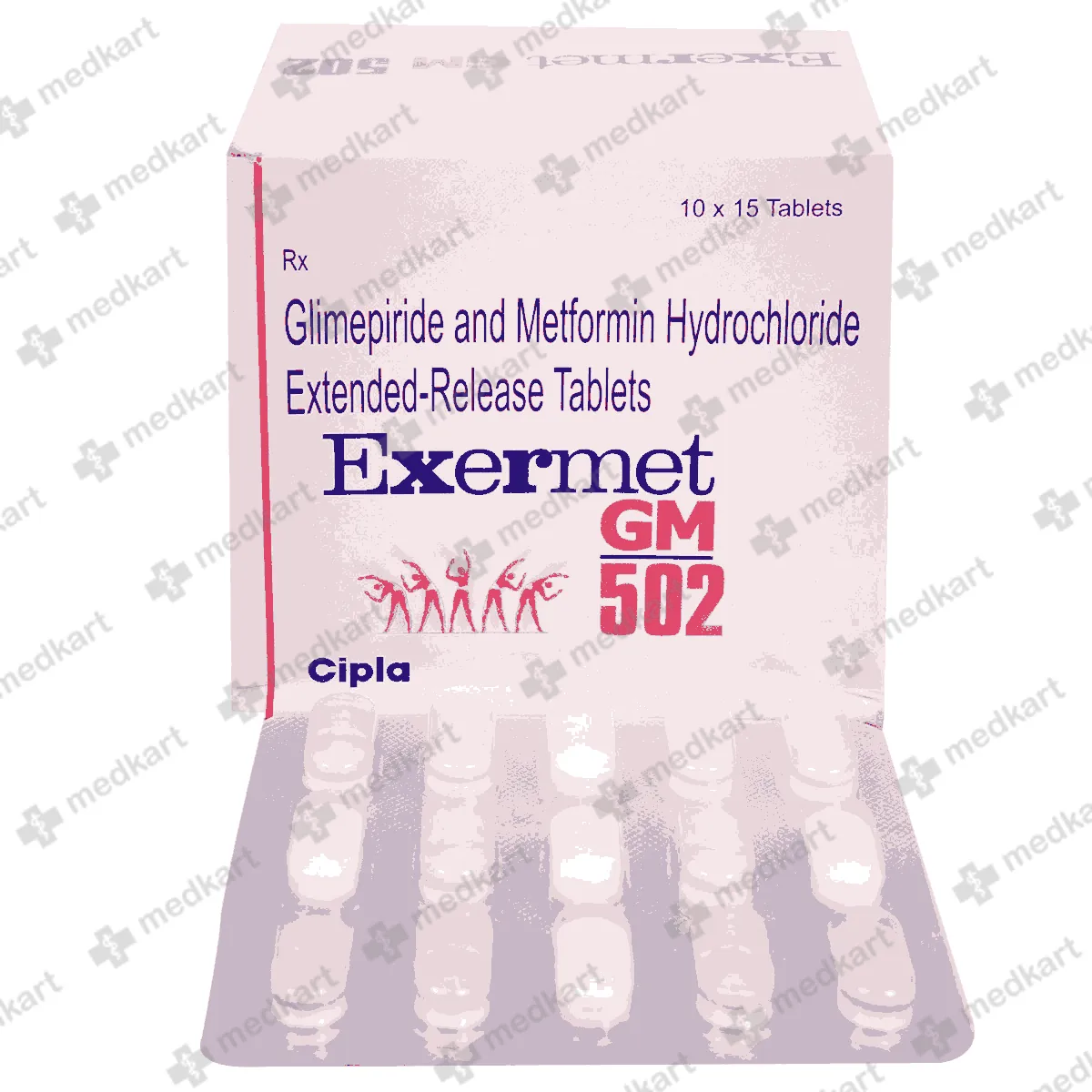
Gemer 2MG Tablet 15's is used for management of type 2 diabetes mellitus alongside diet and exercise, alone or with other antidiabetic medicines; and first-line management of type 2 diabetes mellitus, usually alongside diet and exercise. Gemer 2MG Tablet 15's contains Glimepiride 2 MG + Metformin Hydrochloride 500 MG Sustained Release. Always use Gemer 2MG Tablet 15's as advised by your doctor.
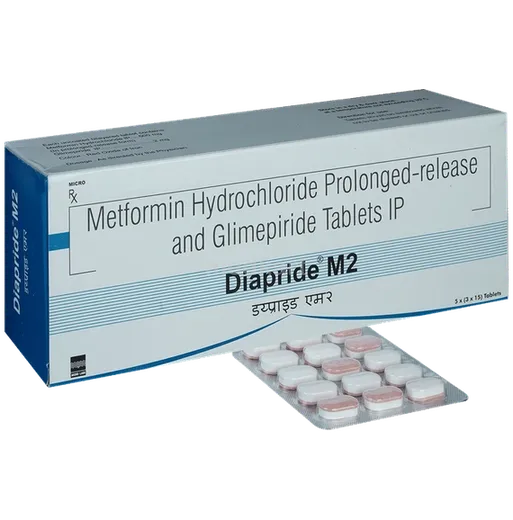
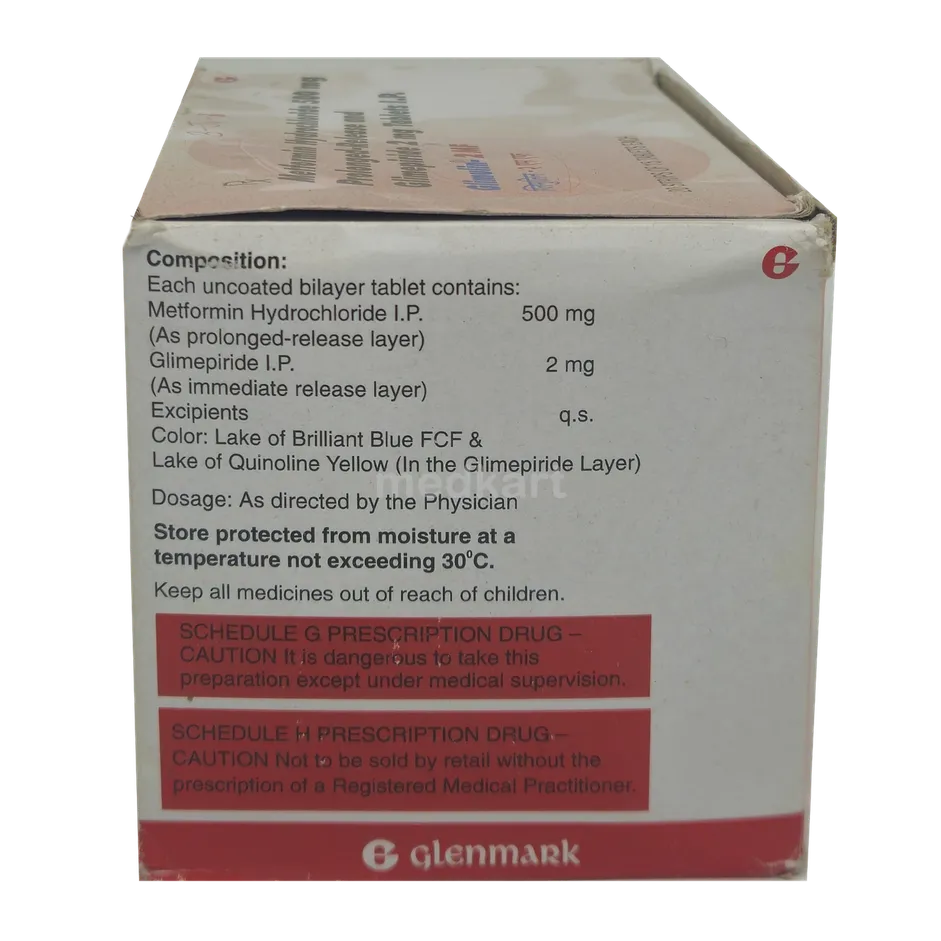
Gemer 2MG Tablet 15's contains Glimepiride 2 MG + Metformin Hydrochloride 500 MG Sustained Release. It is a sulfonylurea antidiabetic; and biguanide antidiabetic.
Commonly reported side effects of Gemer 2MG Tablet 15's include hypoglycaemia (low blood sugar), weight gain, nausea, headache, dizziness; and diarrhoea, nausea, abdominal discomfort, metallic taste, loss of appetite — often improve with time or when taken with food. Not everyone gets side effects. Tell your doctor or pharmacist if any effect persists or worries you.
Gemer 2MG Tablet 15's is listed at Rs. 201.6 on Medkart. Prices can change — check the product page for the current price and pack size.
Hypoglycaemia can be prolonged and serious, especially in the elderly, with kidney impairment, missed meals or alcohol; and Rare but serious risk of lactic acidosis, particularly with kidney impairment, dehydration, acute illness or excess alcohol. Tell your doctor about all other medicines you take before starting Gemer 2MG Tablet 15's.
The dose of Gemer 2MG Tablet 15's depends on your condition, age, weight and other medicines you take, so it must be decided by your doctor. Follow the dose and duration on your prescription and do not change it on your own.
A generic medicine is one with the same active composition as the branded product — for Gemer 2MG Tablet 15's that is Glimepiride 2 MG + Metformin Hydrochloride 500 MG Sustained Release. Medkart lists generic options by composition so you can compare. Ask your doctor or pharmacist before switching from Gemer 2MG Tablet 15's.
Gemer 2MG Tablet 15's contains Glimepiride 2 MG + Metformin Hydrochloride 500 MG Sustained Release, a sulfonylurea antidiabetic; and biguanide antidiabetic. It is used for management of type 2 diabetes mellitus alongside diet and exercise, alone or with other antidiabetic medicines.
Yes. Gemer 2MG Tablet 15's requires a valid doctor's prescription.
Gemer 2MG Tablet 15's is manufactured by Sun Pharmaceutical Industries Ltd.
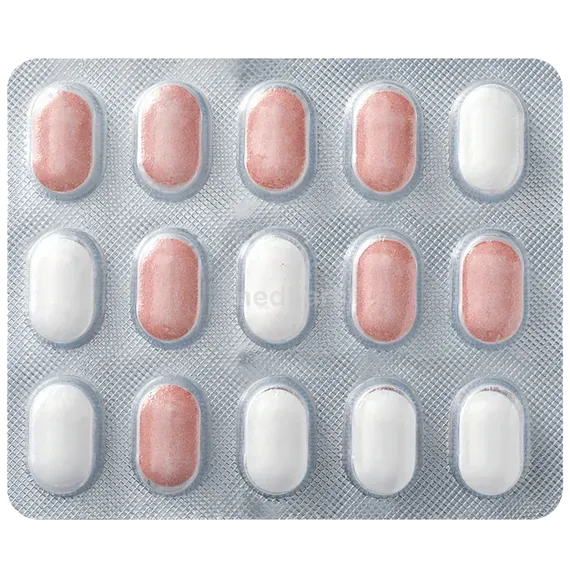
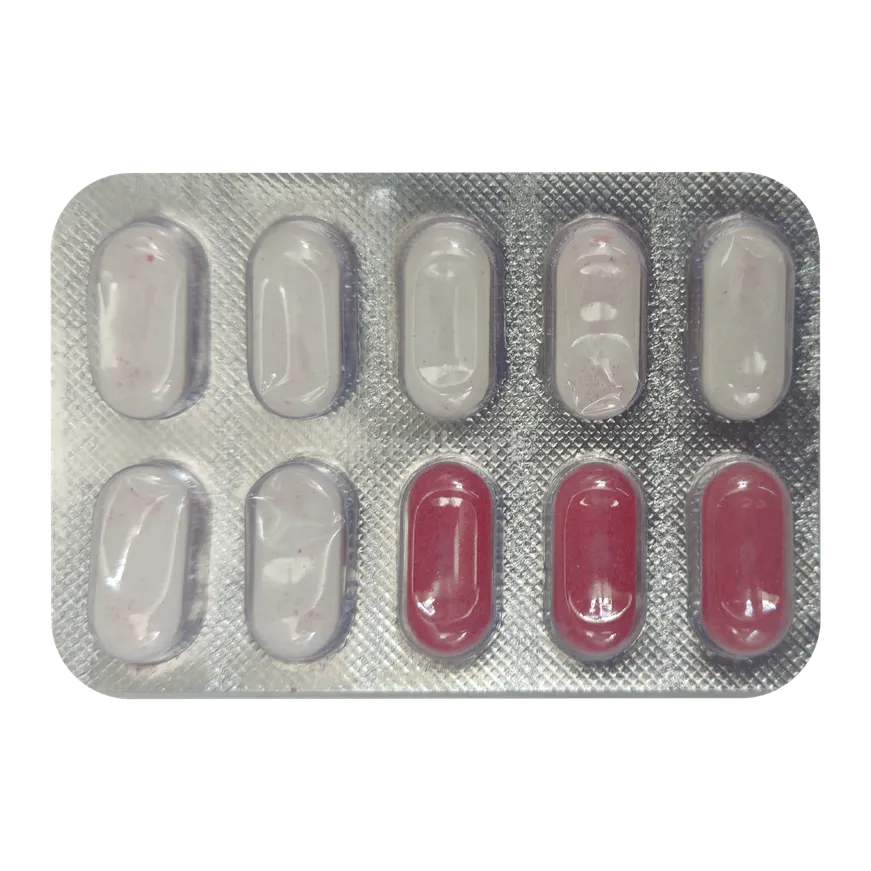
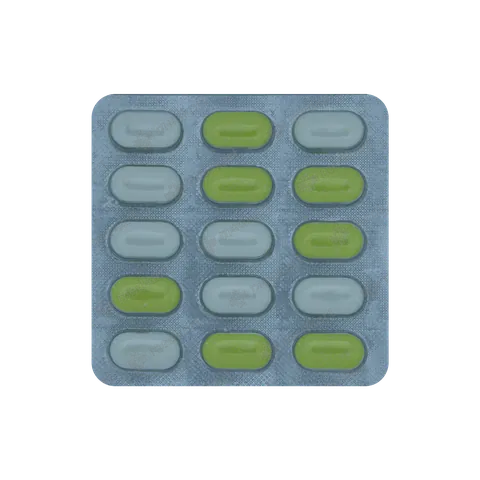
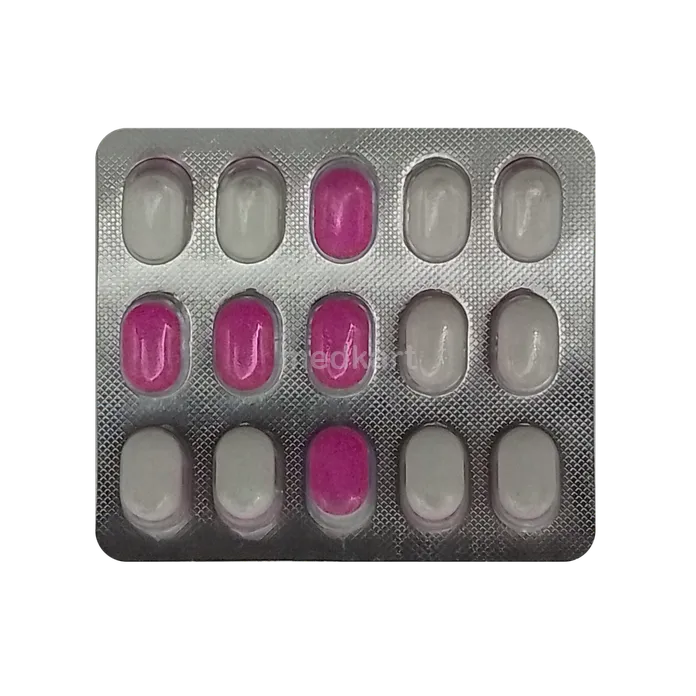
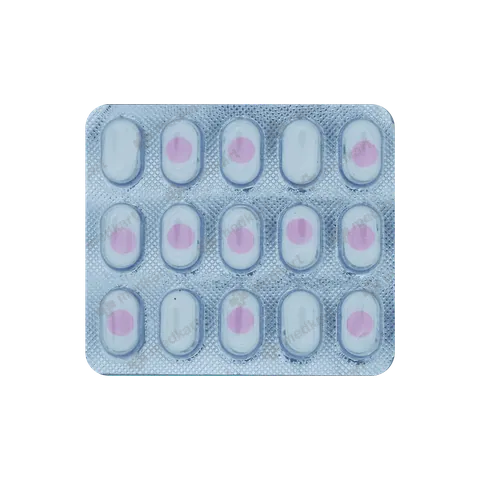
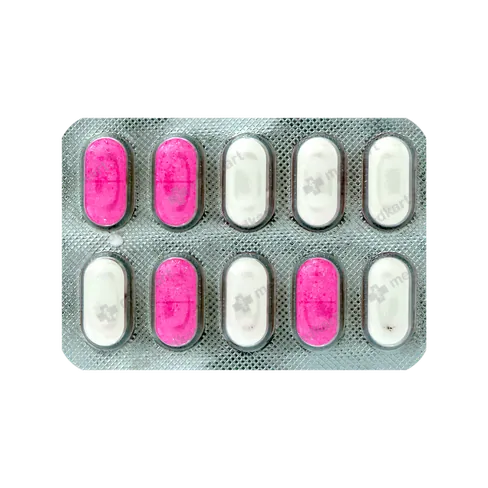
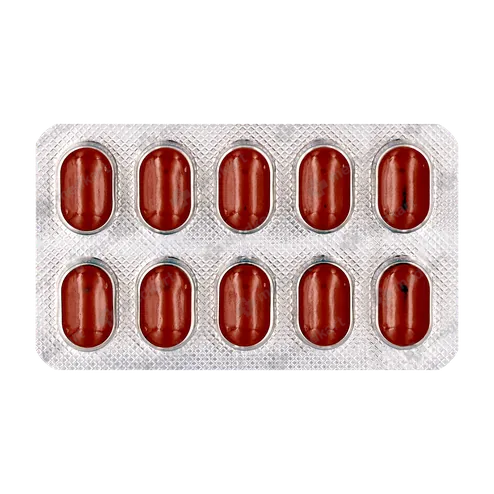
Gemer 2MG Tablet 15's is supplied as a tablet and is taken by the oral route.
Gemer 2MG Tablet 15's contains Glimepiride 2 MG + Metformin Hydrochloride 500 MG Sustained Release. It is used for management of type 2 diabetes mellitus alongside diet and exercise, alone or with other antidiabetic medicines; and first-line management of type 2 diabetes mellitus, usually alongside diet and exercise. The benefit you get depends on the condition your doctor prescribed Gemer 2MG Tablet 15's for.
Whether Gemer 2MG Tablet 15's can be taken daily, and for how long, depends on your condition and must be decided by your doctor. Do not start, extend or repeat a course of Gemer 2MG Tablet 15's on your own.
The timing of Gemer 2MG Tablet 15's depends on the dose your doctor prescribes and on the other medicines you take. Follow the timing on your prescription or ask your pharmacist.
No. Gemer 2MG Tablet 15's is a prescription medicine and should only be taken on a doctor's advice.
Do not take Gemer 2MG Tablet 15's during pregnancy or while breastfeeding without asking your doctor. Safety depends on the medicine, the stage of pregnancy and your own health.
Check with your doctor before drinking alcohol while taking Gemer 2MG Tablet 15's. Alcohol can add to side effects such as drowsiness and can affect how some medicines work.
Store Gemer 2MG Tablet 15's in its original pack, below 25°C unless the pack states otherwise, away from direct sunlight and moisture, and out of the reach of children. Do not use it after the expiry date on the pack.


Quality products and services offered. 🥰
ALIMAMY ABDULAI JALLOH
•
Reviewed on 08-02-2024

(5/5)
Best and cheapest medicine.
Shubham Jain
•
Reviewed on 23-11-2022
(5/5)
You can easily get, Medicines at half the price
Shourya Kharbanda
•
Reviewed on 30-01-2024
(5/5)
Happy
Prince Sharma
•
Reviewed on 18-04-2023
(5/5)
Good
tarif Malek
•
Reviewed on 15-01-2024
(5/5)
SUN PHARMACEUTICAL INDUSTRIES LTD
Country of Origin -
India
Medkart's sole intention is to ensure that its consumers get information that is expert-reviewed, accurate and trustworthy. However, the information contained herein should NOT be used as a substitute for the advice of a qualified physician. The information provided here is for informational purposes only. This may not cover everything about particular health conditions, medicines, generic alternatives, all possible side effects, drug interactions, warnings, alerts, lab tests, etc. Please consult your doctor and discuss all your queries related to any disease or medicine. We intend to support, not replace, the doctor-patient relationship.
10 Lakh+
Happy customers
35000+
Pin-codes Covered
75 Lakh+
Orders Delivered

Authentic Products
All WHO-GMP Certified Medicines






©2025 Medkart Pharmacy. All Rights Reserved








 10's_1.webp)